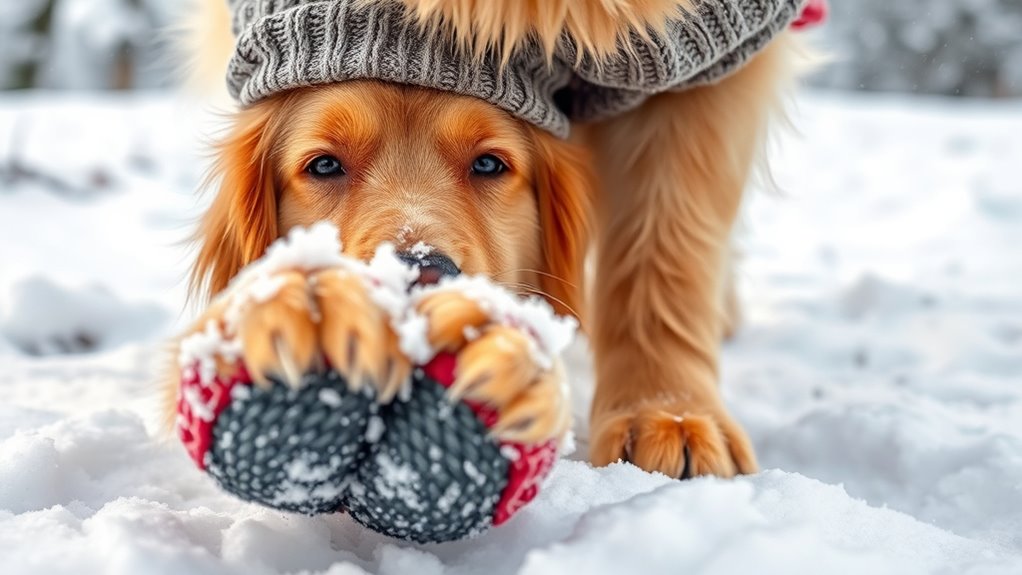

To protect your dog’s paws during winter, equip them with dog boots or apply paw wax to shield against salt, ice, and cold surfaces. Make sure their coat fits well and provides warmth to prevent cold stress or frostbite during outdoor walks. Regularly check their paws for signs of injury or irritation. Want to discover more tips to keep your dog safe and comfortable all winter long? Keep exploring for helpful advice.
Key Takeaways
- Use dog boots or paw wax to shield paws from ice, salt, and chemicals that can cause irritation or injury.
- Regularly inspect and clean paws after outdoor walks to remove ice, snow, and debris.
- Choose insulated, waterproof coats that fit snugly to provide warmth and protect against cold and moisture.
- Limit outdoor activities during extreme cold and opt for indoor play to prevent frostbite and cold stress.
- Incorporate mental stimulation and indoor engaging activities to keep dogs active and comfortable during winter.
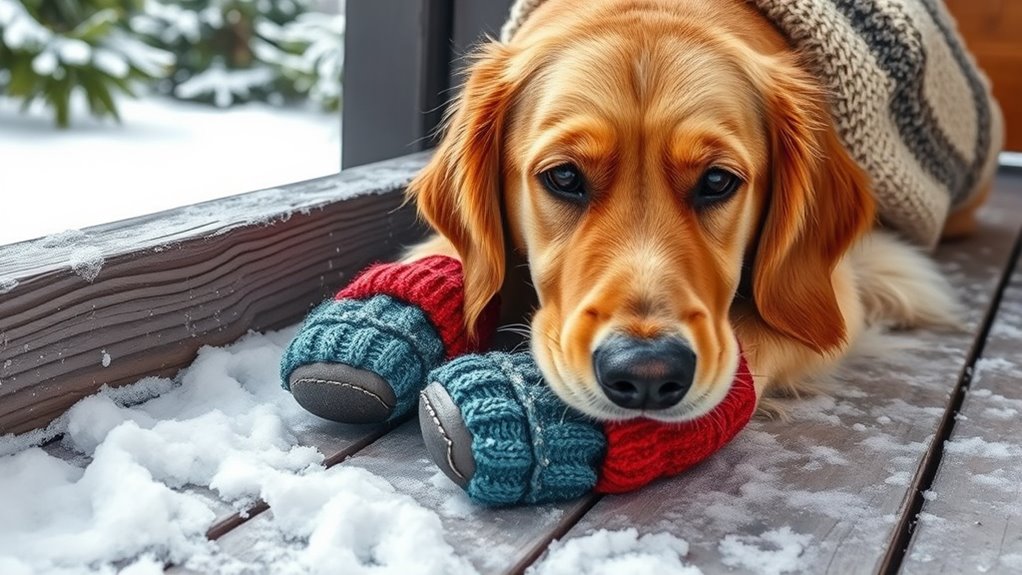
Are you prepared to keep your dog safe and comfortable during the cold winter months? The chilly season can be tough on our furry friends, especially if they have short hair or are particularly sensitive to cold. One of the best ways to ensure your dog stays warm is by exploring different dog coat options. There are plenty of styles and materials to choose from, including waterproof jackets, fleece-lined coats, and insulated options designed to retain heat. You should select a coat that fits snugly without restricting movement or breathing, and consider layering if your dog spends significant time outside. A good coat not only keeps your pet warm but also protects them from wind and snow, which can cause discomfort and even frostbite if they’re exposed for too long.
While outdoor protection is essential, winter doesn’t mean you have to keep your dog confined to the house all the time. If the weather is too harsh, you can turn to indoor activity ideas that help your dog stay active and mentally stimulated. Engage them with puzzle toys, treat-dispensing games, or training exercises that challenge their brain. These activities help burn off excess energy, prevent boredom, and keep your dog happy and healthy even when outdoor play isn’t advisable. If space allows, set up a mini agility course or play fetch inside using soft toys. Not only do these options protect your dog from the cold, but they also strengthen your bond and keep them physically active. Incorporating interactive toys can further enhance mental stimulation and provide additional enrichment during winter months.
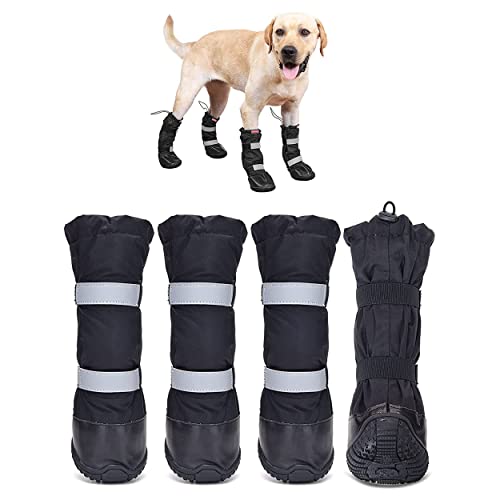
Hipaw Waterproof Dog Boots for Winter Snow Rain,Non-Slip Dog Shoes for Medium to Large Dogs,Extended Cuff Paw Protectors for Outdoor Walking Hiking
【Upgraded Paw Protectors】Protects dog's paws From Ice and Snow,Salt,Rain,Mud,Sharp objects,Hot asphalt,and Many More.Suitable for Both Indoor and Outdoor…
As an affiliate, we earn on qualifying purchases.
As an affiliate, we earn on qualifying purchases.
Frequently Asked Questions
How Can I Prevent My Dog From Getting Frostbite?
To prevent your dog from getting frostbite, keep their paw pads protected by using dog booties or paw wax when outside. Limit exposure in extremely cold weather and avoid icy areas. Watch for frostbite symptoms like pale, cold, or swollen paw pads, and if you notice these, bring your dog indoors immediately. Regularly inspect their paws for signs of damage, and keep their fur and paws dry to maintain warmth.
Are There Specific Clothing Options for Dogs in Winter?
Ah, the good old days of wool and leather! You should opt for dog sweater options that fit snugly and keep your pup warm. Winter coat styles vary from puffer jackets to trench coats, providing extra insulation against cold winds. Choose a coat that covers their chest and belly for maximum warmth. Make sure it’s easy to put on and remove, making winter walks a cozy, enjoyable experience for your furry friend.
How Often Should I Check My Dog’s Paws During Walks?
During walks, you should check your dog’s paws frequently, ideally every 15 to 20 minutes. Perform a quick paw inspection to spot any cuts, ice buildup, or irritation. After walks, always do paw cleaning to remove salt, chemicals, and debris. Regular checks help prevent discomfort and injuries, ensuring your dog stays comfortable and safe during winter adventures. Always be attentive to signs of paw soreness or irritation.
Can Winter Weather Cause Long-Term Health Issues in Dogs?
Yes, winter weather can cause long-term health issues in dogs if you don’t take proper precautions against seasonal hazards. Exposure to cold temperatures, snow, and ice can lead to hypothermia, frostbite, and joint problems. To protect your dog’s winter health, limit time outdoors, keep them warm with appropriate gear, and regularly check for signs of discomfort or injury. Staying vigilant helps prevent lasting damage from harsh winter conditions.
What Signs Indicate My Dog Is Too Cold?
If your dog shows signs like shivering, lifting paws, or slowing down, they’re likely too cold. You can check their dog temperature by feeling their ears or paws for coldness. Cold weather fatigue can make your dog less active and more sluggish. Watch for these signs and bring your dog inside or provide warm blankets. If symptoms persist, consult your vet to keep your furry friend comfortable and safe.

Musher's Secret Dog Paw Wax 60g – Moisturizing Dog Paw Balm – Helps Protect & Heals Cracked Paws – Creates an Invisible Paw Protectors Barrier – All-Natural Nose & Paw Balm with Vitamin E
SAFE AND ALL-NATURAL – Made from food-safe oils and waxes, our paw balm is a must-have for dog…
As an affiliate, we earn on qualifying purchases.
As an affiliate, we earn on qualifying purchases.
Conclusion
Just like a cozy pair of boots keeps your feet warm in winter, caring for your dog’s paws and warmth protects them from icy hazards. Imagine my neighbor’s Labrador, who once refused to walk because of snow and ice—until she discovered paw wax and a warm blanket. Small steps like these make a big difference, ensuring your furry friend stays safe and comfortable all season long. With attentive care, your dog can enjoy winter’s wonderland just as much as you do.

Carhartt Firm Duck Insulated Dog Chore Coat, Durable Weather Resistant Jacket for Cold and Windy Conditions, PFAS Free (Carhartt Brown), Large
Durable Protection For Active Dogs: Durable dog coat with iconic roots for the hardest working dogs. Fully insulated…
As an affiliate, we earn on qualifying purchases.
As an affiliate, we earn on qualifying purchases.

PETSTA Dog Puzzle Toys, Treat Dispensing Dog Enrichment Toys for IQ Training and Brain Stimulation, Interactive Mentally Stimulating Toys as Gifts for Puppies, Cats, Dogs
【PRODUCT SIZE】10 inch*10 inch*1.3 inch.
As an affiliate, we earn on qualifying purchases.
As an affiliate, we earn on qualifying purchases.