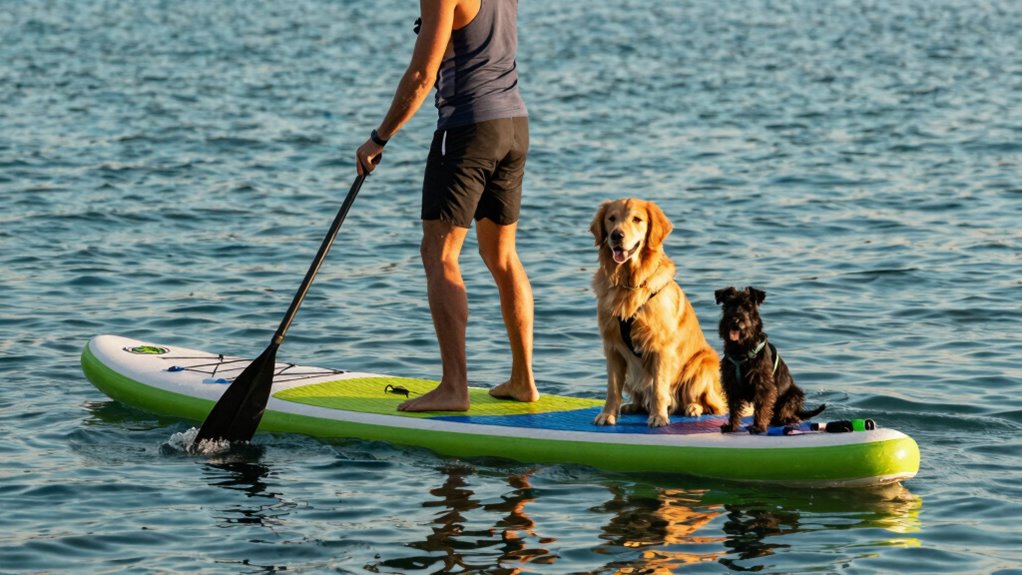

To build your dog’s confidence on a paddleboard before increasing distance, start with calm, shallow water and let your dog explore the board on land first. Use treats and praise to reinforce positive experiences, and make sure they wear a properly fitting life vest with a handle. Keep sessions short and relaxed, focusing on trust and comfort. As your dog grows more confident, you can gradually introduce water exposure and longer outings—more tips are ahead to help you succeed.

Get pet supplies delivered free — and shop member deals
- Fast, free delivery on millions of items
- Access to Prime Big Deal Days deals on October 6–7
- Prime Video, Amazon Music and more included
Key Takeaways
- Build trust by starting with calm, shallow water and using treats and praise to reinforce positive experiences.
- Allow the dog to explore the paddleboard on land to boost familiarity and comfort before water exposure.
- Keep initial sessions short and gradually increase exposure to reduce stress and prevent fatigue.
- Prioritize the dog’s safety with proper life vest fitting, close supervision, and using a leash at all times.
- Focus on creating positive, confidence-building experiences over distance or speed to ensure a relaxed paddleboarding trip.

If you love spending time on the water, paddleboarding with your dog can be an enjoyable and rewarding experience. But before you hit the water, it’s essential to prioritize dog safety. Your dog’s comfort and well-being are just as important as your own, especially since they might not be familiar with the new environment. Start by choosing the right paddleboarding gear designed for dogs, such as a dog-specific life vest that offers buoyancy and keeps your pup afloat if they fall in. These vests also often have handles, making it easier to lift or steady your dog when needed. Never underestimate the importance of a secure leash that attaches to your paddleboard or life vest—this keeps your dog close and prevents accidental falls into the water.
Prioritize your dog’s safety with proper gear and a secure leash for a fun, stress-free paddleboarding adventure.
Building confidence before attempting longer distances is vital. Begin on calm, shallow water where your dog can get used to the sensation of standing on the board without feeling overwhelmed. Use treats and praise to encourage your pup to stay calm and focused, reinforcing positive associations with the paddleboarding experience. It’s helpful to bring along familiar items like their favorite toy or blanket to make the environment feel safe and inviting. As you progress, keep your sessions short and frequent, allowing your dog to learn gradually without feeling pressured or stressed. Watch carefully for signs of discomfort or fatigue, and always be ready to return to shore if your dog seems anxious or tired.
Focusing on confidence-building is key before increasing distance. Allow your dog to explore the board on land first, so they become comfortable with the new surface. Once they’re at ease, gently introduce them to the water, always keeping a close eye on their reactions. When you’re on the water, stay relaxed and confident—your demeanor influences your dog’s comfort level. Use your paddleboarding gear wisely, ensuring your leash is secure and your dog’s life vest fits properly. Keep your dog close, especially if it’s their first time, and avoid rushing into open water or strong currents. Building trust through patience and gradual exposure helps your dog gain confidence, making longer paddleboarding trips more enjoyable for both of you. Additionally, understanding the importance of biodiversity can help foster a greater appreciation for outdoor activities that respect the environment where you and your dog are exploring. It’s also beneficial to educate yourself about dog behavior and safety tips to ensure a positive experience.
Ultimately, the goal is to make every outing a positive experience, focusing on trust and comfort rather than distance or speed. When your dog feels safe and confident, they’ll be more willing to explore and enjoy the water alongside you. With proper preparation, patience, and the right gear, paddleboarding with your dog can become a favorite outdoor activity filled with bonding and adventure.
dog paddleboard life vest with handle
As an affiliate, we earn on qualifying purchases.
As an affiliate, we earn on qualifying purchases.
Frequently Asked Questions
What Breeds Are Best Suited for Paddleboarding With Dogs?
You’ll find that small to medium breeds like Labrador Retrievers, Golden Retrievers, and Cocker Spaniels are best suited for paddleboarding, thanks to their calm nature and good balance. When choosing a paddleboarding breed, consider their dog breed suitability and temperament. Follow paddleboarding breed tips like introducing your dog gradually, providing a life jacket, and practicing in calm waters to guarantee a safe, enjoyable experience for both of you.
How Do I Introduce My Dog to Paddleboarding Safely?
Imagine your dog’s tail wagging as you gently introduce them to paddleboarding. Start with dog training on land, familiarizing them with commands and safety cues. Gradually incorporate paddleboarding techniques by placing their paws on the board while it’s stationary, then slowly moving it. Keep sessions short, positive, and calm. Use treats and praise to build confidence, ensuring your dog feels safe and secure before venturing further onto the water.
What Safety Gear Is Essential for Dogs During Paddleboarding?
You should always have a life jacket designed for dogs to keep them safe in the water. It provides buoyancy and visibility, reducing risks if your dog falls in. Additionally, use leash safety by attaching a secure, quick-release leash to prevent your dog from jumping off or drifting away. These essentials give your dog confidence and security, allowing you both to enjoy paddleboarding adventures comfortably and safely.
How Can I Prevent My Dog From Slipping or Falling?
Imagine your dog happily paddling but slipping on the board’s surface. To prevent this, you should leash train your dog to stay steady and practice on land first. Keep your dog well-hydrated before and during your trip to maintain focus and energy. Additionally, consider using a non-slip mat or grip pads on the paddleboard, which can help your dog gain traction and stay confident, reducing the risk of slipping or falling.
What Signs Indicate My Dog Is Stressed or Uncomfortable?
You’ll notice stress signals in your dog’s behavior, such as panting, lip licking, yawning, or avoiding eye contact. If your dog whines, trembles, or tries to get off the board, these are clear signs they’re uncomfortable. Keep an eye on their body language, and if you see these signs, give them a break. Recognizing stress signals early helps guarantee your dog feels safe and confident during paddleboarding.
Conclusion
As you steady yourself on the board, your dog enthusiastically watches, paws gently touching the water’s surface. Confidence grows with each paddle stroke, transforming the quiet lake into a shared adventure. Just like the ripples spreading outward, your trust expands beyond the boat’s edge, bridging distance with connection. In this peaceful dance of balance and bond, you realize that the greatest journey begins with that first confident step—both on the water and in your friendship.
Fall Picks
fall essentials
As an affiliate, we earn on qualifying purchases.