TL;DR

Get pet supplies delivered free — and shop member deals
- Fast, free delivery on millions of items
- Access to Prime Big Deal Days deals on October 6–7
- Prime Video, Amazon Music and more included
Choose a dog Halloween costume that lets your dog breathe, see, hear, walk, sit, and go to the bathroom normally. Introduce it in short, supervised sessions, remove it if your dog seems uncomfortable, and use a secure harness and reflective details outdoors. A festive bandana or collar can be a better choice than a full outfit.
A dog in a tiny pumpkin suit can steal the whole Halloween photo. But a costume that twists around, blocks your dog’s view, or makes every step awkward can turn that cute moment into a stressful one.
This guide helps you choose dog Halloween costumes with your dog’s comfort in mind. You’ll find practical fit checks, easy alternatives, and tips for photos or a walk after dark, so you can combine seasonal fun with practical concerns.
Measure your dog’s neck, chest, and back, then check the costume’s size chart instead of relying on weight alone.
Make sure the costume leaves your dog’s face clear and allows normal walking, sitting, lying down, and bathroom breaks.
Introduce new clothing in short sessions, and remove it if your dog freezes, paws at it, or struggles to move.
Use a bandana, festive collar, or themed leash if your dog dislikes full outfits.
For outdoor plans, prioritize a secure harness, reflective details, and distance from candy and busy doorways.
Choose a costume your dog can move in
Dog Halloween costumes work best when your dog can walk, sit, lie down, breathe, see, and hear without the outfit getting in the way. Those movements are also practical checks: a dog that cannot sit or lie down normally may struggle to rest, while restricted vision or hearing can make an unfamiliar, busy evening harder to navigate. A bright red superhero cape might look great in a photo, but it should not drag on the ground or flap into your dog’s face.
Picture your dog turning around in the living room, settling on a mat, and stepping over a doorstep. If a sleeve catches a paw or the costume pulls at the chest, the fit needs work. A costume should sit comfortably without rubbing, pinching, or hanging so loose that it catches on furniture. Too-tight fabric can restrict movement or rub with each step; excess fabric can snag or shift and startle your dog. Either problem can become more noticeable once your dog walks, plays, or wears the outfit for more than a few minutes.
Check the size chart before you buy: many costumes use neck, chest, and back measurements, and weight alone may not match your dog’s shape. Follow the maker’s measuring directions, then try the outfit on at home before Halloween. Watch your dog take a few ordinary steps, rather than judging the fit while they stand still. A comfortable fit at rest is only the starting point; movement shows whether straps slide, seams rub, or the costume changes how your dog walks.
Spot the costume hazards before your dog does
Dog Halloween costumes are safer when they leave your dog’s face clear, contain no small chewable parts, and stay on only while you can supervise. Buttons, dangling ribbons, and plastic decorations may look harmless until a curious dog mouths them or catches them on a chair. If a piece comes loose, your dog could choke on it or swallow it, and a loose tie can snag as they move. Fewer attachments mean fewer things to monitor, especially when your attention is divided during a gathering.
Check around the eyes, nose, and mouth, and look for loose seams, long ties, or fabric that could snag. Warm materials can also become uncomfortable if your dog gets hot, especially during an active walk or in mild weather. Dogs may not be able to remove an outfit themselves, so you need to notice when warmth, movement, or friction is becoming a problem. A fluffy indoor costume might be fine for a short photo, yet too warm for a brisk lap around the block.
Take it off if your dog seems uneasy. Freezing, repeated pawing at the outfit, a tucked posture, trouble walking, or panting unrelated to exercise or heat are reasons to stop the costume session. These signs matter because they show your dog is not moving or behaving comfortably; waiting to see whether they will simply get used to it can prolong stress or discomfort.
For example, if your dog keeps backing away from a lion mane and scratching at the collar, switch to a simple themed bandana. Don’t leave a costumed dog unattended, even if the outfit seemed fine a few minutes earlier. A collar or costume can shift, become caught, or be chewed when you are not watching, so supervision lets you respond before a minor problem escalates.
Make the first try short and easy
Introduce a dog Halloween costume with brief, calm practice so your dog can sniff it, wear it for a moment, and earn a treat before you decide whether it suits them. A costume that appears comfortable to you may still feel strange against your dog’s fur or move in an unfamiliar way. Short sessions let you see your dog’s response without making the outfit feel unavoidable; they also help distinguish mild curiosity from discomfort that grows with time.
- Let your dog sniff the costume while it rests on the floor, and reward calm interest with praise or a treat. This gives your dog a chance to investigate before the fabric touches them.
- Try one part at a time, such as placing a cape loosely over the back, then take it off and give your dog a break. Testing one piece helps you identify whether a particular strap, sleeve, or texture is the source of discomfort.
- Check ordinary movement with a short walk, a sit, and a lie-down. Stop if the outfit shifts, rubs, or makes your dog hesitate. A still pose can hide problems that appear when a dog bends or turns.
- Keep the first session brief and repeat only if your dog stays relaxed. Remove the costume if your dog tries to escape or seems distressed. Repeating a calm, short trial can build familiarity, but extending a session despite signs of stress can make the costume harder to tolerate.
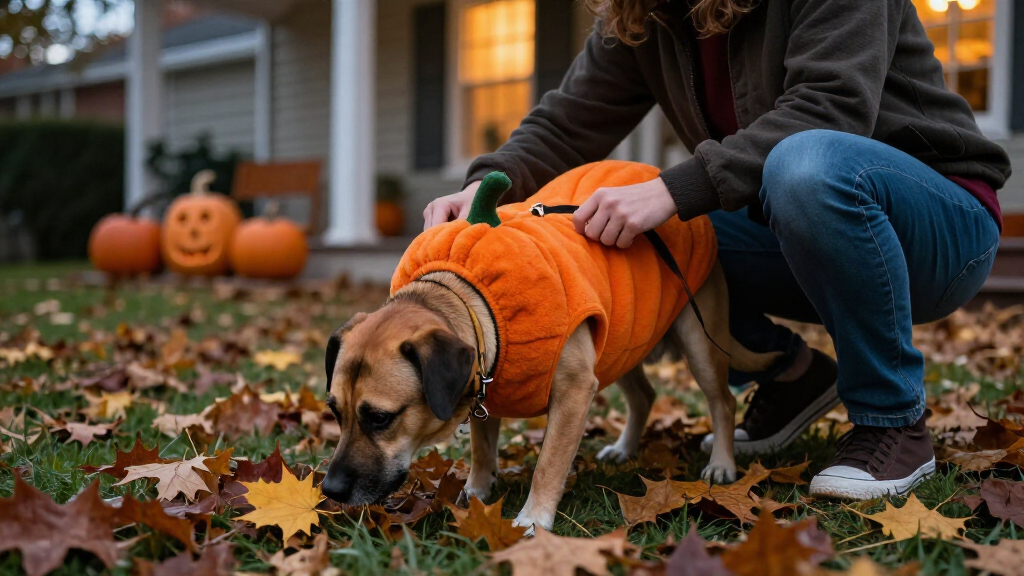
Say your dog tolerates a soft pumpkin vest for a minute but starts pawing at it after a second try. That’s useful information, not a challenge to push through. The pawing may mean the fit or feel is bothering them, and continuing could turn a brief trial into an unpleasant experience. A quick photo in the vest may work; wearing it all evening may not.
Pick a style that fits your dog’s personality
Dog Halloween costumes range from full character outfits to a single festive accessory, so you can match the look to what your dog actually enjoys. If your dog dislikes fabric over the body, a pumpkin bandana, Halloween collar, or themed leash can add color without turning dressing up into a struggle. The simpler choice often has fewer points of contact and fewer parts to shift, which can make it easier to wear and supervise. Your dog’s response is a better guide than how elaborate a costume looks on a hanger.
Perennial themes include pumpkins, ghosts, superheroes, and animals; people also enjoy matching outfits with their dogs or coordinating looks for more than one pet. Online shops and pet stores carry different sizes and styles each year, including some designed to work with a harness, but availability changes. Choose based on fit and your dog’s comfort, rather than a claim that one style is this year’s must-have. Matching looks can be fun, but coordinating several pets also means checking each animal’s fit and tolerance individually rather than assuming they will all accept the same kind of outfit.
Think about the difference between a photo outfit and a walking outfit. A soft, lightweight cape may suit a supervised picture in the backyard, while a simple bandana leaves more room for movement during a busy walk. Photos are brief and controlled; a walk adds changing surfaces, distractions, and longer wear, so a costume that works for one may be impractical for the other. If your dog is happiest without costume clothes, skipping the outfit is a good choice.
Compare a full outfit with simple Halloween accessories
Choose a full dog Halloween costume when your dog stays comfortable in clothing and the outfit passes a movement check; choose an accessory when you want a festive look with fewer pieces to manage. Neither option suits every dog, and the best fit depends on your dog’s temperament, the weather, and what you plan to do. A full outfit can create a more recognizable look, but it usually adds more fabric and attachment points to check. An accessory may be easier to tolerate, though it still needs a secure, comfortable fit.
| Choice | Works well for | Check before using |
|---|---|---|
| Full costume | Short, supervised photos or a calm indoor gathering | Clear face, easy movement, secure fit, and no loose chewable pieces |
| Bandana or festive collar | Dogs that dislike clothing or need a simple look | Comfortable fit and no dangling parts that catch or get chewed |
| Themed leash or harness | Outdoor walks where control and visibility matter | Secure fit and reflective details if you’ll be out after dark |
For a nervous rescue dog, a bright bandana may be a happier Halloween choice than a full ghost costume. For a relaxed dog who already wears a coat comfortably, a light costume may suit a short photo session. Existing comfort with a coat is a useful clue, but it does not guarantee comfort with a costume that has different closures or covers more of the body. Let your dog’s behavior guide the choice, and reassess if the activity or weather changes.
Plan a safer Halloween walk and photo session
A Halloween costume should never make it harder to keep your dog secure or visible outside. After dark, reflective details and a properly fitted harness can help others see your dog, while a leash gives you more control near open doors, crowds, and decorations. A costume should not interfere with the harness or leash connection: if fabric covers a buckle or changes how the harness sits, adjust the outfit or leave it off. Visibility helps others notice your dog, while secure equipment helps you respond if the street becomes busy.
Keep your dog away from candy and busy doorways, where a quick dash can lead to trouble. Dogs should not eat Halloween candy, and some common ingredients, including chocolate and xylitol, are toxic to dogs. Ask your veterinarian if your dog eats something unsafe or if you are unsure what they swallowed. A leash and distance from doorways reduce opportunities to grab dropped treats or slip through an opening, which can be easy to miss amid trick-or-treat activity.
Think about the weather and the length of the outing. A warm costume may feel fine in a cool room but become uncomfortable as your dog walks; a rainy evening can leave dragging fabric heavy and wet. For many dogs, a few supervised minutes for photos, followed by a costume-free walk, makes more sense than wearing an outfit for the whole night. Separating the photo from the walk lets you choose a costume for appearance and ordinary walking gear for comfort and control.
Know when a costume is not the right fit
A dog that repeatedly freezes, tries to remove an outfit, or struggles to walk is telling you the costume session isn’t working. Take it off and give your dog room to settle; you don’t need a full costume to include them in the holiday. Stopping promptly matters because repeated attempts to push through can make the experience more stressful, while a break lets your dog return to normal movement and behavior.
Try a festive collar, a comfortable bandana, or a themed leash instead. If even those bother your dog, let them enjoy the evening without dress-up. Each option still needs to fit comfortably, but fewer or lighter pieces may be easier to accept. For instance, your dog can watch you decorate a pumpkin from a cozy bed while you take the costume photo of a stuffed toy beside them.
When a costume causes skin irritation or your dog eats part of it, contact your veterinarian for advice. Irritation may need attention, and swallowed material can pose a risk depending on what and how much your dog ate. Your veterinarian can also answer health and diet questions about your individual dog. A little seasonal color is fun; your dog’s comfort comes first.
Frequently Asked Questions
How do I measure my dog for a Halloween costume?
Use the product’s size chart and measure the areas it lists, commonly the neck, chest, and back. Weight can help, but dogs with the same weight may have very different shapes. Check the fit at home before Halloween and watch your dog move.
Can my dog wear a costume all night?
Most dogs are better off wearing a costume for a short, supervised photo or event instead of the whole evening. Offer breaks, check for heat or discomfort, and take the outfit off if your dog starts pawing at it or moving awkwardly.
What should my dog wear for trick-or-treating?
Start with a secure leash or properly fitted harness and reflective details if you’ll be out after dark. A costume is optional; keep your dog away from open doors, crowds, decorations, and candy. Ask your veterinarian for advice if your dog eats candy or part of a costume.
What if my dog refuses to wear a costume?
Don’t force it. Try a lightweight bandana, festive collar, or themed leash, and skip dress-up if your dog dislikes those too. Your dog can still join the celebration from a comfortable spot at home.
Conclusion
Choose the lightest costume your dog can wear comfortably, and keep the session short enough that your dog stays relaxed. If the outfit turns every step into a shuffle, reach for a bandana instead.
The best Halloween photo is the one where your dog still looks like themselves: bright-eyed, comfortable, and ready for a treat made for dogs.
Fall Picks
fall essentials
As an affiliate, we earn on qualifying purchases.