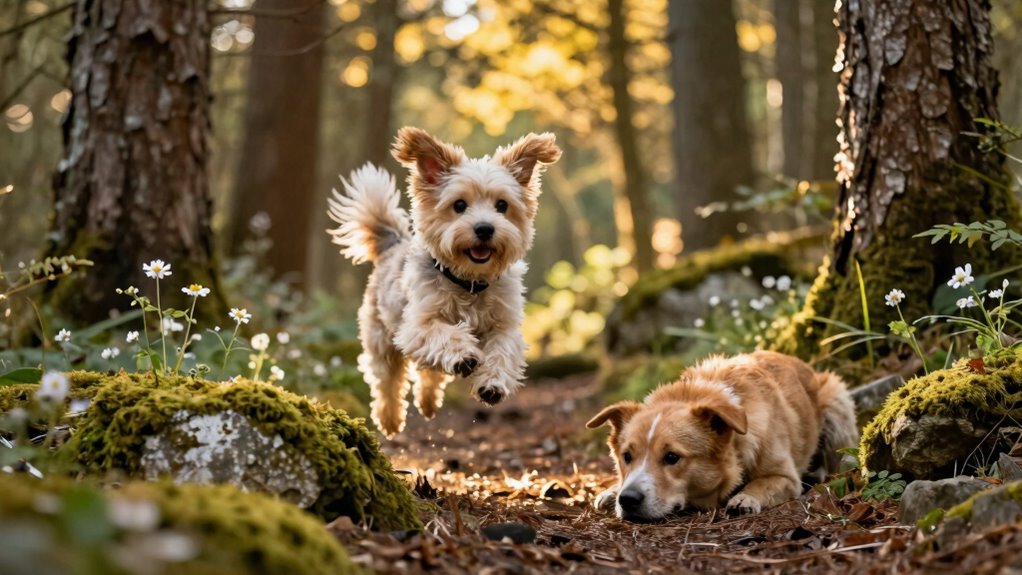

Slowing down your dog’s adventures helps manage their overexcitement by promoting patience and calmness. It allows them to explore the environment through their senses, which builds confidence and reduces overwhelm. A gentle pace encourages them to stay focused, making walks more enjoyable for both of you. By incorporating sensory exploration and mindfulness, you’ll create a relaxed outdoor routine that bonds you closer. Keep going to discover how these slow adventures can transform your outings and your dog’s behavior.

Get pet supplies delivered free with Prime
- Fast, free delivery on millions of items
- Prime Video, Amazon Music and more included
- Member-only deals all year
Key Takeaways
- Slower outings help dogs develop patience and self-control, reducing overexcitement during walks.
- Gentle pacing allows dogs to process stimuli through their senses without feeling overwhelmed.
- Mindful, sensory-rich experiences foster confidence and positive associations with the environment.
- Calm walks improve behavior, deepen owner-dog bonds, and make outdoor time more enjoyable.
- Prioritizing quality over quantity promotes a balanced, relaxed, and respectful outdoor relationship.
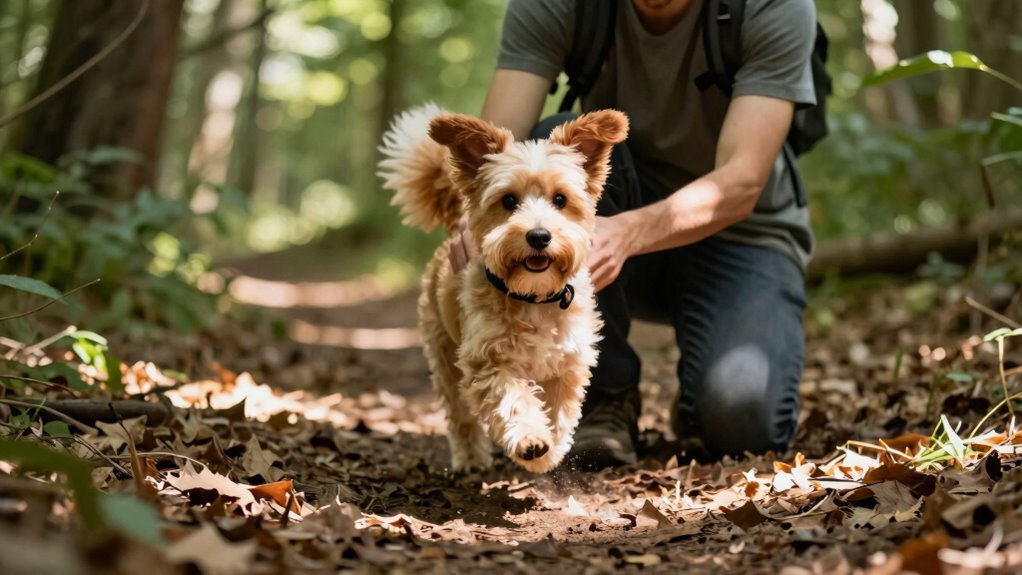
If your dog gets overexcited quickly during outings, it’s tempting to push for more adventurous activities to tire them out. But rushing into high-energy adventures might do more harm than good, especially if your goal is to help your dog develop better self-control. Slower adventures give you the chance to focus on training patience, which is essential for managing overexcitement. Instead of rushing from one activity to the next, take your time to create a calm environment where your dog learns to stay relaxed amid stimulation. This approach allows you to reinforce cues like “sit,” “stay,” and “calm,” which can make future outings more manageable. When your dog begins to understand that excitement doesn’t mean chaos, they learn to regulate their energy levels better over time.
Taking slow, calm outings helps your dog learn patience and self-control while reducing overexcitement.
Sensory exploration becomes a key part of these slower adventures. Dogs experience the world primarily through their senses, and by taking things at a gentle pace, you give them the opportunity to observe, smell, and listen without feeling overwhelmed. Instead of rushing past interesting sights or sounds, encourage your dog to explore their environment at their own pace. This not only helps them develop confidence but also teaches patience as they learn to process new stimuli calmly. You can stop at different spots, encouraging your dog to sniff and investigate, turning each outing into a sensory-rich experience. Incorporating sensory stimulation can further enhance their ability to stay relaxed and attentive during walks. Engaging your dog’s senses in a calm environment can help reinforce positive associations and reduce overexcitement. Additionally, practicing mindfulness during walks can help your dog learn to stay present and focused, further reducing their impulsiveness. Developing self-control techniques can also be an effective part of these slower outings, helping your dog manage their excitement levels more effectively.
Focusing on these slower adventures doesn’t mean you’re limiting your dog’s fun. It’s about quality over quantity. You get to observe your dog’s reactions more closely and address any signs of overexcitement early. Over time, your dog learns that calm behavior often results in more enjoyable experiences, like sniffing new scents or relaxing beside you. This can significantly reduce their tendency to become overexcited during walks or outings. Patience training and sensory exploration help establish a more balanced approach to outdoor activities, making each adventure a chance for your dog to grow more confident and less overwhelmed.
In the end, you’ll find that taking things slowly benefits both you and your dog. It creates a stronger bond built on understanding and respect for each other’s pace. Your dog learns to enjoy outings without feeling pressured to be constantly energetic, and you gain a more peaceful, rewarding experience together. This gentle approach not only helps manage their overexcitement but also nurtures their natural curiosity and confidence, making every walk a calmer, more fulfilling journey.
As an affiliate, we earn on qualifying purchases.
Frequently Asked Questions
How Can I Tell if My Dog Is Overstimulated During Walks?
You can tell your dog is overstimulated during walks when they show signs like rapid panting, jumping, or become fixated on stimuli. To manage this, use calm techniques such as deep pressure or gentle petting to soothe them. Incorporate dog enrichment by keeping walks relaxed and enriching their environment at a slower pace. Watch for signs of overstimulation and adjust your walk accordingly to guarantee a calming experience.
Are There Specific Breeds More Prone to Overexcitement?
Certain breeds, like Border Collies, Jack Russells, and Shetland Sheepdogs, tend to be more prone to overexcitement due to breed tendencies. Excitement triggers for these breeds include high energy levels and strong prey drives. You’ll notice these dogs get overly stimulated quickly, so slowing down and providing calming cues help. Recognizing breed tendencies allows you to tailor walks, making adventures more enjoyable and manageable for your enthusiastic, excitable pup.
What Are Some Signs My Dog Needs a Break?
When your dog shows signs like panting, yawning, or restless pacing, it’s time for a break. Use dog calming techniques like gentle petting or calming commands, and switch to gentle exercise routines to help them relax. Recognize these signals early, and give your dog a quiet space or a short walk to reset. This approach prevents overstimulation and keeps their energy balanced for happier, calmer adventures.
How Does Overexcitement Affect a Dog’s Health Long-Term?
Overexcitement can harm your dog’s health long-term by increasing stress levels and risking issues like anxiety or heart problems. To prevent this, you should use calming techniques and relaxation methods, such as gentle petting and quiet time, to help your dog unwind. Consistently managing their excitement helps maintain their overall well-being, preventing long-term health issues and ensuring they stay happy and balanced during adventures.
Can Training Help Dogs Stay Calmer on Outdoor Adventures?
Yes, training can help your dog stay calmer during outdoor adventures. By understanding your dog’s temperament, you can tailor training techniques like positive reinforcement and gradual exposure to stimuli. Consistent practice builds your dog’s self-control and confidence, reducing overexcitement. Over time, these methods help your dog enjoy outdoor activities without feeling overwhelmed, making adventures safer and more enjoyable for both of you.
Conclusion
So, next time your dog gets overexcited, remember that slowing down isn’t about limiting fun—it’s about making adventures safer and more enjoyable for both of you. Sure, it might feel frustrating at first, but picture peaceful walks where your dog stays calm and engaged. With patience, you’ll build a stronger bond and create memories that last. Sometimes, taking it slow is the best way to truly enjoy the journey together.
Halloween Picks
halloween
As an affiliate, we earn on qualifying purchases.