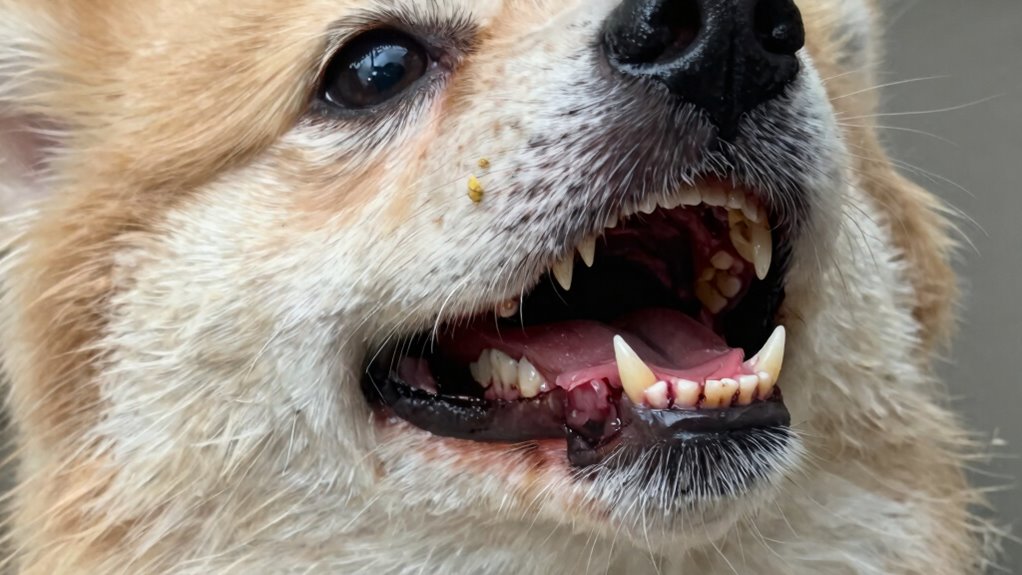

To spot dental trouble early in your dog before bad breath worsens, look for signs like red or swollen gums, difficulty chewing, drooling, or just a sudden change in eating habits. Plaque begins forming within months, and untreated buildup can cause pain and infections that spread beyond the mouth. By catching these signs early, you can prevent serious issues later. Keep going to understand how to protect your dog’s oral health effectively.

Get pet supplies delivered free with Prime
- Fast, free delivery on millions of items
- Prime Video, Amazon Music and more included
- Member-only deals all year
Key Takeaways
- Early signs include red, inflamed gums and plaque buildup around teeth.
- Persistent bad breath often indicates underlying bacterial or dental issues.
- Regular dental checkups can detect problems before bad breath becomes severe.
- Daily brushing and dental treats help prevent plaque and tartar accumulation.
- Ignoring early dental trouble can lead to pain, tooth loss, and systemic health risks.
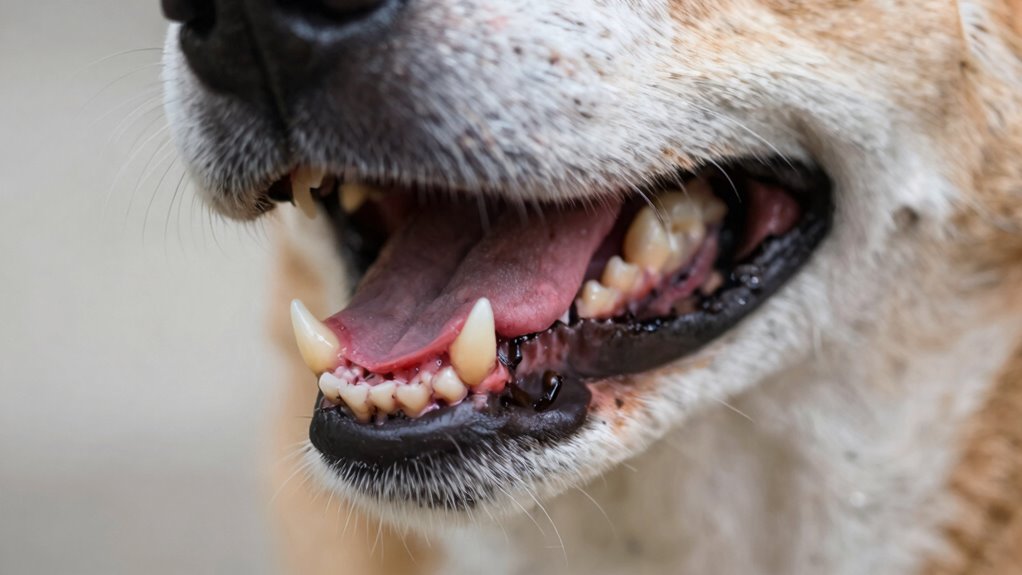
Have you ever wondered why your dog’s breath smells so bad or why they seem uncomfortable when eating? Often, the answer lies in their dental health, which can slip by unnoticed until it becomes a serious issue. One of the key steps to preventing severe dental trouble is regular dental cleaning. This process helps remove plaque buildup—a sticky film of bacteria and food particles—that forms on your dog’s teeth. If plaque isn’t removed promptly, it hardens into tartar, making it more difficult to clean and more likely to cause pain or infection.
Plaque buildup is a silent threat that can start as early as a few months old in some dogs. You might not see it at first, but it’s gradually working beneath the surface, irritating the gums and causing inflammation. As plaque hardens into tartar, your dog’s teeth become more susceptible to decay and periodontal disease. This condition often begins with slight redness or swelling around the gum line, but if ignored, it can lead to persistent bad breath, tooth loss, and even systemic health problems.
Plaque begins early, irritating gums and risking decay and systemic health issues if left untreated.
By scheduling regular dental cleanings with your veterinarian, you’re taking a vital step toward preventing more severe issues. During a dental cleaning, your vet will remove plaque and tartar that brushing alone can’t eliminate. They might also perform a thorough examination to check for loose teeth, gum disease, or other oral problems. Proper dental care doesn’t just stop at cleaning; it involves daily brushing, dental treats, and sometimes specialized diets to keep plaque from forming as quickly. Additionally, a consistent dental routine can significantly reduce the risk of plaque buildup and related complications. Regular dental checkups are also crucial because early detection can help address problems before they worsen.
Implementing proper dental hygiene practices at home can make a substantial difference in maintaining your dog’s oral health over time. Neglecting early signs of dental trouble can turn a minor problem into a significant health concern, especially since bacteria from dental infections can enter the bloodstream and affect other organs. Bad breath isn’t just unpleasant—it’s often a warning sign that bacteria and decay are taking hold. When you catch these issues early, a simple dental cleaning can restore your dog’s oral health and comfort. Over time, neglecting dental hygiene might cause your dog to experience pain when eating, difficulty chewing, or even infections that can spread beyond the mouth. Additionally, plaque formation can be accelerated by factors such as diet and breed susceptibility, making regular prevention even more crucial.
dog dental chews for plaque control
As an affiliate, we earn on qualifying purchases.
As an affiliate, we earn on qualifying purchases.
Frequently Asked Questions
How Often Should I Schedule Professional Dental Cleanings for My Dog?
You should schedule professional dental cleanings for your dog every 6 to 12 months, depending on their oral health. Regular cleanings help remove dental plaque that can lead to oral infections and bad breath. By staying consistent, you prevent plaque buildup and keep your dog’s teeth healthy. If your dog has a history of dental issues, your vet may recommend more frequent cleanings to maintain best oral health.
Are Certain Dog Breeds More Prone to Dental Issues Than Others?
Like a fragile porcelain vase, some breeds are more prone to cracks—certain dog breeds face higher breed predispositions to dental issues. Small breeds such as Chihuahuas and Yorkshire Terriers often carry greater dental health risks due to crowded teeth and smaller mouths. Larger breeds like German Shepherds also face dental challenges, but generally, breed predispositions highlight the importance of regular dental care tailored to your dog’s breed.
Can Homemade Diets Help Improve My Dog’s Dental Health?
Yes, homemade diets can help improve your dog’s dental health. Incorporate homemade treats and dental chews into their routine to promote cleaner teeth and freshen their breath. Crunchy homemade treats naturally scrub teeth, while dental chews can reduce plaque buildup. Just make certain ingredients are safe and nutritious. Regularly offering these options complements brushing and vet visits, ultimately maintaining better oral health and preventing severe dental problems.
What Are the Early Signs of Dental Pain in Dogs?
Did you know that over 80% of dogs show signs of dental disease by age three? You might notice early dental pain through symptoms like difficulty eating, pawing at the mouth, or drooling excessively. Look for plaque buildup and gum inflammation, which are common early indicators. Being attentive to these signs helps you catch issues before bad breath or severe discomfort develop, ensuring your dog stays comfortable and healthy.
How Can I Safely Brush My Dog’s Teeth at Home?
To safely brush your dog’s teeth at home, start by choosing a dog-friendly toothpaste and a soft-bristled toothbrush. Gently lift your dog’s lip and use small, circular toothbrush techniques, focusing on the outer surfaces. Keep sessions short and positive, offering treats afterward. Gradually increase brushing time, always being gentle to avoid causing discomfort. Consistent practice helps prevent dental issues and keeps your dog’s breath fresh.
Conclusion
Just like Icarus didn’t heed the warning to stay grounded, ignoring your dog’s dental health can lead to a fall from grace. By catching dental trouble early, you’re safeguarding your furry friend’s happiness and health—preventing bad breath from turning into a more serious crisis. Stay vigilant, brush regularly, and schedule checkups. After all, a healthy mouth isn’t just a smile; it’s a demonstration of your devotion, ensuring your pet’s golden years remain bright and trouble-free.
Fall Picks
fall essentials
As an affiliate, we earn on qualifying purchases.