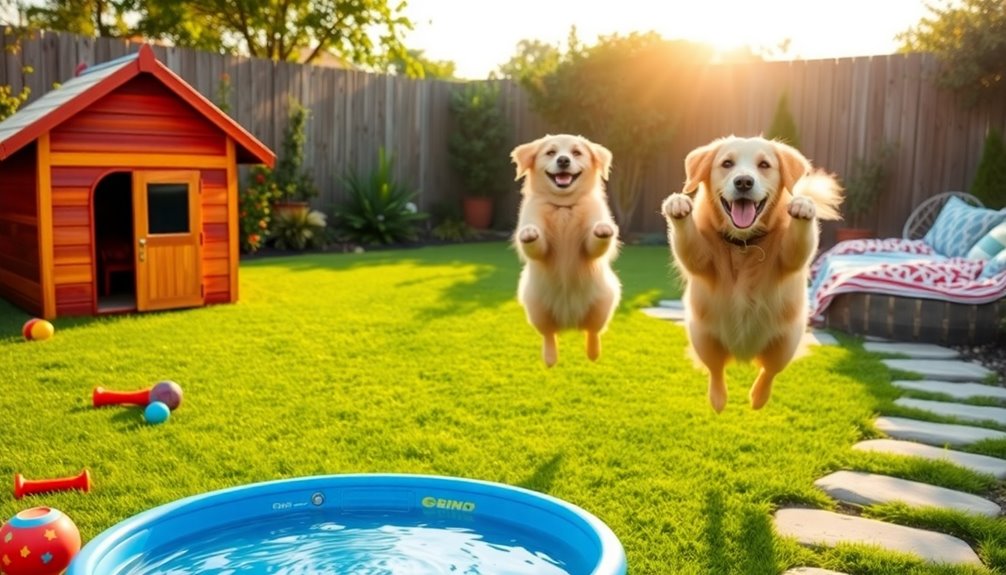
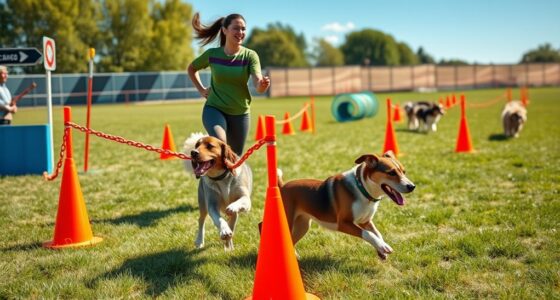
To channel your herding breed’s natural instincts, engage them in activities like herding balls, agility courses, or simulated livestock tasks. These exercises keep them mentally sharp and physically active, preventing boredom and behavioral issues. Tailoring activities to their specific traits, like quick commands for Border Collies or problem-solving for Australian Shepherds, works best. To discover more effective ways to meet your dog’s herding needs, keep exploring what suits their unique instincts.
Key Takeaways
- Design activities that mimic herding scenarios, like guiding objects or livestock, to engage natural instincts.
- Incorporate mental challenges such as problem-solving games and agility courses tailored to breed traits.
- Use positive reinforcement to build trust and improve obedience during herding exercises.
- Adjust activity complexity based on the dog’s skill level to prevent boredom or fatigue.
- Ensure safety while providing varied, stimulating tasks that promote both mental and physical well-being.
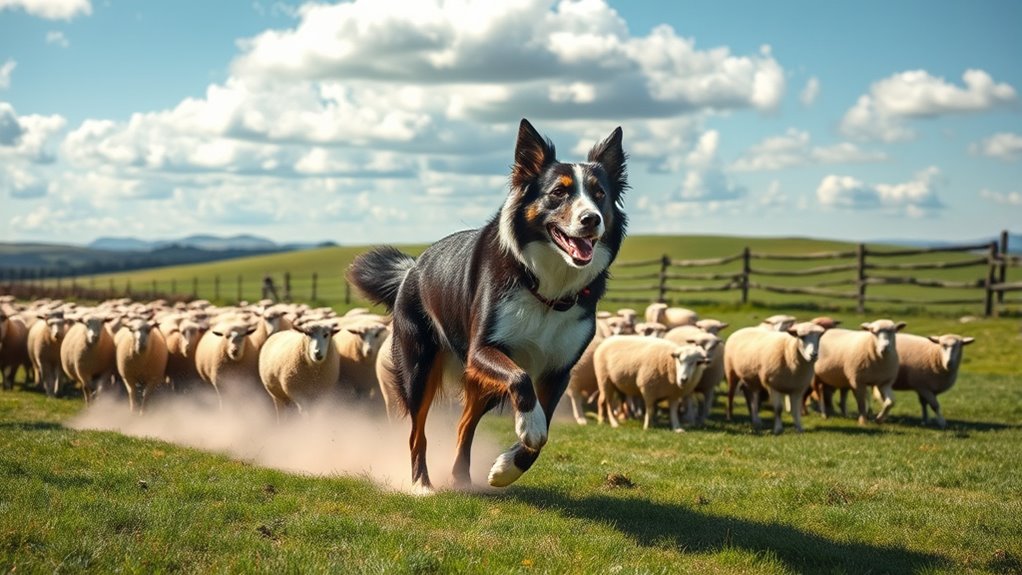
Herding activities are indispensable for keeping herding breeds mentally stimulated and physically active. These dogs have a natural instinct to control movement and gather objects, which makes engaging them in appropriate activities essential for their well-being. When designing herding exercises, it’s important to consider training techniques that align with their breed-specific traits. Each herding breed has unique characteristics, so customizing your approach helps tap into their instincts effectively. For example, Border Collies excel with quick, precise commands and thrive on mental challenges, while Australian Shepherds often enjoy tasks that involve problem-solving and agility. Understanding these nuances allows you to develop activities that keep them engaged and fulfilled.
Using effective training techniques is pivotal in channeling your herding dog’s natural drives. Start with basics like obedience commands to build a foundation of control and trust. Incorporate positive reinforcement, rewarding good behavior with treats, praise, or play, which encourages enthusiasm and helps your dog learn faster. Incorporate short, consistent training sessions that focus on specific herding tasks or commands, reinforcing desired behaviors without overwhelming your dog. As they grow more confident, gradually increase the complexity of the exercises, always keeping their breed-specific traits in mind. For breeds like Belgian Malinois or German Shepherds, you might emphasize agility and problem-solving tasks, while for Collies, focus on herding simulations that mimic real-life scenarios. Recognize that breed-specific traits influence how your dog responds to different activities and training methods.
Understanding your dog’s breed-specific traits also guides how you structure herding activities. For instance, some breeds are more intense and require higher activity levels, whereas others are more adaptable and enjoy a variety of tasks. Recognize signs of fatigue or boredom, and adjust your training accordingly. Incorporate varied activities to keep their minds sharp—such as chasing, sorting, or directing objects—and always ensure safety. Using agility courses, herding balls, or even practicing with livestock can simulate real herding conditions, which is both physically demanding and mentally stimulating. These exercises not only satisfy their instincts but also help prevent behavioral issues stemming from boredom or excess energy.

Tnoay 25'' Herding Ball for Dogs Horse with Cover | Dual Layered Herding Dog Jolly Ball for Australian Shepherds with Hand Pump | Herding Toys for Dog
ENTERTAINED ACTIVITY: This herding ball is designed to provide engaging and mentally stimulating activity for dogs, promoting exercise…
As an affiliate, we earn on qualifying purchases.
As an affiliate, we earn on qualifying purchases.
Frequently Asked Questions
How Can I Tell if My Dog Enjoys Herding Activities?
You’ll notice your dog enjoys herding activities if it displays positive dog body language, like wagging tail, focused stare, and enthusiastic movements. Signs of herding activity include circling, nipping, or guiding motions. If your dog seems energized, engaged, and happy during these activities, it’s a good sign they’re enjoying it. Pay attention to their enthusiasm and body cues—these tell you they’re thrilled to participate and are expressing their natural instincts.
Are Herding Activities Suitable for All Herding Breed Dogs?
You can’t paint all herding breeds with the same brush; some thrive, while others may not find herding activities suitable. Breed suitability varies, so it’s essential to take into account your dog’s individual personality and physical ability. By customizing activities to match your dog’s needs, you’ll keep them engaged and happy. If you push too hard, you might be barking up the wrong tree, so observe your dog’s responses and adapt accordingly.
What Safety Precautions Should I Take During Herding Exercises?
You should always prioritize safety during herding exercises by using proper equipment like well-fitted collars and leashes. Keep emergency preparedness in mind by having a first aid kit on hand and knowing how to respond quickly to injuries or accidents. Monitor your dog closely, avoid overexertion, and choose a safe, enclosed area to prevent escapes. These precautions help guarantee a fun and safe herding experience for your dog.
How Often Should Herding Activities Be Incorporated Into My Dog’s Routine?
You should incorporate herding activities into your dog’s routine 2-3 times a week, balancing training frequency to prevent overexertion. Mixing in activity variety keeps your dog engaged and prevents boredom. Pay attention to your dog’s energy levels and adjust sessions accordingly. Consistent, moderate herding exercises help channel natural instincts, improve focus, and strengthen your bond without causing stress or fatigue.
Can Herding Activities Help Reduce Behavioral Issues in My Dog?
Yes, herding activities can help reduce behavioral issues in your dog by providing an outlet for their natural instincts. Breed suitability plays a role; herding breeds thrive with regular activity. Incorporate herding exercises several times a week, matching the activity frequency to your dog’s energy level. This mental and physical stimulation helps curb boredom, anxiety, and unwanted behaviors, leading to a happier, well-balanced dog.

JMMPOO Dog Agility Training Equipment, 60-Piece Dog Obstacle Course Training Starter Kit Pet Outdoor Game with Tunnel, Agility Hurdle, Weave Poles, Jump Ring, Pause Box, Toy Balls and Storage Bag
UNIQUE & HEALTH: Running, jumping, playing, and most of exercising for maximum dog agility. Whether training for competition…
As an affiliate, we earn on qualifying purchases.
As an affiliate, we earn on qualifying purchases.
Conclusion
By engaging your herding dog in activities that channel their natural instincts, you help keep them happy and well-behaved. Think of it like a river flowing smoothly—when their instincts are properly directed, everything runs better. So, give your herding breed opportunities to work and play, and watch their confidence and happiness grow. Remember, a fulfilled dog is a balanced dog, and your active involvement makes all the difference.
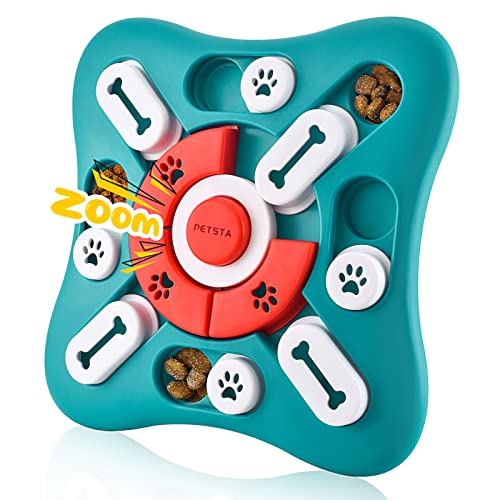
PETSTA Dog Puzzle Toys, Treat Dispensing Dog Enrichment Toys for IQ Training and Brain Stimulation, Interactive Mentally Stimulating Toys as Gifts for Puppies, Cats, Dogs
【PRODUCT SIZE】10 inch*10 inch*1.3 inch.
As an affiliate, we earn on qualifying purchases.
As an affiliate, we earn on qualifying purchases.

KipSip Herding Ball for Dogs – 18” Dog Training Ball with Handles for Medium & Large Breeds – Non-Chew Interactive Toy for Aussies, Heelers & Collies – Outdoor Exercise & Mental Stimulation Toy
►✅ FOCUSED ENERGY RELEASE & INSTINCT REDIRECTION Channel your dog’s natural herding drive. This large, bite-free interactive toy…
As an affiliate, we earn on qualifying purchases.
As an affiliate, we earn on qualifying purchases.