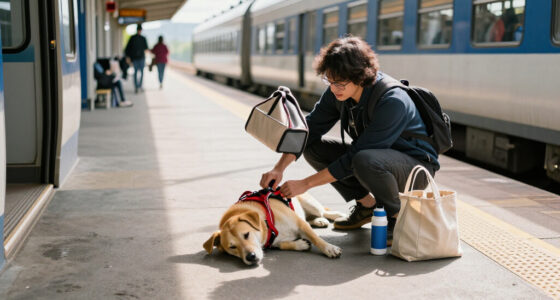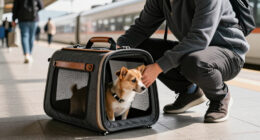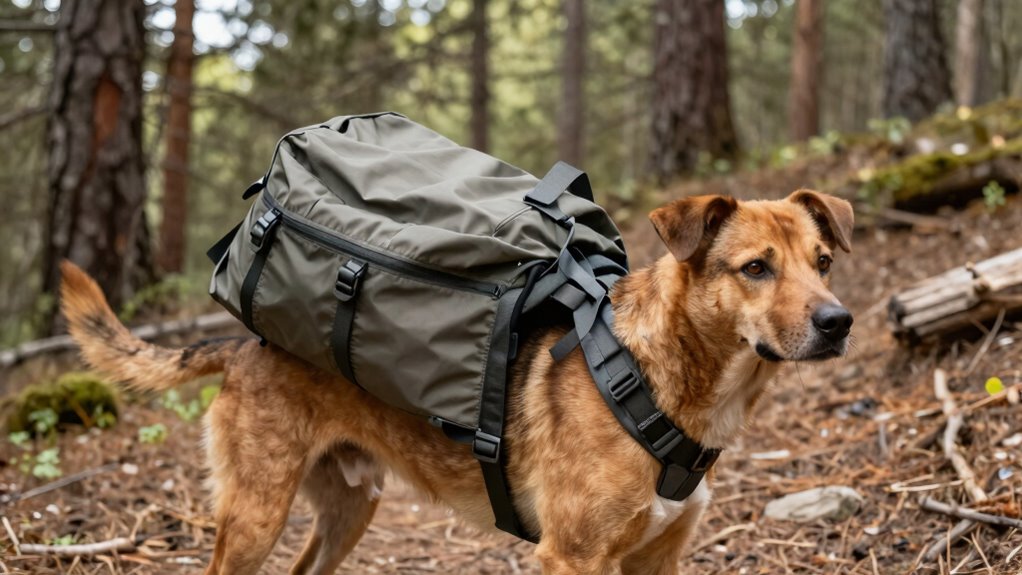

When choosing a hiking pack for your dog, aim to carry no more than 25-30% of their body weight to keep them safe and comfortable. Smaller or less conditioned dogs should carry less, while larger, experienced dogs can handle a bit more. Always make certain the weight is evenly distributed and the pack fits well to prevent chafing or strain. Want to know how to train your dog to use a pack effectively? Keep exploring for expert tips.

Get pet supplies delivered free — and shop member deals
- Fast, free delivery on millions of items
- Access to Prime Big Deal Days deals on October 6–7
- Prime Video, Amazon Music and more included
Key Takeaways
- Keep the pack weight between 25%-30% of the dog’s body weight for safety and comfort.
- Adjust the load based on the dog’s size, age, and conditioning level.
- Ensure weight is evenly distributed to prevent imbalance and chafing.
- Gradually increase pack weight during training to monitor tolerance.
- Watch for signs of fatigue or discomfort and reduce weight if needed.
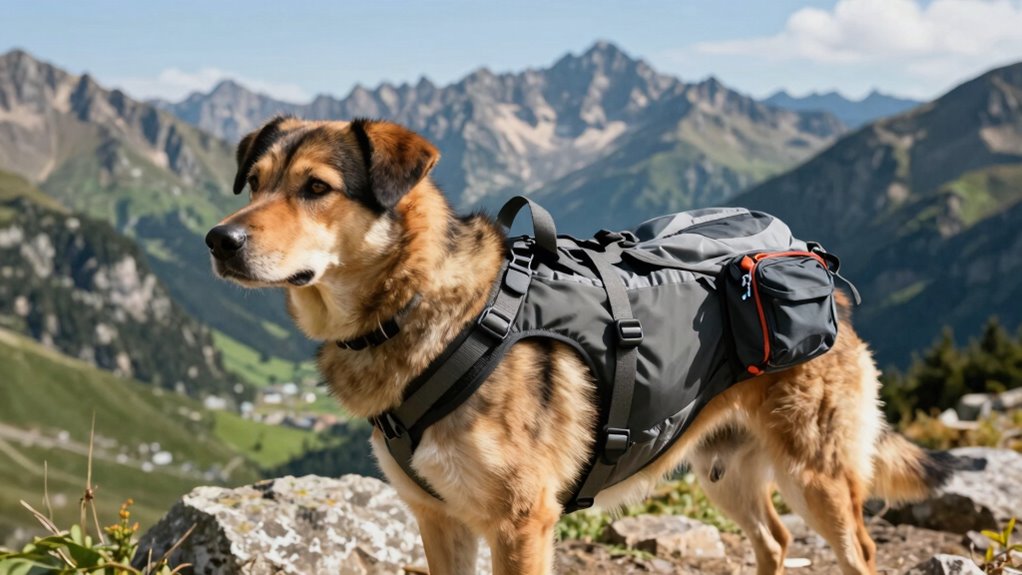
If you’re planning a long hike with your dog, a hiking pack can be a game-changer for both of you. Not only does it help carry essential gear like water, treats, and first aid supplies, but it also promotes good dog training by encouraging your pet to be more attentive and engaged. However, one of the most important aspects to consider when using a hiking pack is how much weight your dog can comfortably carry. Overloading your dog can compromise trail safety and lead to fatigue, injuries, or behavioral issues on the trail.
To determine a fair weight for your dog’s hiking pack, start by understanding your dog’s size, breed, and fitness level. A general rule of thumb is that a dog should carry no more than 25% to 30% of its body weight. Smaller breeds and less conditioned dogs tend to do better with less weight, while larger, more experienced trail dogs can handle a bit more. Keep in mind that the weight should be evenly distributed across the pack to avoid putting unnecessary strain on your dog’s joints and muscles. Proper fit is crucial—ill-fitting packs can cause chafing or imbalance, which can jeopardize trail safety.
Before hitting the trail, spend some time training your dog to get used to carrying a pack. Dog training that incorporates positive reinforcement helps your dog associate the pack with good things, making it easier for them to accept the weight. Gradually increase the load during training sessions, paying close attention to how your dog responds. If your dog shows signs of discomfort, such as limping, excessive panting, or reluctance to continue, it’s a sign to reduce the weight or reconsider using a pack altogether. Additionally, understanding biodiversity can help you choose more eco-friendly and sustainable gear options that minimize environmental impact. Being aware of trail conditions can also inform your packing choices and gear setup, ensuring a safer hike for your dog. It’s also important to consider dog anatomy to prevent injuries or strain when selecting and fitting packs.
Furthermore, considering environmental impact is beneficial when selecting gear, as eco-conscious choices can contribute to the preservation of natural trail areas for future hikes. Always check the trail conditions and terrain to ensure your dog’s safety. Steep, rocky, or slippery paths require extra caution, especially if your dog is carrying a load. Keep a close eye on your pet for signs of exhaustion or distress, and be ready to adjust or remove the pack if needed. Hydration is key—make sure your dog has easy access to water and take frequent breaks. Remember, the goal is to enjoy the hike together, not push your dog beyond their limits.
Ultimately, the right weight for your dog’s hiking pack depends on their individual needs and capabilities. Focus on proper training, trail safety, and listening to your dog’s cues, and you’ll both have a more enjoyable, safe adventure.
dog hiking backpack with adjustable straps
As an affiliate, we earn on qualifying purchases.
As an affiliate, we earn on qualifying purchases.
Frequently Asked Questions
Can All Dog Breeds Wear Hiking Packs Comfortably?
Not all dog breeds can wear hiking packs comfortably. You should consider breed-specific gear and dog pack safety to guarantee a proper fit and avoid discomfort. Small or brachycephalic breeds may struggle with weight or breathing issues, while larger, active breeds usually adapt well. Always check the pack’s fit and weight limits. Tailoring gear to your dog’s breed helps keep them safe, comfortable, and happy on hikes.
How Do I Train My Dog to Carry a Pack?
Imagine your dog’s back as a sturdy bridge, ready to bear a gentle load. To train your dog to carry a pack, start with a proper pack fitting, ensuring it sits comfortably without chafing. Gradually introduce light weight, focusing on even weight distribution. Use positive reinforcement and short sessions, building trust and strength. Over time, your dog will confidently stride, carrying the pack as seamlessly as a river flowing over smooth stones.
Are There Specific Hiking Packs for Puppies?
Yes, there are specific hiking packs for puppies. Look for puppy pack sizes designed for smaller frames and lighter loads. When training puppy packs, start with lightweight, well-fitted gear to guarantee comfort. Gradually increase weight and duration as your pup adjusts. Proper training with these puppy packs helps your dog build strength and confidence, making hikes enjoyable and safe for both of you.
What Signs Indicate My Dog Is Carrying Too Much Weight?
Think of your dog as a tightrope walker balancing a delicate pole. If they lag behind, pant excessively, or seem strained, it’s a sign they’re overburdened. For dog pack safety, watch for signs like difficulty walking, reluctance to move, or discomfort. Always respect canine load limits, ensuring your dog’s gear isn’t too heavy, and monitor them closely during hikes to prevent strain or injury.
How Often Should I Adjust the Pack During a Hike?
You should adjust the pack regularly during your hike to guarantee proper pack fitting and ideal weight distribution. Check your dog’s comfort every 15-20 minutes, especially after breaks or changes in terrain. Adjust straps if you notice shifting or discomfort, and make sure the weight stays balanced across both sides. Consistent adjustments help prevent strain, keep your dog comfortable, and assure a safe, enjoyable hiking experience.
Conclusion
When packing your dog for a hike, remember that about 10% of their body weight is a safe limit. For example, a 50-pound dog can carry around 5 pounds comfortably. Keeping within this range helps prevent strain and keeps your furry friend happy and healthy on the trail. Did you know that dogs have been used as pack animals for thousands of years? Properly weighted packs make certain your adventure is enjoyable for both of you!
Halloween Picks
halloween
As an affiliate, we earn on qualifying purchases.