Rally obedience combines skillful training with fun courses, making learning enjoyable for you and your dog. By practicing basic commands like sit, stay, and heel, you build teamwork and communication. Using treats, praise, or toys—tailored to your dog’s personality—you reinforce behaviors in a positive way. Proper equipment and a calm attitude help maintain focus. Keep practicing, celebrate small wins, and discover how this engaging activity can strengthen your bond. Continue exploring to learn more effective tips.
Key Takeaways
- Rally obedience combines basic and advanced commands in a fun, engaging course to enhance communication and teamwork.
- Courses are designed with varied obstacles and cues to keep training dynamic and enjoyable.
- Positive reinforcement and treats motivate dogs, making skill acquisition a rewarding experience.
- Clear signals and consistent practice improve performance while maintaining a playful atmosphere.
- Participating in fun courses boosts confidence, strengthens bonds, and encourages continued learning for both dog and owner.
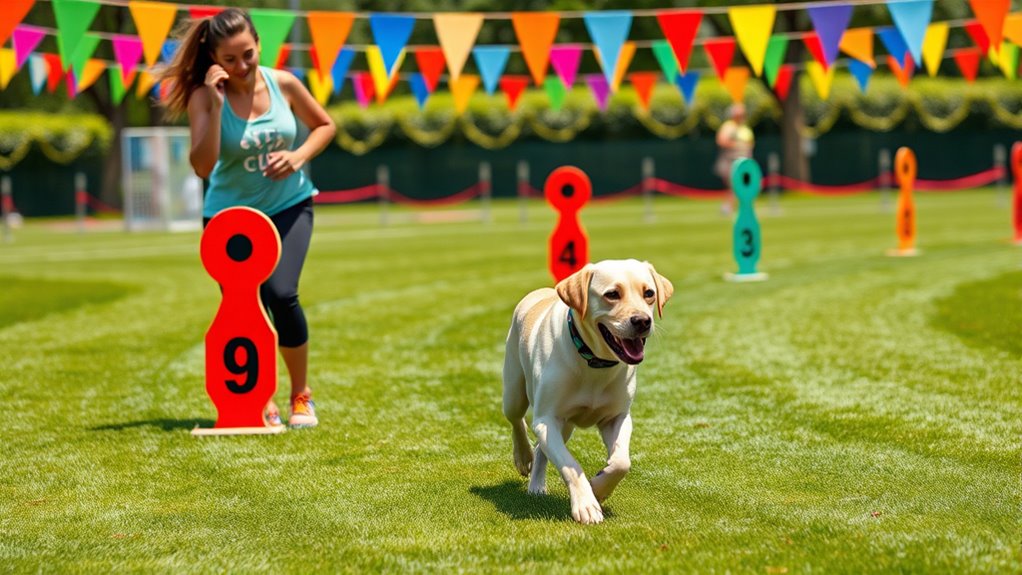
Have you ever wondered how dogs and their owners work together seamlessly in a fun, competitive setting? Rally obedience is the perfect example of this harmony, where teamwork and communication shine. To excel in rally, you need effective training techniques that build your dog’s confidence and responsiveness. Start with basic commands like sit, stay, and heel, then gradually introduce more complex cues. Consistency is key, so practice regularly, using positive reinforcement to encourage your dog’s progress. As you work through exercises, remember that patience and clear signals help your dog understand what you want. Training techniques should be tailored to your dog’s personality—some may respond better to treats, while others thrive with praise or toys. Over time, your bond strengthens, making each command more instinctive and reliable. Incorporating dog names into your training sessions can also boost your dog’s engagement and enthusiasm, as pairing commands with familiar names encourages faster learning.
Equally important are the equipment essentials. You don’t need fancy gear to get started, but having the right tools makes training more effective and enjoyable. A sturdy leash and collar or harness give you control without causing discomfort. Use a designated training area that’s free from distractions, helping your dog focus on you and the task at hand. Consider having a few treats on hand—small, tasty rewards motivate your dog to perform well. A clicker can also be a valuable tool, marking desired behaviors precisely and speeding up the learning process. During practice and competitions, a well-fitted, comfortable harness can help your dog move freely and confidently through the course. Additionally, portable water bowls and a towel for quick cleanups ensure you’re prepared for extended sessions. While equipment essentials support your training, remember that your attitude and consistency matter most. Your dog looks to you for cues, so maintaining a calm, positive demeanor encourages enthusiasm and trust.
As you progress in rally obedience, you’ll find that combining effective training techniques with the right equipment creates a smooth learning experience. The goal isn’t just to complete courses but to develop better communication and a deeper bond with your dog. Each successful maneuver on the course boosts your confidence and your dog’s enthusiasm, making training sessions more fun and rewarding. Rally is designed to be inclusive, so focus on progress rather than perfection. Celebrate small victories and keep practicing, knowing that your dedication leads to a stronger partnership. With patience, the right tools, and a love for your dog, you’ll find rally obedience not only enhances skills but also adds a lot of joy to your shared adventures.

Buddy Biscuits Trainers 10 Oz. Pouch of Training Bites Soft & Chewy Dog Treats Made with Bacon Flavor
Highly Palatable with natural pork liver base
As an affiliate, we earn on qualifying purchases.
As an affiliate, we earn on qualifying purchases.
Frequently Asked Questions
What Breeds Excel Best in Rally Obedience Competitions?
You’ll find that breeds like Border Collies, Shelties, and Golden Retrievers excel in rally obedience because of their breed suitability and enthusiasm to learn. Your training techniques should focus on consistency and positive reinforcement to keep their enthusiasm high. These breeds typically thrive with clear commands and fun, engaging courses, making them great partners in rally obedience competitions. With the right approach, you’ll see impressive performance from these intelligent, responsive dogs.
How Can I Train My Dog for Beginner Rally Courses?
Sure, training your dog for beginner rally courses is a breeze—just ignore the basics, right? Actually, start with simple commands and use positive reinforcement to motivate your pup. Keep training sessions short and fun, rewarding good behavior immediately. Consistency is key, so practice regularly, and be patient as your dog learns each skill. Remember, a little patience and positive reinforcement go a long way in building a confident, happy rally partner.
What Equipment Is Necessary for At-Home Rally Practice?
To practice rally obedience at home, you’ll need basic equipment like indoor agility gear—small cones, tunnels, or a weave pole set—and a clear space. Use treat training to reinforce commands and build your dog’s confidence. Set up simple courses, gradually increasing difficulty. This equipment helps simulate rally courses, making training fun and effective while strengthening your dog’s skills and responsiveness in a familiar environment.
Are There Age Restrictions for Participating in Rally Obedience?
You can participate in rally obedience at any age, but training modifications and safety considerations matter most, especially for young children or seniors. If you’re a parent or caregiver, you’ll want to focus on adapting courses to suit age and ability, ensuring safety at all times. For seniors, gentle exercises and shorter courses help maintain fun and safety. Always prioritize safety considerations and tailor training modifications to keep everyone engaged and secure.
How Do I Improve My Dog’s Focus During Courses?
To improve your dog’s focus during courses, start with distraction management by gradually introducing new environments and distractions, rewarding your dog for staying attentive. Incorporate focus training exercises, like eye contact and target work, into your practice routine. Keep sessions short and positive, using high-value treats to maintain motivation. Consistent training and patience will help your dog stay focused and confident during rallies, making the experience enjoyable for both of you.

Clicker Training for Obedience: Shaping Top Performance-Positively
As an affiliate, we earn on qualifying purchases.
As an affiliate, we earn on qualifying purchases.
Conclusion
Rally Obedience isn’t just a sport; it’s a whirlwind of joy and connection that transforms everyday training into an unforgettable adventure. As you and your dog navigate courses filled with twists, turns, and quick thinking, you’ll feel a bond stronger than steel. With each successful run, you’ll see your teamwork shine brighter than a thousand stars. Keep having fun, stay motivated, and watch your skills soar to heights you never imagined—this journey is truly a game-changer!
](https://m.media-amazon.com/images/I/41ji4lsxEIL._SL500_.jpg)
PHOEPET No Pull Dog Harness Medium Reflective Front Clip Vest with Handle,Adjustable 2 Metal Rings 3 Buckles,[Easy to Put on & Take Off](M, Orange)
[UPDATED VESION, EASY TO PUT ON & TAKE OFF] This dog harness has 3 buckles( One is on…
As an affiliate, we earn on qualifying purchases.
As an affiliate, we earn on qualifying purchases.
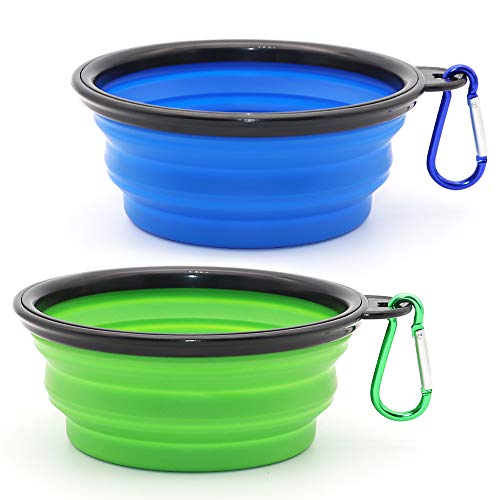
Dog Bowl Pet Collapsible Bowls, 2 Pack for Cats Dogs, Portable Pet Feeding Watering Dish for Walking Parking Traveling with 2 Carabiners (Small, Blue+Green)
COLLAPSIBLE DESIGN: These collapsible dog bowls are designed for space saving,easy to expand and fold away,portable and handy,foldable…
As an affiliate, we earn on qualifying purchases.
As an affiliate, we earn on qualifying purchases.