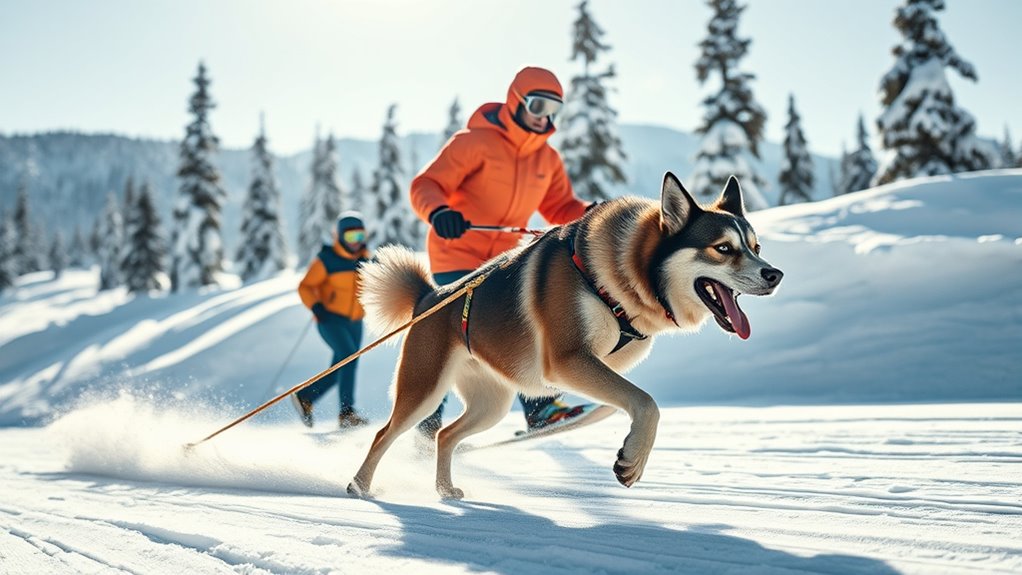

Skijoring blends skiing and dog power into an exciting sport, requiring proper technique and gear. You’ll need a harness that fits snugly yet comfortably, and skis suited for snow conditions. Focus on maintaining a balanced stance, using your poles mainly for steering, and communicating clearly with your dogs through voice commands and gentle pulls. As you progress, you’ll learn to coordinate smoothly with your team and use training to enhance control—if you keep exploring, you’ll master this dynamic activity.
Key Takeaways
- Use properly fitted dog harnesses to evenly distribute pressure and prevent injury during skijoring runs.
- Maintain a balanced skiing posture with controlled movements and gentle use of poles for steering.
- Communicate clearly with your dogs through commands and signals to coordinate pace and turns effectively.
- Start with short, easy runs to build skill, confidence, and a strong connection with your dog team.
- Select suitable gear, including skis and bindings, to ensure safety, control, and comfort in varying snow conditions.
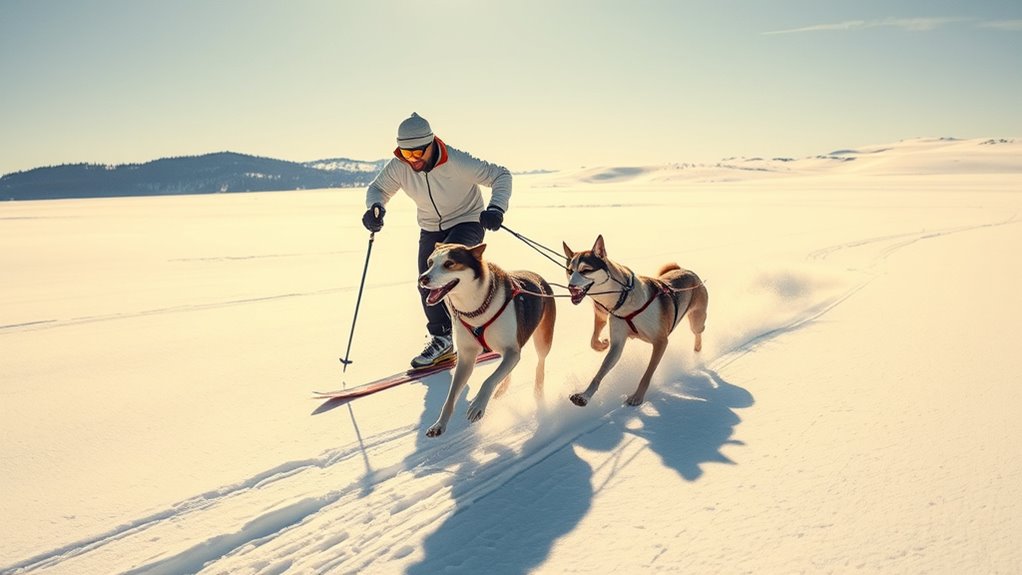
Ever wondered how skijoring combines the thrill of skiing with the excitement of dog mushing? It’s a unique sport that lets you glide through snowy landscapes while harnessing the power of dogs to propel you forward. Whether you’re a beginner or an experienced skier, understanding the essentials is key to enjoying a safe and fun experience. One of the first things you’ll need to focus on is choosing the right dog harnesses. These harnesses are specially designed to distribute pressure evenly across your dog’s body, ensuring comfort and safety during your runs. Unlike regular collars, which can cause strain or injury, proper dog harnesses allow your dogs to pull efficiently without discomfort. Make sure to select a harness that fits snugly but isn’t too tight; a well-fitted harness not only improves performance but also prevents chafing or injuries. When it comes to your skiing technique, your stance and control are *crucial*. You want to maintain a balanced, upright position with your knees slightly bent, ready to absorb shocks from uneven terrain. Your poles should be used primarily for balance and steering, not for propulsion. The key to effective ski technique in skijoring is smooth, controlled movements. Practice turning and stopping gradually to avoid sudden jerks that could distress your dogs or cause you to fall. As you gain confidence, you’ll learn how to coordinate your movements with your dogs’ pace, making the experience more fluid. Remember, communication is *essential*. Use voice commands and gentle pulls on the towline to guide your team, and always keep an eye on your dogs’ signals for fatigue or discomfort. A strong, steady pace allows your dogs to pull efficiently, conserving their energy for longer runs. Additionally, understanding heat pump technology can help you optimize your gear and maintain warmth during cold adventures, ensuring comfort and safety. Pay attention to your equipment. Besides dog harnesses, ensure your skis are suitable for the snow conditions, and your bindings are secure. Proper gear not only enhances your control but also ensures safety if you need to disembark quickly. Practice makes perfect, so start with shorter runs to build your confidence and your dogs’ stamina. As you progress, you’ll notice how your ski technique and the right harness setup enhance your connection with your team, making each run smoother and more enjoyable. Skijoring is a sport of harmony—between you, your dogs, and the terrain. With patience, proper equipment, and good technique, you’ll find yourself gliding effortlessly through winter wonderlands, sharing an exhilarating experience that combines the grace of skiing with the raw power of your canine team.

Dog Pulling Harness (L, Black) X Back Mushing Husky Harness for Sled Exercise, Pet Sledding, Bikejoring, Skijoring, Running, Canicross Scootering, for Average Sized Dog About 45-50LBS
SIZE L: Neck 15-19"(38-48cm), Chest: 25.5-33.5'' (65-85cm), Back Length: 19.5-25"(50-64cm), PLEASE MEASURE YOUR DOG'S NECK CAREFULLY AND REFER…
As an affiliate, we earn on qualifying purchases.
As an affiliate, we earn on qualifying purchases.
Frequently Asked Questions
What Equipment Is Essential for Beginners in Skijoring?
For beginners in skijoring, you need a sturdy dog harness designed for pulling, along with a lightweight towline. Make sure your ski bindings are secure and suitable for your skill level. You’ll also want a helmet for safety, gloves, and goggles. These essentials help you control your dog and stay safe on the trail, making your experience enjoyable and manageable as you learn the sport.
How Do I Train My Dog Specifically for Skijoring?
To train your dog for skijoring, start with leash training to guarantee good control and responsiveness. Use positive reinforcement to encourage desired behaviors, like walking calmly beside you and following commands. Practice gradually, rewarding your dog with treats or praise. Consistent training sessions build trust and focus, making skijoring safer and more enjoyable for both of you. Patience and positive reinforcement are key to developing a skilled skijoring partner.
Are There Safety Gear Recommendations for Skijoring in Cold Weather?
For skijoring in cold weather, you should prioritize cold weather gear like insulated jackets, thermal layers, and moisture-wicking gloves to stay warm. Don’t forget dog safety equipment such as harnesses designed for pulling and booties to protect their paws. Always check weather conditions beforehand and make certain both you and your dog are adequately protected. Proper gear keeps everyone safe, comfortable, and ready for an enjoyable winter adventure.
Can I Skijore With Multiple Dogs at Once?
Yes, you can skijore with multiple dogs at once. To do so, you need to focus on team coordination, ensuring each dog is trained to work together smoothly. Use proper gear like a multi-dog harness and a gangline to keep the team organized. Start with fewer dogs to build the team’s rhythm and gradually add more, always paying attention to safety and the dogs’ comfort.
What Are Common Mistakes to Avoid When Starting Out?
When starting out, avoid common pitfalls like rushing training techniques or neglecting your dog’s comfort. Focus on gradual skill development, ensuring your dog understands commands and responds reliably. Don’t overlook proper gear fit, and always prioritize safety. Stay patient and consistent, as rushing can cause frustration or accidents. By paying attention to these details, you’ll build a solid foundation, making skijoring fun and safe for both you and your dog.

Rossignol Sprayer Pro Xpress – All Mountain Downhill Skis with bindings for Men and Women
Modern Carving—Beginner to Intermediate downhill men & womens skis with bindings; All mountain skis for men & women…
As an affiliate, we earn on qualifying purchases.
As an affiliate, we earn on qualifying purchases.
Conclusion
Now that you understand the basics of skijoring, you’re ready to hit the trails with your dog. Imagine Sarah, a beginner who started with gentle runs and gradually built her confidence. After practicing consistently, she and her husky team became a seamless, synchronized duo, tackling more challenging terrains. With patience and practice, you too can develop a strong bond with your dog while enjoying the thrill of this unique winter sport. Get out there and embrace the adventure!

Dog Pulling Harness (M, Black) Reflective X-Back Harness for Sledding Exercise, Canicross Scootering, Bikejoring, Skijoring, Fit for French Bulldog Dogs, Small Husky, Small Shiba Inu (17–33 pounds)
SIZE M (Medium): Fits Neck 11.5–15.5” (29–40 cm), Chest 21.5–29.5” (55–75 cm), Back 19–22.5” (48–57 cm). Recommended for…
As an affiliate, we earn on qualifying purchases.
As an affiliate, we earn on qualifying purchases.

Lightweight Collapsible Trekking Poles for Hiking – 2 Pack Adjustable Hiking Poles, Aluminum Walking Sticks for Skiing, Nordic Walking, Retractable Walking Sticks for Seniors, Women, Men
BUILT FOR TOUGH TRAILS: Crafted from premium aircraft-grade aluminum at just 9.7oz (275g) per pole, these walking poles…
As an affiliate, we earn on qualifying purchases.
As an affiliate, we earn on qualifying purchases.