
To teach your dog to enjoy water safely, start slowly in shallow areas, using positive reinforcement like treats and praise to build confidence. Never force your dog into water—let them explore at their own pace—and make certain all safety gear, such as a well-fitting life jacket, is in place. Supervise closely and watch for signs of fatigue or anxiety. By gradually increasing water exposure and focusing on fun, you’ll help your dog develop trust and comfort around water. Keep exploring to discover more tips.
Key Takeaways
- Gradually introduce your dog to water in shallow areas using positive reinforcement.
- Use a well-fitting life jacket to ensure safety during swimming sessions.
- Teach basic commands like “come” and “stay” to maintain control around water.
- Monitor your dog’s behavior for signs of fatigue or panic, and avoid forcing them into water.
- Choose safe, monitored environments and check water conditions before swimming.
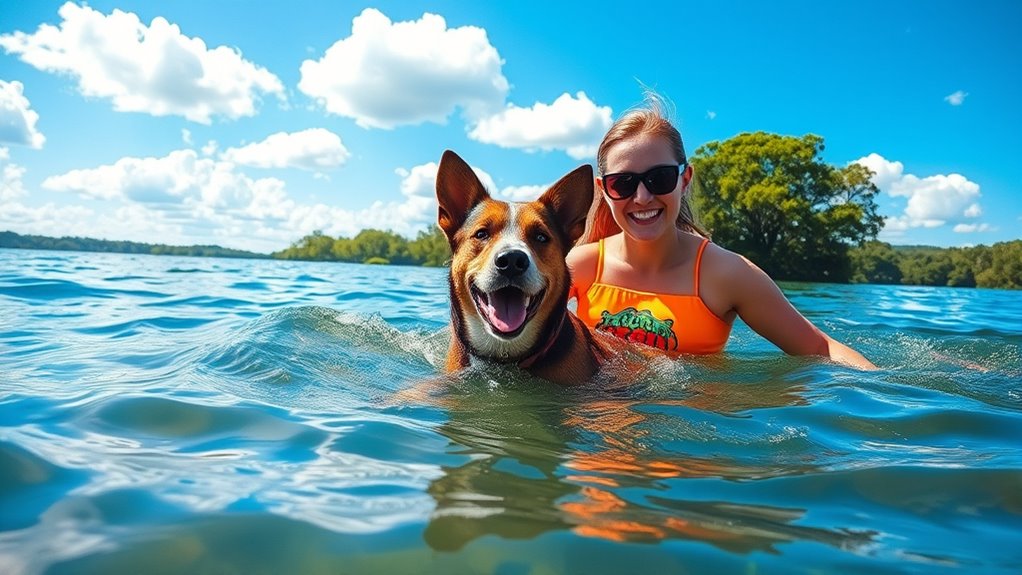
Swimming with dogs can be a fun and rewarding activity that strengthens your bond while providing excellent exercise for both of you. However, ensuring your dog’s safety during water adventures is essential. Before you plunge in, it’s vital to focus on dog safety, especially if your pup is new to swimming. Not all dogs instinctively know how to swim, so it’s your job to introduce water gradually and safely. Starting in shallow water allows your dog to get comfortable without feeling overwhelmed. Keep a close eye on their behavior—if they seem anxious or tired, it’s best to take a break. Remember, never force your dog into the water; patience and positive reinforcement go a long way.
Always introduce water gradually and supervise your dog to ensure safe, enjoyable swimming experiences.
Water training is a key component of helping your dog enjoy swimming safely. This involves teaching basic commands around water, like “come,” “stay,” and “leave it,” which can be lifesaving if your pup gets into trouble. It’s also helpful to introduce your dog to water in a controlled environment, such as a kiddie pool or a shallow section of a lake or pool. Use treats and praise to create positive associations with water, making the experience enjoyable rather than stressful. As your dog becomes more confident, you can gradually extend water training to deeper water, always ensuring they’re comfortable and safe.
Proper equipment plays an important role in water safety. A well-fitting life jacket designed for dogs can provide buoyancy and help prevent accidents, especially in open water or for less confident swimmers. Never underestimate the importance of supervision—never leave your dog unattended near water, even if they seem comfortable. Keep a close watch on their energy levels and breathing, and be ready to help them out at any sign of distress. Learning how to recognize signs of fatigue or panic can make all the difference.
Additionally, it’s beneficial to explore anime movies related to water adventures or animal stories, which can inspire and encourage your dog’s positive water experiences. Lastly, always plan your water outings thoughtfully. Check water conditions beforehand, avoid strong currents, and choose safe, monitored areas. Hydrate your dog well before and after swimming, and rinse off any chlorinated or saltwater to protect their skin and coat. By prioritizing dog safety and focusing on water training, you’ll help your furry friend develop confidence and a love for water, making each swim session safe, fun, and memorable for both of you.

Outward Hound Granby Splash Orange Dog Life Jacket, Medium
Dog Life Jacket: High-performance dog life vest provides maximum flotation for dogs of all swimming skill levels
As an affiliate, we earn on qualifying purchases.
As an affiliate, we earn on qualifying purchases.
Frequently Asked Questions
What Are Common Signs of a Dog’s Water Anxiety?
You’ll notice water fear signs in your dog’s body language, like trembling, tail tucked, or ears pulled back. Signs of water anxiety include trying to escape, resisting water entry, or vocalizing loudly. If your dog avoids eye contact or whines near water, it’s a clear sign of water fear. Recognizing these cues helps you gently address their anxiety and introduce water gradually, ensuring a safe and positive experience.
How Can I Prevent My Dog From Drinking Too Much Pool Water?
Think of your dog as a sponge soaking up what’s around them, but too much pool water can upset their stomach. To prevent this, supervise closely and offer fresh water often, encouraging thirst regulation. Use a designated water bowl, not the pool, and teach commands like “leave it” to stop them from drinking excess pool water. This way, you keep their water intake balanced and safe.
What Safety Gear Is Recommended for Water Training?
You should always use a well-fitting life jacket designed for dogs to keep them safe and buoyant during water training. Swimming goggles can also protect their eyes from chlorine or saltwater, making the experience more comfortable. Guarantee the gear fits properly and is comfortable for your dog, allowing freedom of movement. These safety items help prevent accidents and make water training enjoyable and secure for your furry friend.
How Long Should Initial Swimming Sessions Last?
You should start with short sessions, around 5 to 10 minutes, to keep your dog comfortable and avoid fatigue. Follow duration guidelines closely, gradually increasing as they build confidence. Keep session intervals brief, allowing plenty of water breaks and observation. Stay attentive to signs of tiredness or stress, and always prioritize your dog’s safety. A cautious, steady approach guarantees your dog learns to enjoy water without feeling overwhelmed.
Can Older Dogs Learn to Swim Safely?
Yes, older dogs can learn to swim safely, but you should consider their breed and age-related risks. Some breeds, like retrievers, are naturally good swimmers, while others, such as Bulldogs, may struggle. Always start slow, monitor their comfort, and consult your vet beforehand. Be patient, use flotation devices if needed, and keep sessions short to prevent exhaustion or injury, ensuring a positive experience for your senior pup.

BARKIE Dog Training Kit – Treat Pouch, Pet Training Fanny Pack, 2 Puppy Training Clickers, Ultrasonic Silent Whistle, 2-in-1 Whistle Clicker, Clicker Training Guide Booklet, Dog Poop Bag (Black)
【Rich Dog Training Kit】 Includes a training waist bag, a silicone dog treat bag, 2 dog training clickers…
As an affiliate, we earn on qualifying purchases.
As an affiliate, we earn on qualifying purchases.
Conclusion
Remember, about 60% of dogs enjoy swimming once they’re comfortable, making water a fantastic activity for bonding and exercise. By introducing your dog to water gradually and safely, you can help them develop a love for swimming while preventing accidents. With patience and positive reinforcement, you’ll both enjoy many fun, splash-filled days together. So, take the time to teach your furry friend water safety—you might just be surprised at how quickly they take to it!

Segzwlor Dog Float Toy – Interactive Training Bumper & Fetching Retrieving Dog Water Toys Dummy Outdoor – Lightweight for Float on the Water Pool Fetch Rope Pet Toys for Small, Medium, Large Dogs
DOG FLOAT TOY : We believe that interactive games will help strengthen the bond between you and your…
As an affiliate, we earn on qualifying purchases.
As an affiliate, we earn on qualifying purchases.

Kuoser Dog Life Jacket High Flotation, Reflective Dogs Life Vest for Swimming Boating, Adjustable Small Medium Large Dog lifejacket, Lightweight Dogs Life Preserver Rescue Handle Spring Summer Pool
【Dog lifejacket Size】XS, S, M, L, XL, XXL fits most breeds furry friend,our size of dog life vest…
As an affiliate, we earn on qualifying purchases.
As an affiliate, we earn on qualifying purchases.