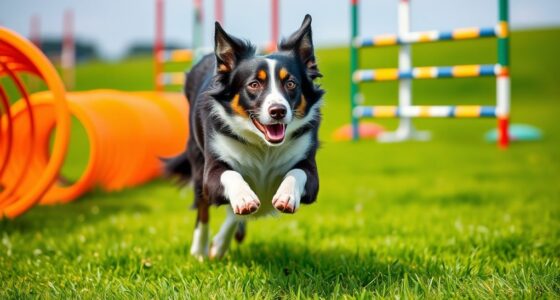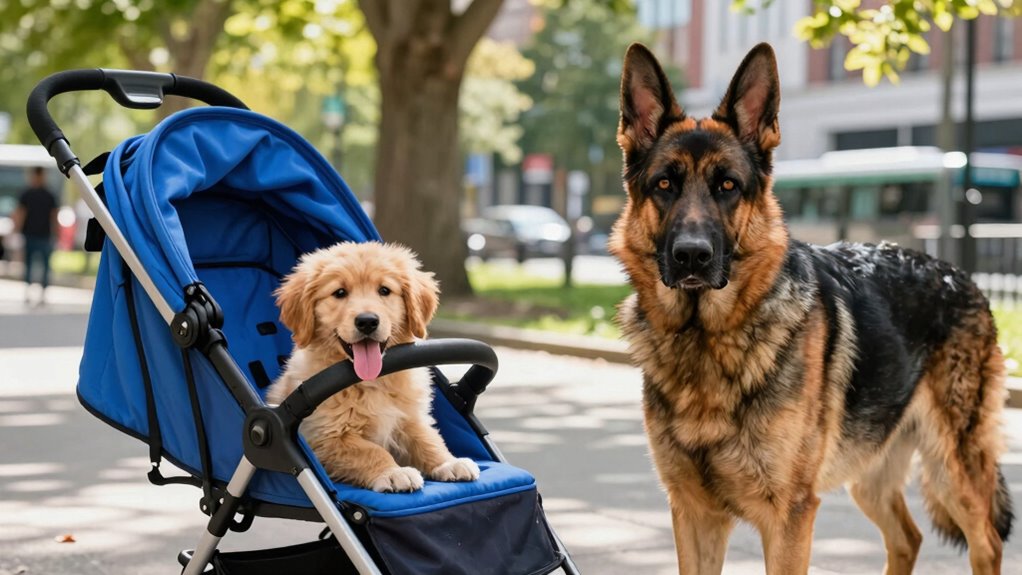

Dogs that love strollers often have social, enthusiastic, or adaptable personalities, and they respond well to gradual, positive introductions. Breed traits also play a role—some breeds are more comfortable with enclosed spaces, while others prefer to stay on their feet. If your dog shows resistance or stress, it may be due to their individual temperament or breed tendencies. Keep in mind that understanding your dog’s personality and applying proper training can help them enjoy stroller rides. Want to discover more?

Get pet supplies delivered free with Prime
- Fast, free delivery on millions of items
- Prime Video, Amazon Music and more included
- Member-only deals all year
Key Takeaways
- Social, enthusiastic, and well-socialized dogs tend to enjoy stroller rides more than reserved or anxious ones.
- Breed traits, such as energy level and territorial instincts, influence a dog’s acceptance of strollers.
- Gradual, positive exposure helps less adaptable dogs develop comfort with stroller use.
- Individual personality and past experiences play a significant role in a dog’s preference for strollers.
- Proper training and socialization increase the likelihood that a dog will enjoy stroller rides.
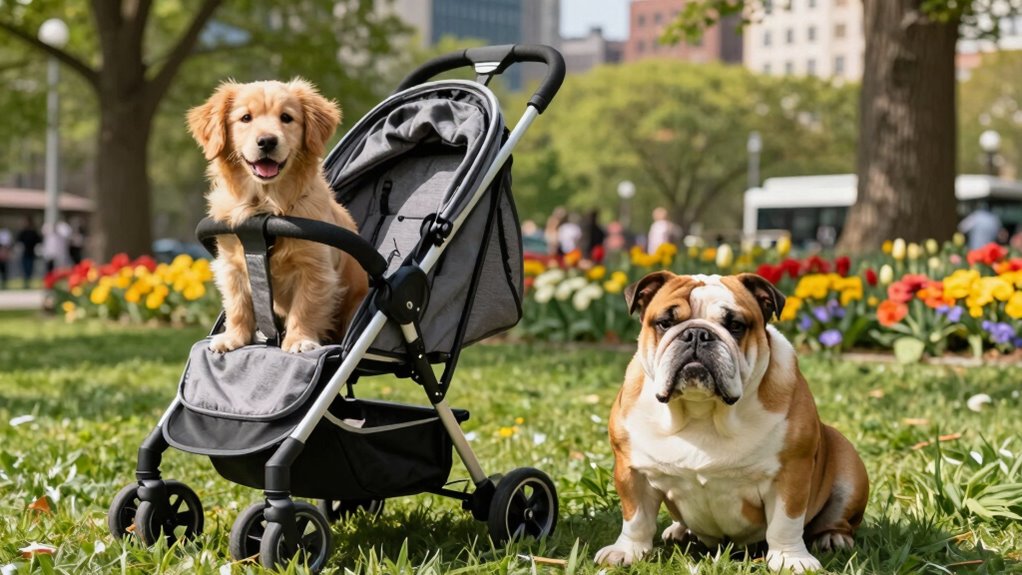
Many dogs have strong opinions about strollers—some jump right in and seem to enjoy the ride, while others resist at every turn. Your dog’s reaction can depend heavily on their behavioral traits and breed differences. If your pup is naturally curious and adaptable, they’re more likely to feel comfortable in a stroller. But if they’re cautious or more independent, they might see it as an intrusion or a confinement. Understanding these factors can help you figure out why your dog reacts the way they do and how to make the experience better for them.
Behavioral traits play a big role in how your dog perceives a stroller. Some dogs are inherently more social and enthusiastic to explore new environments, which makes them more open to riding. These dogs often enjoy the extra view and the chance to observe the world from a new perspective. On the other hand, dogs with more reserved or anxious temperaments might see the stroller as a threat or a source of discomfort. If your dog is naturally wary or tends to be nervous in unfamiliar situations, they might resist entering or feel stressed once inside. Recognizing these traits helps you gauge whether a stroller is suitable or if you need to gradually introduce them to it.
Behavioral traits influence your dog’s comfort with strollers—social, curious dogs often enjoy them, while anxious or reserved dogs may resist.
Breed differences also influence how your dog reacts to strollers. Certain breeds are known for their independence, alertness, or strong territorial instincts, which can make them less accepting of enclosed spaces. For example, some terrier breeds or small, energetic dogs might prefer to stay on their feet and explore on their own terms. Conversely, breeds that are more docile or adaptable—like retrievers or spaniels—may take to strollers more easily. Some breeds simply enjoy resting during outings, and a stroller becomes a comfy spot for them to relax without exerting themselves. Additionally, breed traits can help you better understand your dog’s comfort level with riding in a stroller. Knowing your dog’s breed traits can give you insight into their comfort level and help you decide whether strollers are a good fit. Moreover, observing your dog’s individual personality can be just as crucial in determining their preference and comfort with riding. A positive, gradual introduction—especially for less adaptable dogs—can make a significant difference in their acceptance of the stroller. Furthermore, training and socialization play a significant role in how your dog reacts, as well-socialized dogs tend to adapt more readily to new experiences like riding in a stroller. Understanding these factors, including how dog’s temperament influences their behavior, allows you to create a positive experience, whether your dog happily hops in or prefers to stay on foot. If your dog shows signs of stress or resistance, consider slow, positive exposure to help them feel more at ease.
As an affiliate, we earn on qualifying purchases.
Frequently Asked Questions
Can a Dog’s Breed Influence Their Preference for Strollers?
Yes, a dog’s breed can influence their preference for strollers. Breed temperament plays a role—more relaxed or social breeds tend to enjoy stroller rides, while more independent or energetic breeds might prefer to explore freely. Additionally, stroller design preferences matter; lightweight, spacious models suit small or senior dogs, making rides comfortable, whereas sturdier strollers appeal to breeds with specific needs. Your dog’s breed influences their comfort and enjoyment in a stroller.
How Does a Dog’s Age Affect Their Comfort in a Stroller?
Think of your dog’s age as a chapter in their story; as they grow, their comfort in a stroller evolves. Puppies, fueled by curiosity, often enjoy stroller rides, exploring the world anew. Seniors, seeking gentle comfort, may prefer resting in a stroller to alleviate joint pain or fatigue. Understanding these stages helps you choose the right environment, ensuring your dog feels safe and happy, whether they’re enthusiastic explorers or peaceful loungers.
Do Training Techniques Help Dogs Adapt to Strollers?
Yes, training techniques can help your dog adapt to strollers. Using behavior training and socialization techniques, you can gradually introduce your dog to the stroller, making it a positive experience. Start with short sessions, reward calm behavior, and slowly increase exposure. Consistent training helps your dog feel comfortable, reducing anxiety and encouraging acceptance of the stroller as a safe, enjoyable part of outings.
Are There Health Risks for Certain Dogs Using Strollers?
Think of a stroller as a gentle breeze or a wild rollercoaster—sometimes it’s just too much for certain dogs. For some, it can lead to health risks, especially if they experience exercise exhaustion or struggle with mobility issues. While strollers offer socialization benefits, pushing a dog beyond their limits might cause stress or injury. Always watch your pup’s cues and consult your vet to keep outings safe and enjoyable.
How Can I Tell if My Dog Is Stressed in a Stroller?
You can tell if your dog is stressed in a stroller by watching for dog anxiety signs like panting, yawning, or lip licking. Look for comfort indicators such as relaxed body posture, wagging tail, or calm breathing. If your dog seems tense, avoids eye contact, or tries to escape, these are signs they’re uncomfortable. Pay attention to these cues to make certain your dog feels safe and secure during stroller rides.
Conclusion
Think of the stroller as a mirror reflecting your dog’s trust and comfort—some see it as a safe harbor, others view it as unfamiliar territory. Your choice to embrace or avoid it symbolizes your understanding of their needs and fears. By respecting their feelings, you help build a bond that’s rooted in trust. Ultimately, whether they love it or reject it, you’re guiding their journey—like a lighthouse guiding a ship through uncertain waters.
Fall Picks
fall essentials
As an affiliate, we earn on qualifying purchases.