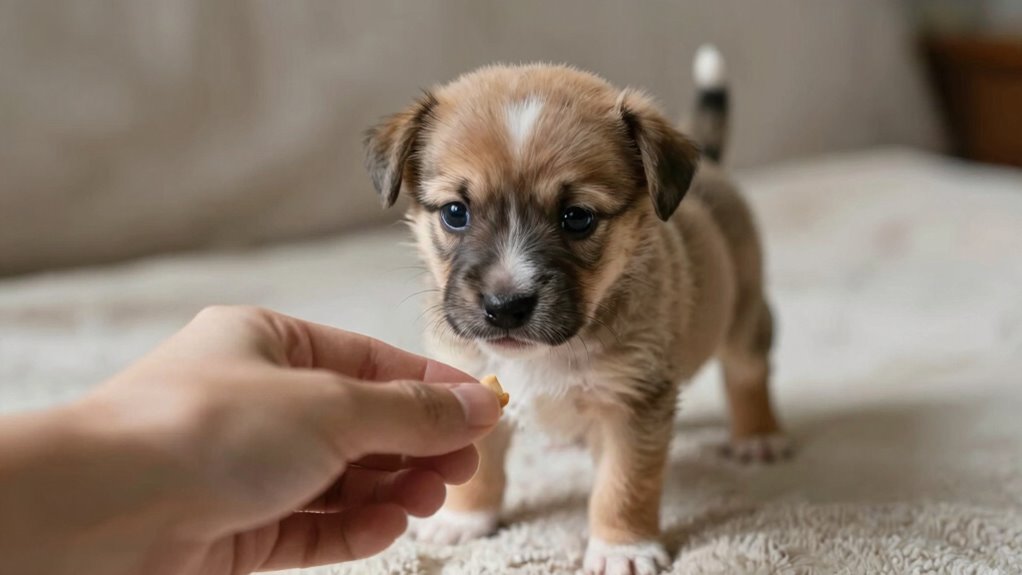

To build confidence in nervous puppies without overdoing it, you should use gentle socialization with positive, gradual exposure to new people, animals, and environments. Keep interactions short and rewarding, and avoid forcing your pup into unfamiliar situations. Use desensitization by slowly introducing stimuli at low volume or intensity, ensuring your puppy remains calm. Be consistent, patient, and attentive to their responses. By following these steps, you’ll help your puppy grow more confident over time—if you’re curious, there’s more to discover.

Get pet supplies delivered free with Prime
- Fast, free delivery on millions of items
- Prime Video, Amazon Music and more included
- Member-only deals all year
Key Takeaways
- Use gradual, positive exposure to new stimuli, increasing intensity only when the puppy remains calm.
- Keep training sessions short, consistent, and always end on a positive, successful note.
- Pair new experiences with treats or praise to foster positive associations and trust.
- Carefully monitor reactions, backing off if signs of stress appear to prevent overwhelm.
- Be patient, celebrate small progress, and avoid comparing the puppy to others for steady confidence building.

Starting the journey to build confidence in a nervous puppy can feel intimidating, but with the right approach, you can help your pup become more secure without overwhelming them. The key is to use gentle, positive methods that gradually expose your puppy to new experiences without causing stress. Socialization techniques are essential here, as they help your puppy learn to feel comfortable around different people, animals, and environments. Instead of forcing your pup into unfamiliar situations, take small steps. For example, invite a calm, friendly person over and let your puppy approach at their own pace. Keep interactions short and positive, rewarding your pup with treats or praise when they show curiosity or calm behavior. Over time, these small social interactions build their confidence naturally.
Desensitization methods are equally important. They involve carefully exposing your puppy to potentially scary stimuli at a low intensity and gradually increasing the exposure as they become more comfortable. For instance, if your puppy is nervous around loud noises, you might start with recordings of soft sounds and play them at a low volume. As your puppy remains calm, slowly increase the volume over days or weeks. This controlled exposure prevents your puppy from becoming overwhelmed and helps them associate the stimulus with safety, not fear. The goal is to create positive associations without rushing or forcing your pup to confront their fears all at once. Additionally, understanding the importance of positive reinforcement can significantly enhance your training success by encouraging your puppy’s good behavior.
Consistency is essential in both socialization techniques and desensitization methods. Keep training sessions short, frequent, and predictable, so your puppy knows what to expect. Always end on a positive note, with your puppy feeling successful and relaxed. If your puppy shows signs of stress or fear, back off and give them time to recover before trying again. Remember, patience and gentle encouragement are more effective than pushing too hard. It’s also helpful to recognize that gradual exposure fosters confidence more reliably than abrupt or intense encounters. Using training sessions that are consistent and tailored to your puppy’s needs can accelerate their progress and help solidify their confidence. Incorporating positive associations, such as pairing new experiences with treats or praise, can further reinforce your puppy’s trust and comfort. Being mindful of puppy responses and adjusting your approach accordingly ensures that training remains a positive experience for your pup.
As you work through these techniques, observe your puppy’s responses carefully. Every puppy is different, and some may need more time to adjust. Don’t rush the process or compare your pup to others. Instead, celebrate small victories—like stepping out of their comfort zone slightly or calmly greeting a new person—and use those as motivation to continue building confidence gradually. With persistent, gentle efforts, your nervous puppy will develop trust and security without feeling overwhelmed. Over time, they’ll learn that new experiences are safe and rewarding, paving the way for a more confident, happy companion.
As an affiliate, we earn on qualifying purchases.
Frequently Asked Questions
How Long Does It Typically Take to Build Confidence in a Nervous Puppy?
It usually takes several weeks to a few months to build confidence in a nervous puppy. Consistent puppy socialization and confidence-building exercises are essential. You should introduce new people, environments, and gentle challenges gradually. Keep sessions positive and short, avoiding overwhelming your pup. Over time, you’ll notice your puppy becoming more relaxed and confident. Patience and gentle guidance are vital, and every puppy progresses at its own pace.
Are Certain Breeds More Prone to Nervousness Than Others?
Certain breeds are more prone to nervousness, with studies showing that around 30% of dogs with breed-specific traits exhibit higher anxiety levels. Breed traits and temperament differences play a big role in this, so some breeds naturally tend to be more anxious or sensitive. You should pay extra attention to these breed tendencies, offer gentle socialization, and create a calm environment to help nervous puppies build confidence without overwhelming them.
Can Diet Influence a Puppy’s Confidence Levels?
Yes, diet can influence a puppy’s confidence levels. Proper nutrition supports healthy brain development, which impacts how your puppy responds to new experiences. Combine this with effective training techniques and socialization strategies to build confidence gradually. Providing a balanced diet helps reduce anxiety, making your puppy more receptive to positive interactions. Remember, consistent care and patience are essential for nurturing a confident, well-adjusted pup.
When Should I Seek Professional Help for My Nervous Puppy?
When your puppy’s anxiety triggers feel like storm clouds gathering, it’s time to seek professional help. If socialization efforts aren’t easing fears or if your pup shows signs of ongoing distress, a trainer or veterinarian can guide you through tailored strategies. Think of professional help as a lighthouse, guiding your nervous puppy safely through the rough waters of socialization and anxiety, ensuring they grow confident and secure.
How Do I Prevent My Puppy’s Nervousness From Worsening Over Time?
You can prevent your puppy’s nervousness from worsening by focusing on puppy socialization and maintaining a calm environment. Gradually expose your pup to new people, animals, and settings, ensuring each experience is positive and not overwhelming. Keep the environment peaceful at home, avoid sudden loud noises, and offer plenty of gentle reassurance. Consistent, positive interactions help build confidence without causing stress or setbacks.
Conclusion
By gently guiding your nervous puppy, you build trust, foster resilience, and create a foundation of confidence. With patience, consistency, and love, you nurture a brave soul who faces each day with curiosity, courage, and calm. Remember, every small step forward is a victory, like sunshine breaking through clouds, turning shadows into light. Keep encouraging, keep supporting, and watch your puppy blossom into a confident companion ready to explore the world by your side.
Fall Picks
fall essentials
As an affiliate, we earn on qualifying purchases.