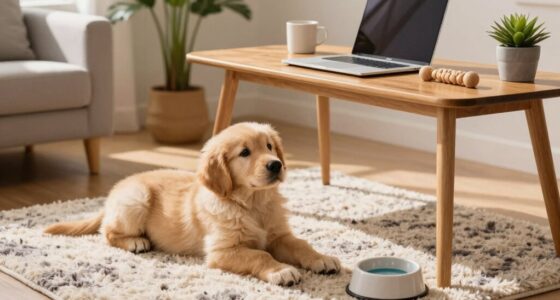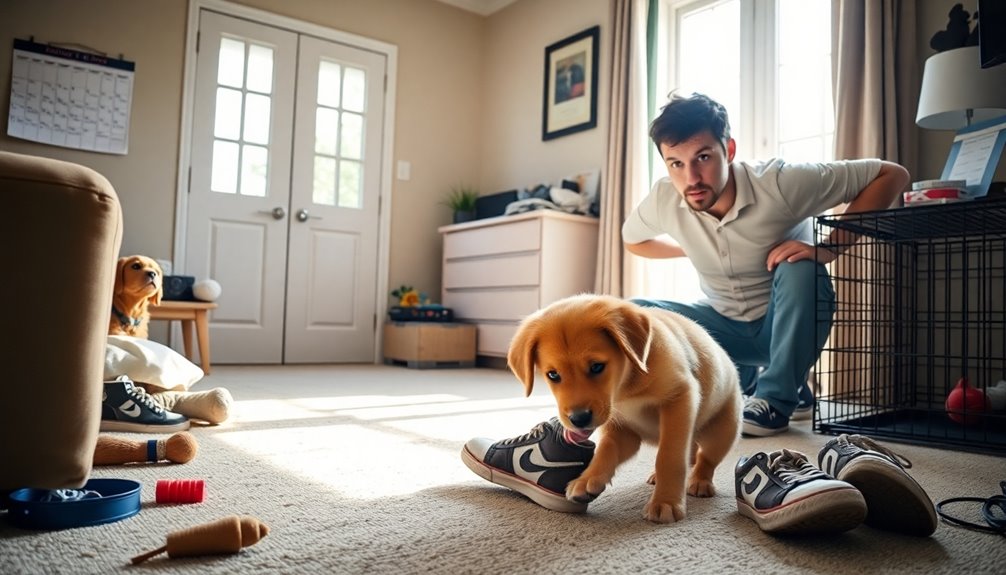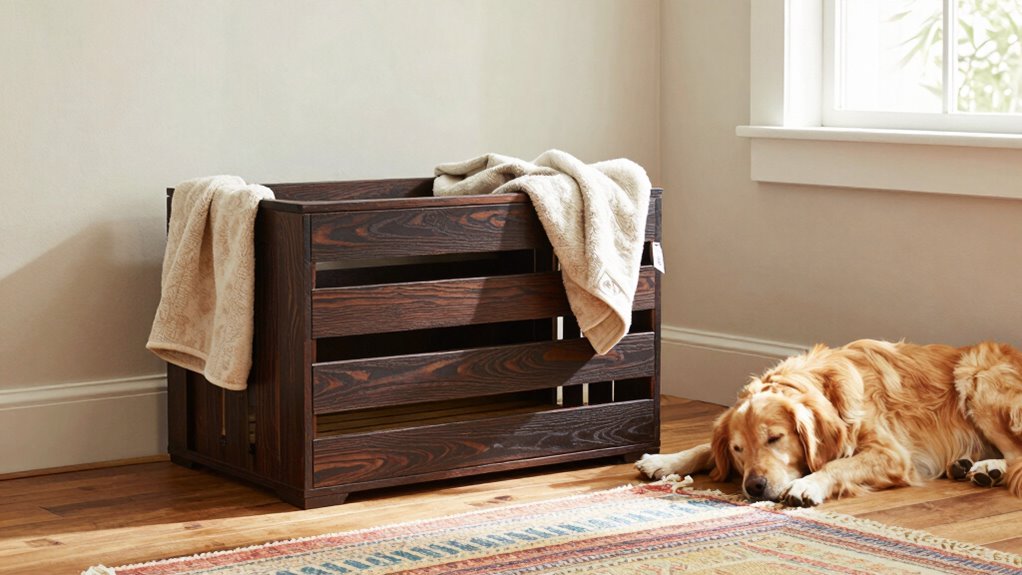

Where you place your dog’s crate at home really impacts their comfort, behavior, and well-being. Selecting a quiet, low-traffic spot with good ventilation and natural light helps your pup feel safe and relaxed. The right placement varies based on your dog’s age, personality, and your household layout. Proper positioning can prevent anxiety and promote trust. Want to discover the best crate spot for your dog? Keep exploring this guide to learn more.

Get pet supplies delivered free — and shop member deals
- Fast, free delivery on millions of items
- Access to Prime Big Deal Days deals on October 6–7
- Prime Video, Amazon Music and more included
Key Takeaways
- Choosing a quiet, low-traffic spot promotes comfort, reduces stress, and fosters positive crate associations.
- Proper placement in well-ventilated, naturally lit areas supports health and relaxation.
- Placing the crate near household activity enhances bonding but avoid noisy or disruptive locations.
- Seasonal and environmental factors like temperature and sunlight influence the crate’s suitability.
- Consistent, appropriate positioning helps build routine, security, and adapts to your dog’s changing needs.
As an affiliate, we earn on qualifying purchases.
Why Crate Placement Affects Your Dog’s Comfort and Behavior
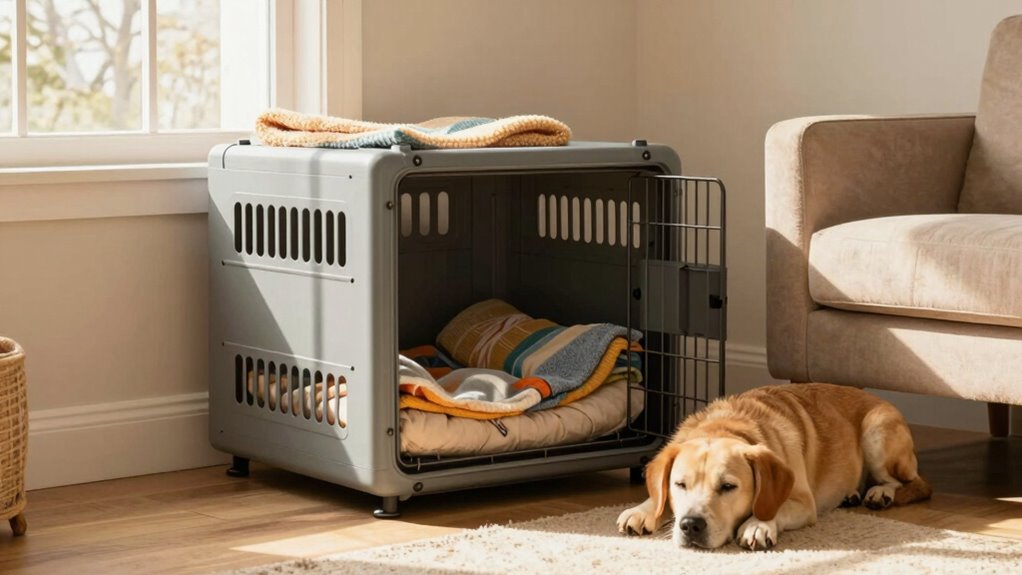
The placement of your dog’s crate can considerably influence their comfort and behavior. When you choose a spot, consider crate aesthetics—pick an area that feels cozy and blends well with your home’s decor. A visually appealing crate can make your dog feel more at ease. Additionally, adding crate accessories like soft bedding, calming toys, or a blanket can boost their comfort. Proper placement reduces anxiety, helping your dog view the crate as a safe retreat rather than a punishment. Avoid noisy or high-traffic areas that might overwhelm them or disrupt their rest. Instead, select a calm, quiet spot where your dog can relax without feeling isolated. Thoughtful crate placement fosters positive associations, making crate training smoother and more effective. Incorporating natural elements such as plants or earthy tones can further enhance the crate’s inviting atmosphere. Considering ambient noise levels is also important to create a peaceful environment that encourages rest and relaxation. Ensuring the environment is free from distractions can help your dog feel secure and comfortable in their crate. Creating a consistent routine around crate time can also help your dog feel more secure and reduce anxiety. Additionally, maintaining proper lighting in the area can influence your dog’s comfort and sense of security.
Key Factors to Consider When Choosing Your Dog’s Crate Spot

When choosing the perfect spot for your dog’s crate, focus on a quiet, low-traffic area where your dog can feel safe. Make sure the space has good ventilation and receives enough natural light to keep your dog comfortable. Considering these factors helps create a calming environment that encourages your dog to settle in easily. Additionally, being aware of ethical choices in pet care ensures that your decisions support your dog’s well-being and comfort. Incorporating appropriate DIY tools and safety tips can also help you set up the space safely and effectively. Recognizing dog behavior and preferences can further assist in selecting the most suitable crate placement for your pet, and understanding professional pet care standards can guide your overall approach to a healthy, happy environment. Properly managing portable oil radiator safety in your home can prevent accidents and maintain a safe area for your dog.
Quiet, Low-Traffic Area
Choosing a quiet, low-traffic area for your dog’s crate guarantees your pet feels secure and relaxed. This spot minimizes noise levels and avoids constant disruptions, helping your dog settle comfortably. When selecting the spot, consider these factors:
- Away from busy hallways or entryways, so foot traffic doesn’t disturb your dog.
- A corner of a room with minimal movement, providing a sense of enclosure.
- A spot away from household appliances that make noise, like washers or dryers.
- Close enough to children so your dog feels included but not overwhelmed by constant activity.
- Ensuring the space is free from distractions that could cause your dog to become anxious or restless.
This balance ensures your dog gets a peaceful environment, reducing stress and encouraging restful sleep. Keep noise levels low and proximity to children just right for a calm, secure crate space.
Adequate Ventilation and Light
Ensuring your dog’s crate is placed in an area with adequate ventilation and natural light is essential for their comfort and health. Good air circulation prevents stuffiness and reduces the risk of respiratory issues, making your dog more comfortable. Natural light helps regulate their sleep-wake cycle and boosts mood, especially if the crate is near a window. Avoid cramped or poorly ventilated spots like closets or corners with minimal airflow. Instead, choose a location where fresh air flows freely and sunlight filters in without direct heat or glare. Proper ventilation and light are simple yet crucial factors in crate placement that considerably impact your dog’s well-being. Additionally, considering all-waterpark hotels nearby can make your pet’s stay even more enjoyable if you’re planning trips. Furthermore, placing the crate in a spot with consistent ambient temperature helps prevent discomfort caused by extreme heat or cold. Ensuring the space is free from excessive noise can also help your dog feel more relaxed and secure. Incorporating proper air quality into your placement choices can further support your dog’s respiratory health and overall comfort.
Where Is the Best Room for Your Dog’s Crate? Pros and Cons of Living Room Placement

The living room often becomes the natural choice for placing your dog’s crate because it’s a central area where everyone spends time. It offers a cozy spot to integrate the crate decor seamlessly into your home. When considering crate size, think about these factors:
- Visibility – Your dog feels secure yet connected.
- Accessibility – Easy for you to reach and supervise.
- Space – Enough room to avoid clutter and allow movement.
- Flow – Maintains traffic patterns without obstruction. Additionally, selecting the right crate placement can influence your dog’s comfort and behavior, especially considering how seasons and weather conditions might affect their preference for certain areas seasonal considerations. Proper placement can also help prevent your dog from developing anxiety or other behavioral issues associated with confinement. Living room placement fosters social bonding and easy supervision but might tempt your dog to seek attention constantly. It’s ideal if you want your pup nearby but requires thoughtful crate size considerations to avoid crowding or making the space feel cramped. Ensuring that the crate placement aligns with your home’s layout can enhance your dog’s overall well-being. Also, understanding how environmental factors impact your dog’s comfort can help you make better placement decisions year-round. Being aware of seasonal changes can help you adapt the crate location to maintain your dog’s comfort across different weather conditions.
Should You Put the Crate in the Bedroom? Benefits and Drawbacks
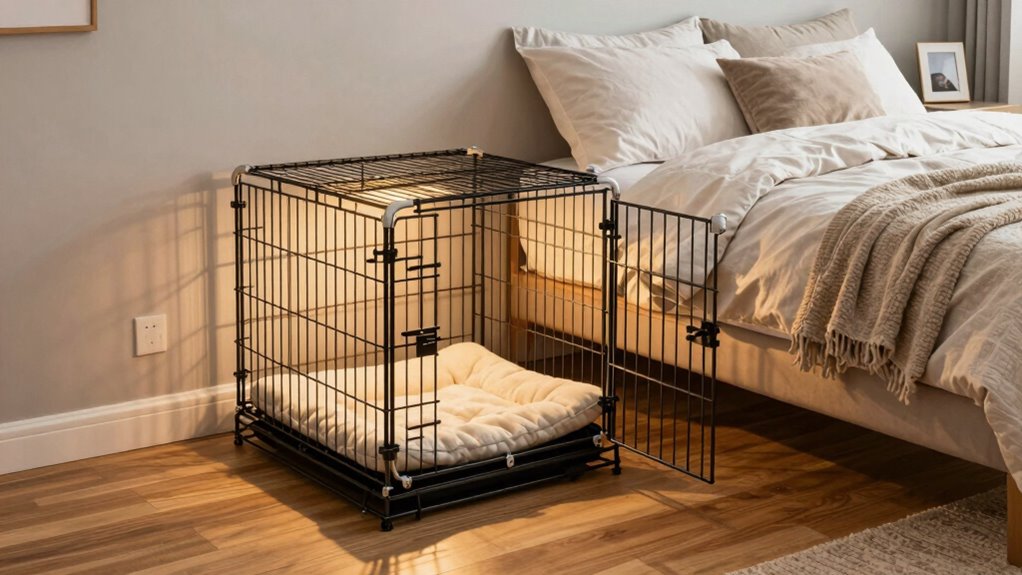
Placing the crate in your bedroom can help strengthen your bond and provide your dog with a sense of security. However, it might also disrupt your sleep or reduce room privacy. Consider whether the benefits of closeness outweigh the potential drawbacks for your household. Additionally, understanding user privacy and cookies can help you manage your personal space and comfort effectively. Evaluating home safety considerations can further ensure that the crate placement supports both your and your dog’s well-being. Being aware of privacy policies can also guide you in creating a comfortable environment that respects your personal boundaries. Incorporating cybersecurity measures into your home setup can help protect your private space from external threats. Recognizing home design principles can assist in optimizing the placement for both functionality and comfort.
Promotes Bonding and Comfort
Putting the crate in your bedroom can foster a strong bond between you and your dog, creating a sense of security and familiarity. This closeness encourages your dog to see you as a source of comfort, making training techniques more effective. Imagine your dog:
- Curling up peacefully at your feet, feeling safe.
- Listening intently during feeding routines, knowing you’re nearby.
- Gaining confidence with your consistent presence.
- Developing trust that strengthens your connection. Additionally, placing your crate in a quiet, comfortable spot can promote healthy indoor plant care habits by creating a calm environment for your dog to relax in. Incorporating emotional skills into your routine can further enhance your relationship and help your dog feel more secure in their space.
Furthermore, understanding dog behavior can guide you in optimizing crate placement for their comfort and well-being.
Disrupts Sleep Patterns
While having your dog’s crate in the bedroom can strengthen your bond, it may also lead to sleep disruptions. Your dog might wake you during the night or become overly dependent on your presence. Additionally, poor dog crate hygiene can cause odors or allergies, affecting your sleep quality. If you travel with your dog, maintaining cleanliness and practicing crate travel tips are essential to prevent stress and discomfort. To minimize sleep disturbances, consider placing the crate slightly away from your bed. Here’s a quick comparison:
| Aspect | Benefits | Drawbacks |
|---|---|---|
| Sleep Disruption | Can wake you at night | May cause inconsistent rest |
| Hygiene | Easy to clean in your room | Risks of odor if neglected |
| Bonding | Strengthens attachment | Overdependence may develop |
| Travel Readiness | Familiar environment | Less sleep comfort initially |
| Privacy | Less privacy for both | Can be disruptive to others |
Balancing crate placement helps protect your sleep while maintaining your dog’s well-being.
Affects Room Privacy
Deciding whether to keep your dog’s crate in the bedroom directly impacts your room’s privacy. Privacy concerns arise because the crate becomes a constant presence, influencing how private your space feels. Noise levels are also a factor—your dog’s sounds can be loud or sudden, disrupting your personal sanctuary. Imagine:
- The gentle hum of your dog breathing overnight.
- The occasional whimper or bark waking you up.
- The close proximity making your belongings feel less private.
- Your bed feeling more exposed with the crate nearby.
These elements can make your room feel less private, especially if your dog is noisy or restless. Weighing these privacy concerns helps determine if sharing your space with the crate is right for you.
Tips for Setting Up a Safe, Calm, and Comfortable Crate Space

Creating a safe, calm, and comfortable crate space begins with choosing the right location. Select a quiet area where your dog feels secure, avoiding high-traffic spots or noisy appliances. This promotes effective crate training and helps your dog associate the space with safety. Keep the crate away from direct sunlight or drafts to maintain a comfortable temperature. Use soft bedding to ensure coziness and encourage relaxation. To optimize space, ensure there’s enough room for your dog to stand, turn around, and lie down comfortably. Keep the crate accessible but not in the middle of daily activity zones. Consistent placement helps your dog settle faster and builds a sense of routine, making the crate a positive, calming retreat.
Common Mistakes to Avoid When Placing Your Dog’s Crate

Avoid placing your dog’s crate in areas with high foot traffic or constant activity, as this can make it difficult for your dog to relax and may cause anxiety. Instead, pay attention to details like crate size and door orientation. Here are common mistakes to avoid:
- Choosing a crate that’s too small, restricting movement and comfort.
- Placing the crate near loud appliances or noisy areas that disturb your dog’s peace.
- Ignoring crate door orientation—avoid doors that face busy hallways or direct sunlight.
- Positioning the crate where your dog feels isolated or trapped, such as in dark corners or closets.
How Your Dog’s Age and Temperament Influence the Best Crate Location

Your dog’s age and temperament play a significant role in choosing the best spot for their crate. For puppies or anxious dogs, a quiet area away from high traffic helps them feel secure. An older or more confident dog may prefer a more active spot, where they can observe household activity. Consider your dog’s temperament—shyer dogs benefit from a cozy, enclosed space, while more outgoing dogs may need room to stretch and explore. The crate size should match their age and size, providing enough room to stand, turn around, and lie comfortably. Adjusting the crate location based on these factors guarantees your dog feels safe and relaxed, making crate training smoother and more effective.
Adjusting Your Dog’s Crate Placement as They Grow and Change

As your dog grows and changes, it’s important to regularly reassess and adjust where their crate is placed. Your dog’s needs evolve, and so should their space. If you initially used decorative crates in the living room, consider shifting them to quieter spots as they mature. For outdoor placement, guarantee the crate is protected from harsh weather and pests. To help visualize, imagine:
As your dog matures, relocate their crate to quieter, safer spots for comfort and security.
- Moving the crate from a bustling hallway to a cozy corner for quiet times.
- Switching from a visible spot to a more private area for better rest.
- Replacing a fragile decorative crate with a sturdy outdoor one for safety.
- Positioning the crate in a shaded outdoor spot during warmer months.
Adjusting crate placement keeps your dog comfortable, secure, and happy as they grow.
Frequently Asked Questions
How Does Crate Placement Impact My Dog’s Anxiety Levels?
Placing your crate thoughtfully can substantially reduce your dog’s anxiety. If you position it in a quiet, comfortable spot with good crate comfort, your dog feels safe. Providing visual access to the room helps them stay connected and reassured. Avoid noisy or high-traffic areas. When your dog can see you and feels secure, their anxiety decreases, making crate time more calming and positive overall.
Can Crate Location Influence My Dog’s Training Success?
Yes, crate location can influence your dog’s training success. Place the crate in a quiet, accessible spot, considering your dog’s crate size and comfort. Use crate accessories like soft bedding or toys to make it inviting. When your dog feels safe and relaxed in its designated area, it becomes easier to establish routines, reduce anxiety, and reinforce positive behaviors, ultimately making training smoother and more effective.
Is It Better to Change Crate Spots Frequently or Keep It Consistent?
Think of your dog’s crate as a cozy home base — stability fosters trust. Keeping the crate in one spot enhances crate comfort and aligns with your dog’s preferences, making training smoother. Frequently changing locations can disrupt this sense of security and slow progress. So, it’s best to stay consistent, allowing your pup to settle in and feel safe, turning the crate into a positive space rather than a confusing one.
How Do Household Noise Levels Affect Crate Placement Choices?
Household noise levels substantially impact your crate placement choices. If your dog has sound sensitivity or is easily disturbed by household disturbances, place the crate in a quiet, low-traffic area to help them feel secure. Avoid noisy spots near appliances or high-traffic zones. Consistent placement in a calm environment reassures your dog, reducing anxiety and promoting better rest. Adjust as needed based on your dog’s reactions to different household sounds.
Should I Consider My Pet’s Past Experiences When Choosing Crate Placement?
Did you know your pet’s past experiences can make a big difference? You should consider your pet’s history when choosing crate placement because it influences their crate associations. If your dog has had positive crate experiences, placing it in a quiet, cozy spot can reinforce comfort. Conversely, if they had negative experiences, you might need to introduce the crate gradually in a familiar, calm area to build trust.
Conclusion
The right crate placement can substantially improve your dog’s comfort and behavior, leading to a happier, healthier pet. Did you know that dogs with cozy, well-placed crates sleep up to 16 hours a day? By considering your dog’s age, temperament, and your home layout, you create a safe space that fosters trust and calmness. Remember, small adjustments over time make a big difference in your dog’s well-being and your peace of mind.
Halloween Picks
halloween
As an affiliate, we earn on qualifying purchases.