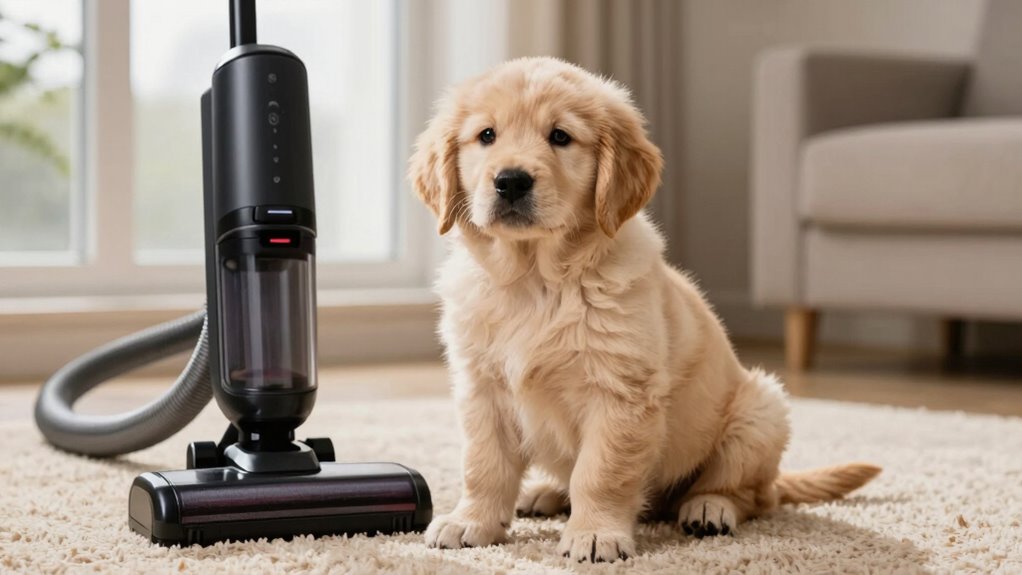

To introduce your puppy to the vacuum without fear, start by keeping it off and letting your puppy sniff and explore the vacuum at their own pace in a familiar space. Gradually turn it on at a low volume from a distance, praising and rewarding your pup for calm behavior. Slowly reduce the distance and increase exposure time, always ending on positive notes. Keep patience and consistency in your approach, and you’ll find more helpful tips if you continue exploring.

Get pet supplies delivered free with Prime
- Fast, free delivery on millions of items
- Prime Video, Amazon Music and more included
- Member-only deals all year
Key Takeaways
- Introduce the vacuum when it’s off and let the puppy explore it at their own pace.
- Gradually turn the vacuum on at low volume from a distance, offering treats and praise.
- Slowly move the vacuum closer while maintaining a calm, positive environment.
- Keep training sessions short, positive, and end with rewards to reinforce confidence.
- Use calming sounds or scent associations to help the puppy feel comfortable around the vacuum.
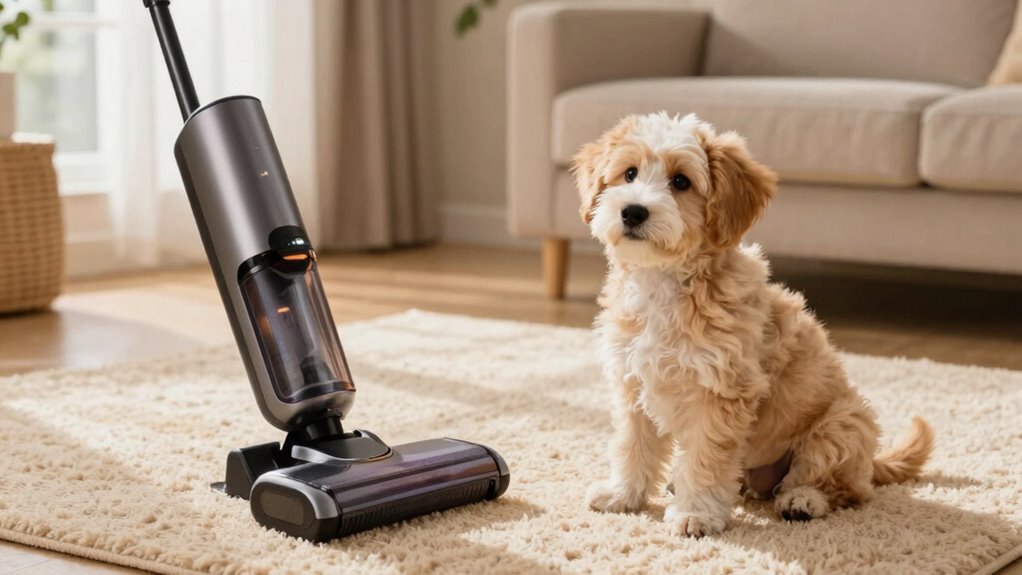
Introducing a puppy to the vacuum can be a challenging task, especially if your pup is naturally wary of loud sounds and unfamiliar objects. Many puppies display cautious or fearful puppy behavior when faced with new stimuli, and a vacuum’s noise can trigger this instinct. To help your pup overcome this fear, you need to approach the situation carefully, focusing on noise desensitization and positive associations. The goal is to gradually familiarize your puppy with the vacuum in a way that reduces their anxiety and builds confidence.
Start by introducing your puppy to the vacuum when it’s turned off. Let them sniff and explore it at their own pace. Keep the vacuum in the room where your puppy feels comfortable, so they don’t associate the object with stress right away. During this initial stage, provide treats and praise to create positive puppy behavior around the vacuum. This helps your pup associate the object with good things and reduces their wariness.
Introduce your puppy to the off, stationary vacuum with treats and praise to foster positive associations and reduce stress.
Once your puppy seems comfortable around the vacuum when it’s off, begin noise desensitization. Turn the vacuum on at a low volume, but don’t move it toward your pup yet. Keep the vacuum at a distance, and continue offering treats and praise. Over time, gradually decrease the distance between your pup and the vacuum while keeping the volume low. The key is to expose your puppy to the sound in a controlled way, so they don’t become overwhelmed. If your puppy shows signs of fear—such as trembling or retreating—pause the process, and give them some time to relax before trying again.
As your puppy becomes more accustomed to the noise, start moving the vacuum slowly in their presence, always at a comfortable distance. Keep sessions short and positive, ending on a good note with treats or play. Consistency is vital; repeat these steps daily, gradually increasing the exposure duration and proximity. Remember, patience is essential—every puppy responds differently, and some may need a longer time to adjust.
Throughout this process, your main focus should be on creating positive puppy behavior around the vacuum. Avoid forcing your pup into a situation where they feel overwhelmed, as this can reinforce fear. Instead, use gentle, consistent exposure combined with lots of praise and treats. Developing a training plan can help guide you through this gradual process more effectively. Incorporating beyond familiarization techniques, such as calming sounds or scent associations, can further enhance your puppy’s comfort. Using gradual exposure is a proven method to build confidence and reduce anxiety in fearful puppies. Additionally, understanding puppy behavior can help you better interpret and respond to your pup’s reactions. With patience and persistence, you can turn a stressful experience into a confident, fearless response to the vacuum.
puppy vacuum noise desensitization toys
As an affiliate, we earn on qualifying purchases.
As an affiliate, we earn on qualifying purchases.
Frequently Asked Questions
How Long Does It Typically Take for a Puppy to Stop Fearing the Vacuum?
It usually takes a few days to a few weeks for your puppy to stop fearing the vacuum, depending on their individual noise sensitivity. Consistent, gentle exposure helps reduce puppy anxiety. Keep vacuum sessions short and positive, offering treats and praise. Over time, your puppy will become more comfortable as they associate the noise with good things. Patience and gradual desensitization are key to overcoming their fear.
Should I Use Treats or Toys During the Introduction Process?
You should use treats or toys during the introduction process—because nothing says “trust me” like a tasty reward. Employ positive reinforcement and gradual exposure to make your puppy comfortable. Use treats or toys to distract and reward, turning the vacuum from a monster into a friend. This playful approach speeds up the process, helping your pup see the vacuum as just another curious object, not a source of terror.
What Are Signs That My Puppy Is Overwhelmed or Scared?
If your puppy shows signs like trembling, cowering, or trying to hide during noise desensitization, they’re overwhelmed or scared. In puppy socialization, it’s important to recognize these cues early. Take a step back, reduce the noise level, and give your pup time to adjust. Use gentle, positive reinforcement and patience to help them feel safe and build confidence around noisy appliances like vacuums.
Can Early Exposure Prevent Future Vacuum Phobias?
Early exposure is like planting seeds of confidence, preventing future vacuum phobias. By gradually introducing your puppy to noise desensitization and puppy socialization, you help them build resilience. Consistently, gentle handling and positive reinforcement teach your pup that the vacuum isn’t a threat. This proactive approach guarantees your puppy grows into a calm, confident dog, unafraid of household sounds that once seemed intimidating.
Is It Okay to Use a Different Vacuum Cleaner if My Puppy Is Still Fearful?
Yes, it’s okay to use a different vacuum cleaner if your puppy remains fearful. This can help if noise sensitivity is an issue, as different models produce varying sounds and vibrations. You might also try alternative methods, like gradually introducing the new vacuum or using treats to create positive associations. Patience is key—giving your puppy time to adjust with a different appliance can reduce anxiety and build confidence.
Conclusion
By gradually guiding your puppy with gentle patience and positive reinforcement, you’ll create a calm, confident companion who’s comfortable around the vacuum. Remember, consistency and kindness conquer fear, turning trepidation into trust. With time, your tiny pup will triumph over terror, transforming the terrifying task into a tame, tolerable routine. So, stay steady, be supportive, and celebrate small successes—soon enough, you’ll have a happy, fearless friend ready to face the vacuum without fuss or fear.
Evergreen bestsellers Picks
bestsellers
As an affiliate, we earn on qualifying purchases.