
Many myths about raw and grain-free diets for puppies can lead you astray. Raw diets may pose health risks from bacteria, and not all puppies thrive on them without proper safety measures. Grain-free diets are linked to heart issues, and removing grains might cause deficiencies if not carefully planned. It’s important to remember that a balanced diet suited to your puppy’s needs is key. Keep exploring to uncover the facts behind these common feeding beliefs.
Key Takeaways
- Raw diets can pose bacterial risks; proper sourcing and veterinary advice are essential for safety.
- Grain-free diets are linked to heart issues; grains like rice and oats can be nutritious and beneficial.
- Both raw and grain-free diets are not inherently superior; balanced nutrition depends on individual puppy needs.
- Homemade treats should supplement, not replace, balanced, vet-approved meals for puppies.
- Establishing regular feeding schedules and consulting vets ensures optimal nutrition and health for puppies.
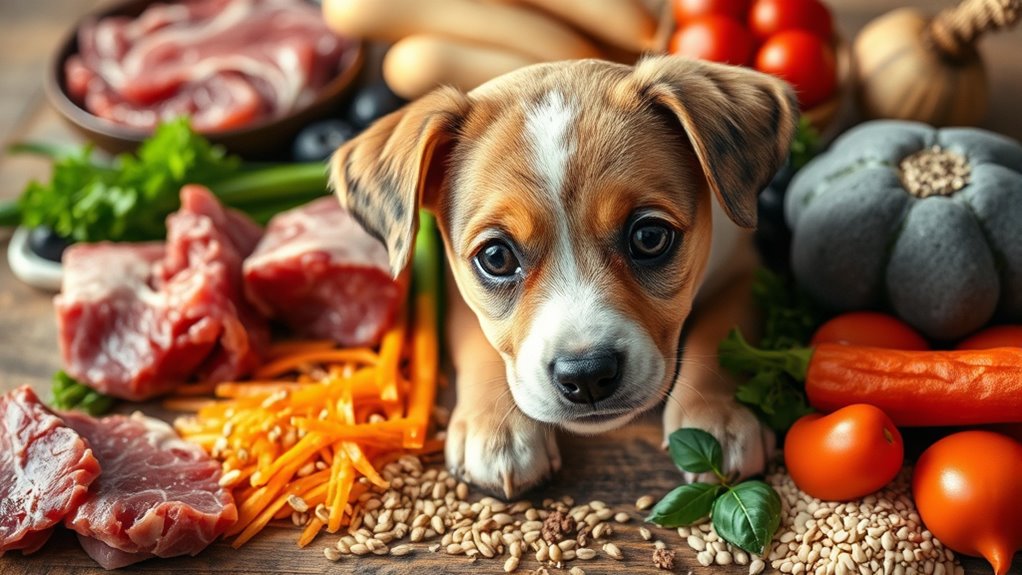
Many common beliefs about puppy nutrition are actually myths that can misguide new pet owners. One of the most widespread misconceptions is that homemade treats and supplements are always necessary to guarantee your puppy’s health. While offering homemade treats can be a fun way to bond and reward your pup, they shouldn’t replace balanced, vet-approved meals. Many owners think that supplementing with extra vitamins or minerals is essential, but in reality, most puppies get all they need from high-quality commercial diets. Over-supplementing can even cause health issues, so it’s best to consult your vet before giving your puppy any puppy supplements.
Homemade treats are fun but shouldn’t replace balanced, vet-approved puppy meals.
A lot of new owners believe that raw diets are inherently better than traditional kibble or wet food. The raw diet trend has gained popularity, but it’s important to understand the facts. Raw diets can pose risks of bacterial contamination, such as Salmonella or E. coli, which can affect both your puppy and your household. While some puppies may thrive on a carefully prepared raw diet, it’s not suitable for everyone. Proper safety measures, sourcing from reputable suppliers, and consulting your veterinarian are vital before switching to raw food. A balanced diet, whether commercial or homemade, should meet all your puppy’s nutritional needs without risking health hazards.
Similarly, many people assume that grain-free diets are superior because they’re more “natural.” However, recent studies link grain-free foods to heart issues in dogs, especially those with certain genetic predispositions. Grains like rice, oats, and barley can be excellent sources of fiber and energy. Eliminating grains without proper nutritional planning can lead to deficiencies. It’s essential to read ingredient labels carefully and choose foods that provide a balanced mix of nutrients suited to your puppy’s breed, size, and health status. Grain-free doesn’t automatically mean better; it simply depends on your puppy’s specific needs and your veterinarian’s advice.
Furthermore, some owners believe that puppies don’t need a set feeding schedule and can eat whenever they want. This isn’t true. Establishing regular feeding times helps regulate digestion and prevents overeating or obesity. Consistent schedules also make it easier to monitor your puppy’s appetite and health. Always follow portion guidelines recommended by your vet or the food manufacturer, and avoid giving excessive treats or table scraps. While treats are an important training tool, they should be given in moderation, and homemade treats should complement a balanced diet—not replace it.
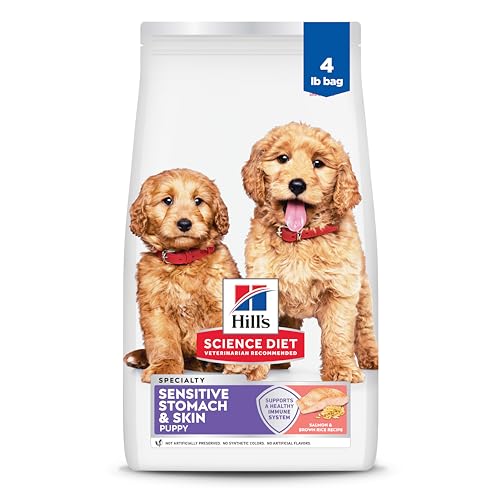
Hill's Science Diet Puppy Sensitive Stomach & Skin Dry Dog Food, Salmon & Brown Rice, 4 lb. Bag
Triple support for stomach, skin and immune system health
As an affiliate, we earn on qualifying purchases.
As an affiliate, we earn on qualifying purchases.
Frequently Asked Questions
How Do I Know if My Puppy Needs a Raw Diet?
You’ll know if your puppy needs a raw diet if they have specific health issues or if your vet recommends it. Pay attention to their feeding frequency, ensuring they get enough nutrients. When considering a diet shift, start gradually, usually around 8-12 weeks old, and monitor their response. Consult your vet to determine if a raw diet suits your puppy’s needs and to plan the best transition timing.
Are Grain-Free Diets Suitable for All Puppy Breeds?
Like a tailored suit, grain-free diets suit some breeds better than others. They offer benefits like improved digestion and energy, but aren’t ideal for every breed. Breed-specific nutrition is key; smaller or active breeds may thrive on grain-free, while others need grains for balanced nutrients. Consult your vet to determine if a grain-free diet aligns with your puppy’s unique needs, ensuring ideal health and growth.
Can a Raw Diet Prevent Common Puppy Health Issues?
A raw diet can support your puppy’s bone and digestive health, but it doesn’t guarantee prevention of common health issues. You need to make certain it’s balanced with essential nutrients and safe ingredients. Properly prepared raw diets can reduce inflammation and improve nutrient absorption, helping your pup stay healthier overall. However, consult your vet to tailor the diet specifically for your puppy’s breed, age, and needs for the best results.
What Are the Signs of Nutritional Deficiency in Puppies?
You’ll notice your puppy’s health waning if they show signs like dull coat, flaky skin, or sluggish behavior—these are clues you’re facing vitamin deficiencies. Behavioral changes, like increased irritability or decreased activity, can also signal nutritional gaps. Keep an eye out for these red flags, because early detection helps you adjust their diet, ensuring they stay vibrant and full of life’s spark.
How Often Should I Switch My Puppy’s Diet?
You should switch your puppy’s diet gradually over 7 to 10 days, adjusting the feeding schedule during the diet changeover to prevent digestive upset. Typically, change the food every few days, increasing the new diet’s proportion while decreasing the old. Keep an eye on your puppy’s response and consult your vet if you notice any signs of discomfort. Consistency and patience help ensure a smooth transition for your puppy.

Nature's Recipe Grain Free Puppy Dry Dog Food, Chicken, Sweet Potato & Pumpkin Recipe, 4 lb. Bag
PUPPY DOG FOOD: Contains one (1) 4-pound bag of Nature's Recipe grain free dry dog food for puppies
As an affiliate, we earn on qualifying purchases.
As an affiliate, we earn on qualifying purchases.
Conclusion
So, next time you hear about raw or grain-free diets, remember that myths often blend with facts. Don’t let coincidence steer your choices—your puppy’s health depends on informed decisions. You might find yourself surprised how science and common sense align when you look past the hype. Ultimately, trusting balanced nutrition helps your puppy thrive, proving that sometimes, the simplest truths are the ones that truly make a difference.

FAFAFLYER Dog-Cat Food-Scoop Measuring-Cup – 304 stainless steel material.1-Cup capacity. Precision scale measurements
304 STAINLESS STEEL MATERIAL: This dog food scoop is made of high quality 304 stainless steel to ensure…
As an affiliate, we earn on qualifying purchases.
As an affiliate, we earn on qualifying purchases.

Blue Buffalo Baby Blue Training Treats Natural Puppy Soft Dog Treats, Savory Chicken 4-oz Bag
REAL CHICKEN FIRST: Baby BLUE Training Treats are made with delicious real chicken as the first ingredient, plus…
As an affiliate, we earn on qualifying purchases.
As an affiliate, we earn on qualifying purchases.