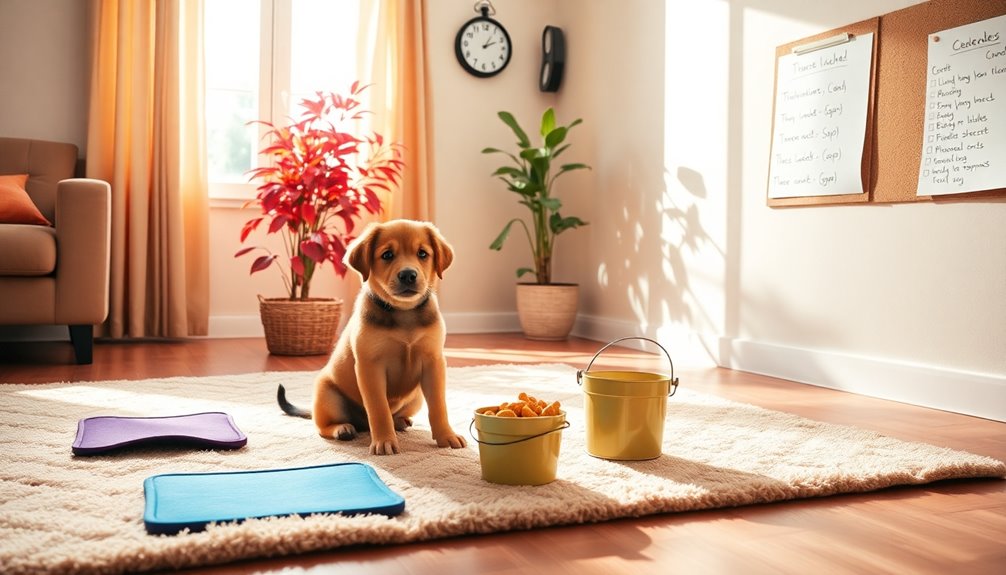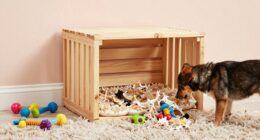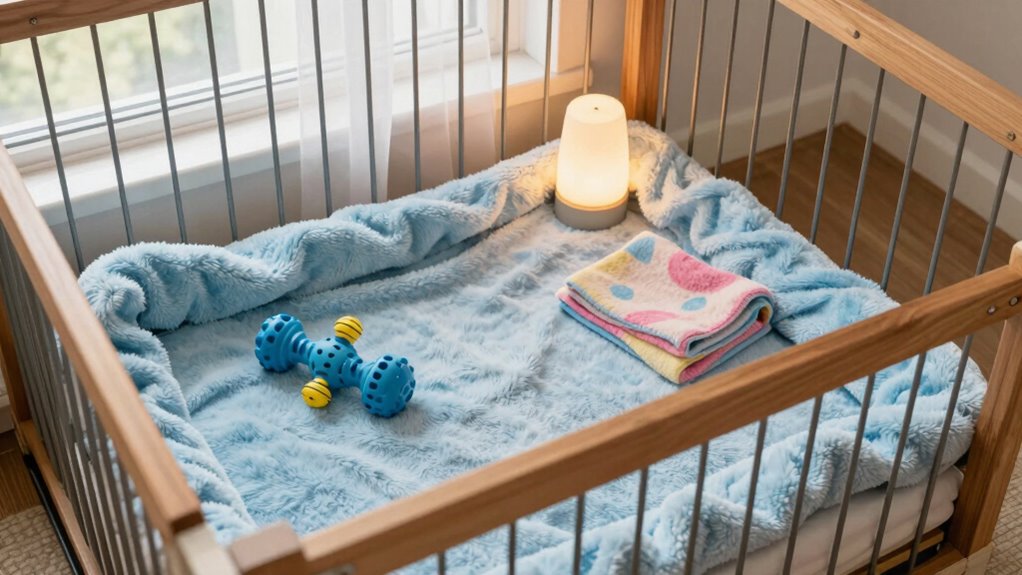
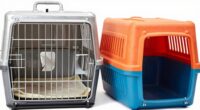
To set up a safe and comfy crate for your puppy, include soft, washable bedding that provides support and comfort. Add safe toys and chew items to keep them mentally stimulated and prevent boredom, but avoid anything sharp, toxic, or small enough to swallow. make certain of proper ventilation and keep distractions minimal to foster a calm environment. If you want to discover more tips on creating the ideal crate setup, keep exploring the essentials below.
Key Takeaways
- Include safe, durable toys and chew items to promote mental stimulation and bonding.
- Provide soft, washable bedding that fits comfortably and supports relaxation.
- Ensure secure water bowls to encourage hydration without spills.
- Maintain proper ventilation and a calm environment with gentle lighting and soothing sounds.
- Avoid hazardous objects, toxic foods, and small items that could cause choking or injury.
What Your Puppy Needs in Their Crate and Safety Tips
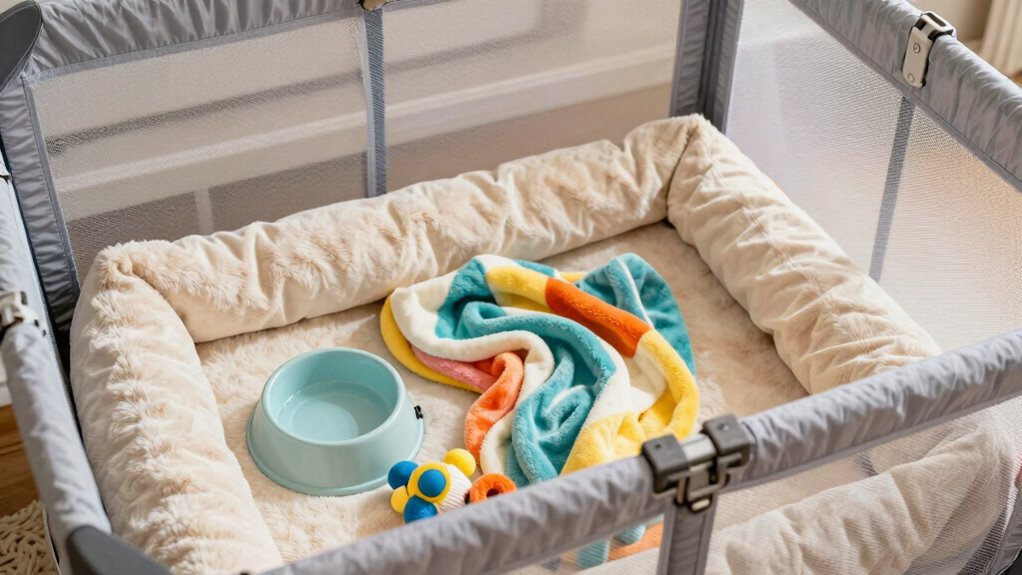
To guarantee your puppy’s safety and comfort in their crate, you need to include essential items that meet their needs. Proper crate ventilation is vital, so ensure the crate has enough airflow to keep your puppy comfortable and prevent overheating. Good ventilation also reduces odors and keeps the space fresh. Additionally, consider your puppy’s feeding schedule; placing a small, accessible bowl or mat nearby can help with puppy feeding routines, especially if they need a quick snack. Avoid overcrowding the crate with unnecessary items, as this can cause discomfort and anxiety. Focus on creating a safe, well-ventilated space that encourages positive associations with the crate, making it a cozy retreat rather than a punishment zone. Safety and comfort go hand-in-hand for happy crate training. Adequate ventilation is essential for preventing heat buildup and ensuring fresh air circulates around your puppy. Ensuring proper crate size helps your puppy move comfortably and reduces stress during crate time. Additionally, including some safe chew toys can help alleviate boredom and promote healthy chewing behaviors. Remember that indoor air quality can impact your puppy’s health, so maintaining a clean, well-ventilated environment is crucial for their well-being. Incorporating proper sanitation practices also helps reduce germs and keeps your puppy healthy.
Essential Items to Include Inside Your Puppy’s Crate
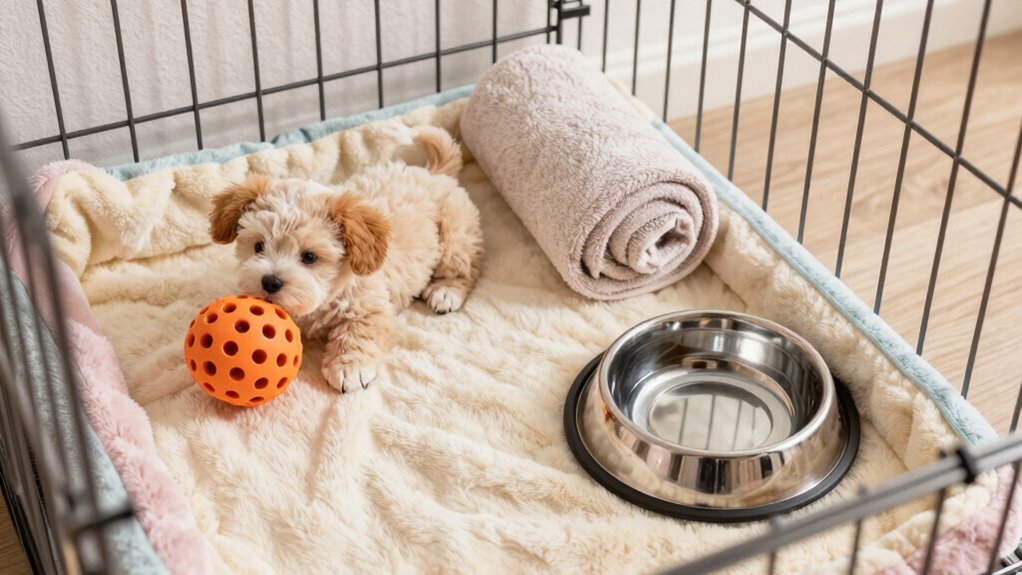
Filling your puppy’s crate with the right items helps create a safe and inviting space they’ll want to settle into. Focus on essential crate accessories that support puppy training and comfort. Include a durable, chew-proof toy to keep your pup entertained and reduce anxiety. A small, safe water bowl encourages hydration, especially during long stays. Consider placing a simple puzzle feeder to stimulate their mind. Avoid clutter or items that might pose a choking risk. Here’s a quick overview:
| Item | Purpose | Tip |
|---|---|---|
| Chew toy | Teething and boredom relief | Choose safe, durable options |
| Water bowl | Hydration during confinement | Secure to prevent spills |
| Puzzle feeder | Mental stimulation | Use during crate training |
| Safe chew treats | Comfort and distraction | Limit quantity to avoid overfeeding |
How to Choose Comfortable Bedding for Your Puppy
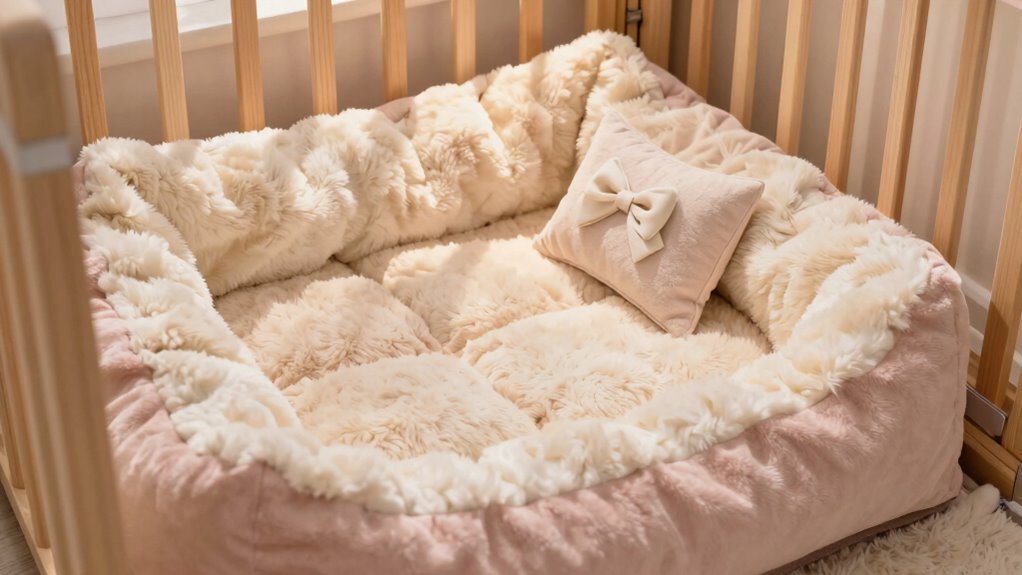
Choosing the right bedding starts with selecting comfortable materials that your puppy will enjoy. Make sure the bed is the right size so your puppy can stretch out comfortably without feeling cramped. Additionally, selecting appropriate bedding that is easy to clean and durable will help keep your puppy’s space hygienic and inviting. Opting for washable fabrics ensures that you can maintain a clean environment and remove any accidents or dirt easily. Using durable, easy-to-clean materials can also extend the life of the bedding and reduce maintenance time. Incorporating advanced filtration systems into your cleaning routine can further ensure a hygienic environment for your puppy. Considering healthy eating tips and safe materials can also contribute to your puppy’s overall well-being. With these points in mind, you’ll create a cozy space that keeps your pup happy and relaxed.
Comfortable Material Options
Selecting the right bedding for your puppy starts with understanding what materials will keep them comfortable and safe. You want options that provide warmth without restricting airflow, ensuring proper crate ventilation. Additionally, choosing bedding that’s easy to clean helps maintain bedding cleanliness and reduces odor buildup. Consider the following options:
| Material | Benefits |
|---|---|
| Plush Fabric | Soft, cozy, easy to wash |
| Memory Foam | Supports comfort, durable |
| Fleece | Lightweight, breathable |
| Straw or Hay | Natural, good ventilation |
| Rubber Mats | Non-absorbent, easy to sanitize |
Always select materials that promote airflow and are simple to keep clean, ensuring your puppy stays comfortable and healthy. Exploring bedding options can help you find the best fit for your puppy’s needs and promote overall well-being. Proper bedding also helps prevent pressure sores, especially in puppies that rest for extended periods. Using appropriate bedding can also reduce the risk of allergies and skin irritations.
Proper Bed Size Selection
The right bed size guarantees your puppy has enough space to stretch comfortably while still fitting well within the crate. Choose a bed that allows your puppy to lie down and turn around easily without taking up the entire space. Proper sizing also promotes good crate ventilation, preventing overheating and ensuring airflow around your puppy. When selecting the bed, consider the crate placement—placing it in a quiet, draft-free area helps maintain a comfortable environment. A bed that’s too small may restrict movement and cause discomfort, while one that’s too large can reduce the crate’s overall coziness. Measure your puppy and the crate carefully, opting for a bed that provides a snug, supportive fit. This balance ensures your puppy feels secure and relaxed in their safe space. Additionally, choosing appropriate bedding materials can help enhance comfort and promote better sleep. Being aware of spirituality and success insights can also inspire a positive environment that supports your puppy’s well-being. Incorporating positive reinforcement techniques during crate training can further promote a sense of safety and trust for your puppy. Selecting a quality mattress can also contribute significantly to your puppy’s comfort and health by providing proper support. A well-chosen bed size and quality materials contribute to a more comfortable sleeping environment, encouraging your puppy to view the crate as a cozy retreat.
Safe Toys and Chew Items to Keep Your Puppy Engaged
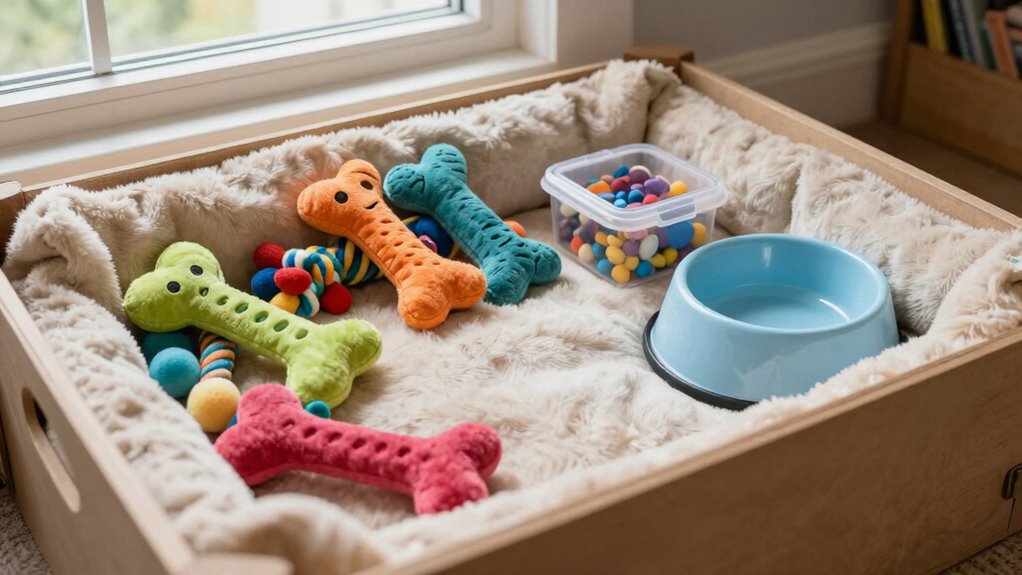
Providing your puppy with safe toys and chew items is essential for keeping them happy and mentally stimulated. Interactive play encourages bonding and helps burn off energy, so include toys that promote engagement. Puzzle toys are excellent for challenging your puppy’s mind while preventing boredom. Choose durable, non-toxic options that are appropriate for their size and chewing strength. Avoid toys with small parts or materials that could be swallowed or cause choking. Rotate toys regularly to keep your puppy interested and prevent them from becoming bored with the same items. Chew items like rubber bones or safe bully sticks can satisfy their natural instincts and protect your belongings. Always supervise playtime, and remove any worn or damaged toys to guarantee safety. Recognizing early warning signs of health issues can help ensure your puppy’s well-being from the start. Additionally, understanding appropriate toy safety guidelines helps prevent accidents during play. Moreover, selecting toys made from non-toxic materials is crucial for your puppy’s safety and health. Ensuring that toys meet quality and safety standards can further reduce risks and promote your puppy’s overall well-being.
Stuff You Should Never Put in Your Puppy’s Crate
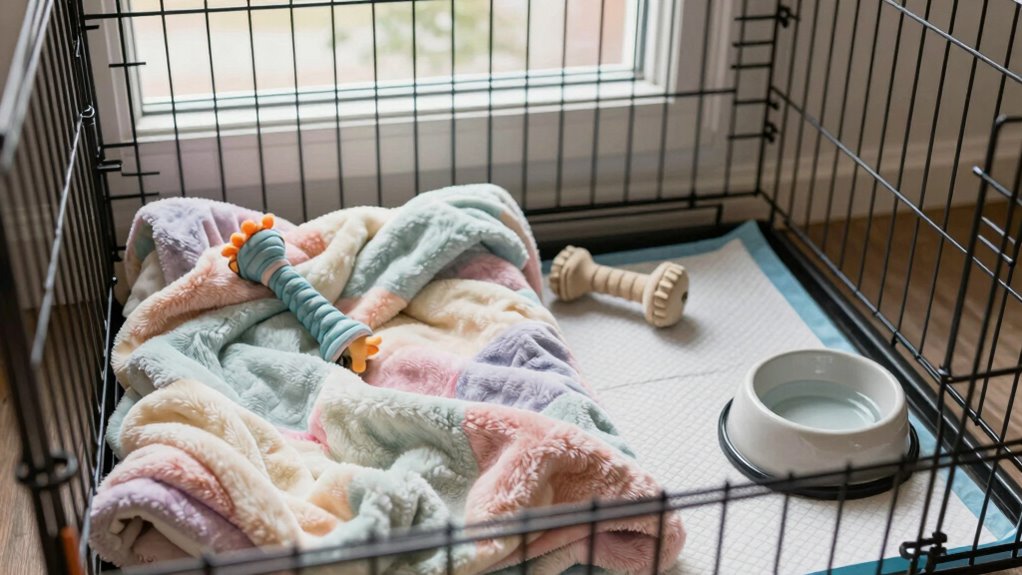
You should never put harmful or unsafe items in your puppy’s crate, as these can pose serious health risks or cause injuries. Avoid toys or objects that could be swallowed or choked on, as well as anything that disrupts your puppy’s puppy diet or comfort. Items like sharp objects, small accessories, or toxic substances are a big no-no. Also, don’t use excessive crate decoration that could be chewed or ingested. Here’s a quick guide:
| Unsafe Items | Risks | Alternatives |
|---|---|---|
| Sharp objects | Injury | Soft toys, chew-safe items |
| Toxic substances | Poisoning | Puppy-safe treats, toys |
| Excessive decoration | Choking hazard | Minimal, secure decor |
Keeping these out ensures your puppy stays safe and healthy. Additionally, ensuring the crate environment is free of hazardous household items helps prevent accidental ingestion or injury. Regularly inspecting the crate for potential hazards can help maintain a safe space for your puppy’s curiosity to be explored safely. Being aware of common household dangers is essential to prevent unforeseen accidents. To further enhance safety, consider using appropriate tracking gear to monitor your puppy’s movements and prevent accidents. It’s also important to avoid placing any dangerous foods that are toxic to dogs inside the crate.
How to Set Up a Calm and Positive Crate Environment

Creating a calm and positive crate environment starts with choosing comfortable bedding that makes your puppy feel secure. You can also add calming sounds or soft lighting to help your pup relax and feel safe. Paying attention to these details sets the stage for a peaceful crate experience.
Comfortable Bedding Choices
Choosing the right bedding is vital for making your dog feel safe and comfortable in their crate. Opt for soft, washable materials that provide support without restricting airflow, supporting good crate ventilation. A cozy blanket or a plush dog bed can help your puppy relax and settle in more easily. Regularly maintaining bedding hygiene is essential; wash it frequently to prevent odors and bacteria buildup, which can cause discomfort or health issues. Avoid bulky or overly thick bedding that might block proper ventilation or cause overheating. Confirm the bedding is appropriately sized—large enough for your puppy to stretch out comfortably but not so big that it feels overwhelming. With the right bedding, your puppy will feel secure and at ease in their crate.
Calming Sound and Light
To promote a calm and positive environment in your puppy’s crate, incorporating soothing sounds and gentle lighting can make a significant difference. A calming sound, like soft music or white noise, helps drown out loud household noises and reduces anxiety. Pair this with a calming light, such as a dim nightlight or a warm glow, to create a cozy atmosphere. Visualize your puppy lying peacefully with:
- Soft, low-volume music playing in the background
- A gentle, warm glow from a small nightlight
- The scent of lavender or a calming spray nearby
- Minimal distractions or bright lights
- A consistent noise level that’s neither startling nor silent
These elements work together to foster relaxation, making crate time a safe and comforting experience for your puppy.
Tips for Maintaining a Safe and Cozy Puppy Crate Over Time
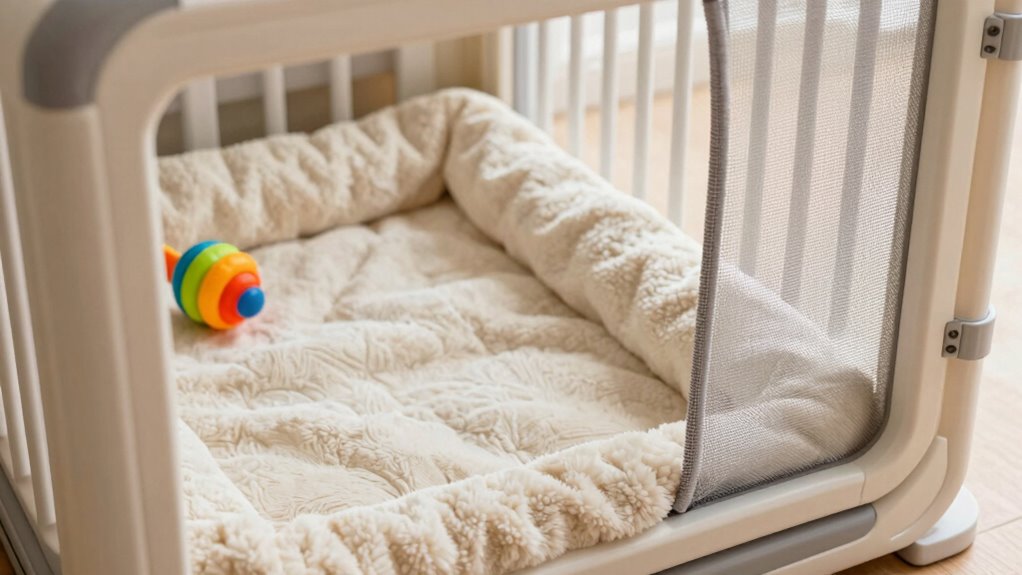
Regularly inspecting your puppy’s crate is essential to guarantee it remains safe and comfortable over time. Check for any signs of wear, damage, or loose parts that could pose risks. Keep the crate decor simple and cozy, replacing worn bedding or toys to maintain an inviting environment. Consistent crate cleaning is vital—wash bedding and wipe down surfaces to prevent dirt and odor buildup. Avoid clutter that could inhibit airflow or cause discomfort. Ensure the crate remains well-ventilated and free from sharp edges or broken parts. By routinely maintaining and updating the crate decor and cleaning routine, you create a safe, cozy space that encourages your puppy’s well-being and makes crate time a positive experience.
Frequently Asked Questions
How Do I Introduce My Puppy to Their Crate Gradually?
To introduce your puppy to their crate gradually, start by making the crate inviting with treats and toys. Let them explore it at their own pace, never forcing them inside. Use positive reinforcement during crate training, praising your pup when they enter voluntarily. Gradually increase crate time, always keeping the experience positive. This approach helps your puppy feel safe and comfortable, easing the crate training process.
What Safety Features Should I Look for in Crate Materials?
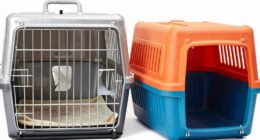
You should look for crate materials with excellent crate ventilation to keep your puppy comfortable and safe. Choose a crate with sturdy, durable materials like high-quality metal or reinforced plastic that can withstand biting and chewing. guarantee the crate has proper ventilation for airflow, and avoid fragile or sharp-edged materials that could injure your puppy. Prioritize safety features that promote durability and airflow for a secure, comfortable environment.
How Often Should I Clean and Disinfect My Puppy’s Crate?
Consistent cleaning and disinfecting are essential for your puppy’s health. You should clean the crate at least once a week, more frequently if accidents occur. Establish a disinfecting schedule to eliminate germs and odors, ensuring a hygienic haven. Regularly wipe down surfaces, wash bedding, and sanitize toys. By maintaining a meticulous cleaning routine, you help prevent infections, promote comfort, and create a clean, cozy space where your puppy feels safe and secure.
Can I Use a Crate for House Training at Night?
Yes, you can use a crate for house training at night. It helps establish a routine and keeps your puppy comfortable and secure. When crate training, make sure the crate is cozy, with a soft blanket and toys, so your puppy feels safe. Keep nighttime trips consistent, and avoid using the crate as punishment. This approach promotes positive associations and speeds up house training success.
What Are Signs My Puppy Feels Safe and Comfortable in the Crate?
You’ll know your puppy feels safe and comfortable in the crate when they settle in peacefully, like a bird content in its nest. Look for relaxed puppy comfort signs—calm breathing, gentle tail wagging, and easy settling down. If they explore the crate without fear and rest quietly, it shows crate security. These signs tell you your pup trusts their space and feels secure, turning the crate into a cozy, safe haven.
Conclusion
Creating the perfect crate for your puppy sets the foundation for good behavior and safety. Did you know that puppies who feel secure in their crates are 50% less likely to develop separation anxiety? By including the right essentials, choosing comfy bedding, and maintaining a calm environment, you’ll help your pup feel safe and loved. Keep these tips in mind, and your puppy will see their crate as a cozy, happy retreat for years to come.