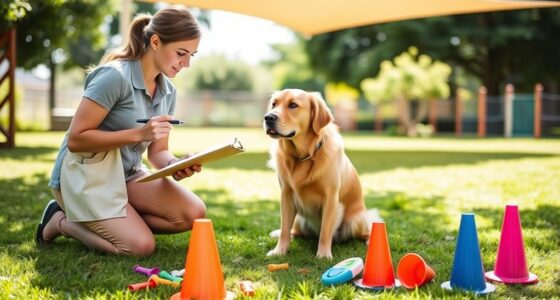

To teach your dog calm greetings, start by using relaxed body language and a gentle voice to set a positive tone. Use training tools like a leash or harness to maintain control and reward your dog when they stay calm before meeting someone. Teach them to sit or stay first, and avoid giving attention if they jump or lunge. Consistent practice and awareness of your dog’s signals help create relaxed interactions, and you’ll discover how to make every greeting peaceful if you keep going.

Get pet supplies delivered free with Prime
- Fast, free delivery on millions of items
- Prime Video, Amazon Music and more included
- Member-only deals all year
Key Takeaways
- Use a relaxed body language and gentle voice to signal calmness during greetings.
- Teach the dog to sit or stay before allowing interactions with new people.
- Reward calm behavior with treats or praise, and ignore or turn away from jumping.
- Gradually introduce distractions to help the dog stay composed in different environments.
- Consistently monitor body language cues to prevent excitement and reinforce calm greetings.

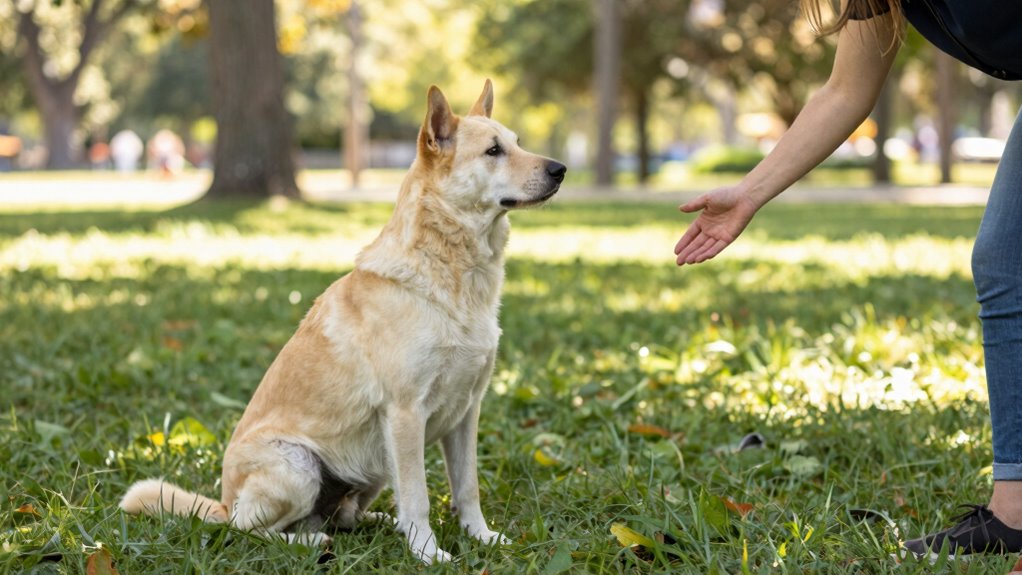
When welcoming a dog, a calm greeting can set the tone for a positive interaction and help him feel secure. Dogs are highly perceptive to your body language, so your demeanor plays a crucial role in how he responds. If you approach with excitement or tension, your dog might interpret that as an invitation to jump or bark. Instead, maintain a relaxed posture, avoid sudden movements, and speak in a gentle, steady voice. Recognizing your dog’s body language is essential—look for cues like wagging tail, relaxed ears, or a soft gaze, which indicate comfort, and respond accordingly. When your dog is showing signs of enthusiasm, like jumping or lunging, pause for a moment to regain composure before continuing your greeting. Incorporating sustainable training methods can also support positive behavior changes and strengthen your bond. Using training tools can greatly assist in teaching your dog to greet people calmly. Proper tools like a leash, harness, and possibly a head collar give you control and help prevent unwanted jumping. When your dog begins to lunge or jump, gently but firmly correct him with these tools, guiding him back to a calm position. Consistency is key—every time he exhibits jumping behavior, use the same cues and corrections. Reward calm behavior with treats, praise, or a gentle pet, reinforcing the idea that calm greetings lead to positive outcomes. Over time, your dog will start to associate calmness with attention and rewards, reducing the likelihood of launching at visitors. Teaching your dog not to jump or launch involves patience and regular practice. Start in low-stress environments, like your home, before gradually introducing more distractions. When someone new approaches, instruct your dog to sit or stay, and only reward him when he remains calm. If he begins to jump, gently turn away or step back, so he learns that jumping results in no attention. Utilizing training tools and techniques can help maintain control and consistency during these exercises. Additionally, understanding the importance of body language awareness can greatly improve your training effectiveness. Being mindful of your own body language cues can help communicate confidence and reassurance to your dog. Remember that consistent reinforcement is essential to help your dog understand the desired behavior and reduce anxiety during greetings.
As an affiliate, we earn on qualifying purchases.
Frequently Asked Questions
How Long Does It Take to Train a Dog to Stay Calm?
It usually takes a few weeks to a couple of months to train your dog to stay calm, but it varies based on your dog’s temperament and consistency. Using positive reinforcement and understanding dog psychology, you can speed up progress. Consistent training techniques, patience, and regular practice are key. Remember, every dog learns at their own pace, so stay patient and keep reinforcing calm behavior during interactions.
Are There Specific Breeds More Prone to Jumping?
Some breeds are more prone to jumping due to breed tendencies and jumping likelihood. For example, high-energy breeds like Border Collies, Jack Russell Terriers, and Labs often jump more because they’re naturally active and enthusiastic to interact. On the other hand, calmer breeds like Bulldogs or Basset Hounds tend to jump less. Knowing your dog’s breed tendencies helps you anticipate and manage their jumping behavior effectively, especially during greetings.
Can Calm Greetings Be Effective for Puppies?
You’ll find that calm greetings are highly effective for puppies—about 60% of puppies improve their socialization with gentle, controlled interactions. When you encourage calm behavior during socialization, your puppy learns to stay relaxed around people. Consistently practicing calm greetings helps prevent jumping and overexcitement, building a foundation for good manners. By patiently guiding your puppy through these interactions, you’ll foster confidence and better social skills as they grow.
What Should I Do if My Dog Still Jumps After Training?
If your dog still jumps after training, stay patient and consistent. Reinforce greeting cues like sitting politely before approaching people, and reward calm behavior. Use dog patience by calmly ignoring jumping and only rewarding when all four paws are on the ground. Practice regularly, and avoid punishing your dog. Over time, your dog will learn that calm greetings earn attention, helping reduce jumping and promoting better manners.
Is Professional Help Necessary for Aggressive Greeting Behaviors?
Yes, professional help can be necessary if your dog’s aggressive greeting behaviors persist despite training. A professional trainer or behaviorist can assess the situation, identify underlying causes, and implement effective behavior modification techniques tailored to your dog. They provide expert guidance, ensuring safety for everyone involved, and help your dog learn appropriate ways to greet people. Investing in professional training can make a significant difference in resolving these challenging behaviors.
Conclusion
By practicing calm greetings, you help your dog understand that patience pays off. Consistency and gentle reinforcement turn jumping and excitement into composed behavior. Remember, Rome wasn’t built in a day, so stay patient and persistent. With time, your dog will learn that calmness is the best welcome, making every greeting a pleasant experience for both of you. Keep at it, and you’ll see progress—your dog’s good manners will shine through.
Halloween Picks
halloween
As an affiliate, we earn on qualifying purchases.