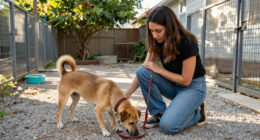
Slow desensitization is essential for safe, stress-free nail grinding with your dog. By gradually exposing your pet to the grinder, you build trust and reduce fear, making the process more comfortable for both of you. Using gentle handling, positive reinforcement, and patience helps prevent injury and resistance. Rushing can cause anxiety and make future grooming harder. Keep practicing calmly, and you’ll discover how this gentle approach leads to a happier grooming experience. Keep going to learn more tips.
Key Takeaways
- Slow desensitization builds positive associations, reducing fear and resistance during nail grinding.
- Gradual exposure minimizes stress and discomfort for the dog, making grooming safer and more pleasant.
- Patience and gradual steps foster trust between the dog and owner, improving overall grooming experience.
- Using low speeds and short sessions helps prevent injury and builds confidence over time.
- Consistent, gentle handling combined with positive reinforcement encourages calm behavior during grooming.

Have you ever struggled to trim your dog’s nails without causing stress or discomfort? If so, you’re not alone. Many pet owners find nail trimming to be a challenging and sometimes upsetting experience for both themselves and their dogs. That’s where nail grinders for dogs come in, offering a safer and often less intimidating alternative to traditional nail clippers. However, to make the process smooth and effective, understanding why slow desensitization works best is essential. It’s not just about the tool you choose but also about applying proper grooming techniques and following fundamental safety precautions.
Slow desensitization and patience make dog nail trimming safer and less stressful for both of you.
When you start introducing a nail grinder, it’s imperative to prioritize safety precautions. Your goal is to prevent any accidental injury or pain, which can create fear and resistance in your dog. Always check that the grinder is in good condition, with a fully charged or fresh battery, and verify the grinding bit is appropriate for your dog’s size and nail thickness. Begin by familiarizing your dog with the sound and feel of the grinder without turning it on. Let your dog sniff it, and reward calm behavior with treats. When you do turn it on, keep the device away from their face and body, and start with the lowest speed setting. Incorporating positive reinforcement techniques early on can help your dog associate the grinder with positive experiences.
Grooming techniques centered around patience and gradual exposure are key. Instead of rushing into trimming, break the process into small, manageable steps. Use gentle, reassuring words, and keep sessions short to prevent overwhelming your dog. Start by briefly touching their paws, then gradually introduce the grinder, letting your dog get used to its noise and vibration. Use treats generously to reinforce calm behavior, and never force your dog into a situation where they’re clearly distressed. As your dog becomes more comfortable, you can slowly extend the time you use the grinder and increase the grinding duration. Incorporating proper grooming techniques during each step can make a noticeable difference in your dog’s comfort level. Consistent practice combined with gentle handling can help build trust and familiarity.
Slow desensitization works because it builds a positive association with the grooming process. Rushing or forcing your dog can backfire, leading to fear or aggression. Additionally, incorporating patience and consistency along with positive reinforcement can significantly enhance the training process. Remember, safety precautions include using the grinder properly, keeping it away from sensitive areas, and watching your dog for signs of discomfort. By combining careful grooming techniques with patience and positive reinforcement, you help your dog develop a more relaxed attitude toward nail trimming. Over time, this approach not only reduces stress but also creates a safer and more pleasant experience for both of you.
dog nail grinder for slow desensitization
As an affiliate, we earn on qualifying purchases.
As an affiliate, we earn on qualifying purchases.
Frequently Asked Questions
How Long Does It Take for a Dog to Get Used to a Nail Grinder?
It typically takes a few days to a week for your dog to get used to a nail grinder. By gradually introducing the tool and using positive reinforcement, you help improve dog behavior and guarantee grooming safety. Patience is key—keep sessions short and frequent, and always reward calm behavior. Over time, your dog will become more comfortable, making nail trimming less stressful for both of you.
Are Nail Grinders Suitable for All Dog Breeds and Sizes?
In the blink of an eye, you’ll see that nail grinders aren’t suitable for all dog breeds and sizes. Breed compatibility and size considerations matter a lot. Small dogs with delicate nails might need gentle tools, while larger breeds can handle more robust grinders. Always choose a grinder designed for your dog’s size and breed, and introduce it slowly. Patience and understanding guarantee a safe, stress-free grooming experience.
Can Using a Nail Grinder Cause Pain or Discomfort?
Using a nail grinder can cause pain or discomfort if your dog has a sensitive temperament or if you don’t prioritize grinder safety. To prevent this, start slowly and use gentle pressure, allowing your dog to get used to the tool gradually. Always monitor their reactions, and stop if they show signs of distress. Proper training and patience guarantee the process remains comfortable and safe for your furry friend.
How Often Should I Use a Nail Grinder on My Dog?
Think of nail grinder safety like tending a delicate plant—you don’t want to overdo it. Use the grinder once a week initially, then adjust based on your dog’s temperament and comfort. If your dog remains calm, you can gradually increase frequency. Always observe for signs of stress, and don’t rush. Patience and gentle handling help guarantee safe, effective nail trimming, making the process smoother for both of you.
What Are Signs My Dog Is Stressed During Nail Grinding?
You’ll notice stress signals like lip licking, yawning, trembling, or trying to pull away when your dog is overwhelmed during nail grinding. If you see these signs, pause and use calming techniques like gentle praise, soothing voice, or treats to help your dog relax. Recognizing stress signals early allows you to adjust the process, making nail grinding a positive experience and reducing anxiety over time.
Conclusion
So, next time your pup’s nails turn into tiny claws of doom, remember: slow desensitization with a nail grinder isn’t just smart—it’s practically a spa day in disguise. Who knew that patience, gentle coaxing, and a dash of humor could turn a nail trimming nightmare into a comedy show? Embrace the process, stay calm, and watch your furry friend become a nail-trimming connoisseur—one tiny, trembling paw at a time. Because, really, what’s more glamorous than a well-groomed dog?