
To stop bedding destruction safely, first identify if your dog chews out of boredom, stress, or teething. Choose durable, chew-resistant bedding like heavy-duty fabrics or orthopedic mats and create a secure, calming space. Use positive reinforcement and provide plenty of safe toys and mental stimulation to redirect their chewing. Consistency and patience are key, and if issues persist, exploring additional enrichment options or professional advice can help. Keep exploring how to protect your home and your pup’s well-being.
Key Takeaways
- Use durable, chew-resistant bedding inside crates to withstand chewing and prevent destruction.
- Provide plenty of enrichment and mental stimulation outside the crate to reduce boredom-driven chewing.
- Redirect chewing behavior to safe, appropriate toys and reward compliance with positive reinforcement.
- Ensure the crate size is appropriate and comfortable, minimizing excess space that encourages bedding tearing.
- Address underlying anxiety or stress with training, calming aids, and creating a secure, calming environment.

Chew Proof Dog Bed Crate Pad for Aggressive Chewers – Indestructible Heavy Duty Kennel Mat with Waterproof Lining – Reinforced Stitching, Washable Black (X-Large (28"x47"))
HEAVY-DUTY DURABILITY FOR STRONG CHEWERS – Crafted with high-density, tear-resistant fabric designed to handle scratching, digging, and biting….
As an affiliate, we earn on qualifying purchases.
As an affiliate, we earn on qualifying purchases.
How to Recognize If Your Dog Is Destroying Bedding

If you notice your dog consistently chewing or ripping apart their bedding, it’s a clear sign they may be destroying it. This behavior often stems from dog anxiety or specific bedding preferences. Dogs experiencing anxiety might chew on their bedding as a way to self-soothe or alleviate stress. Alternatively, they may simply prefer certain textures or scents, leading them to destroy bedding they find unappealing. Look for signs like frayed edges, shredded fabric, or torn stuffing. If your dog shows signs of distress or obsessive chewing, it’s a strong indicator that anxiety could be involved. Recognizing these behaviors early helps you understand whether your dog’s bedding destruction is due to emotional needs or preference, setting the stage for more effective solutions. Incorporating training techniques and ensuring proper mental stimulation can help reduce destructive behaviors. Addressing underlying causes like anxiety triggers can further improve your dog’s well-being and reduce bedding destruction. Additionally, understanding the role of stress in canine behavior can help you develop targeted strategies to keep your dog calm and content, especially considering how bedding preferences can influence their behavior.

Sunheir Orthopedic Dog Bed for Large Dogs – Big Waterproof Dog Crate Bed with Removable Washable Cover, Egg Crate Foam Support, Anti-Slip Bottom, Deluxe Plush Pet Bed Mat (Grey)
WARM PLUSH SURFACE – The dog bed is designed with a luxury plush Sherpa top and a slip-resistant…
As an affiliate, we earn on qualifying purchases.
As an affiliate, we earn on qualifying purchases.
Why Do Dogs Chew and Ruin Their Bedding? Key Causes Explained
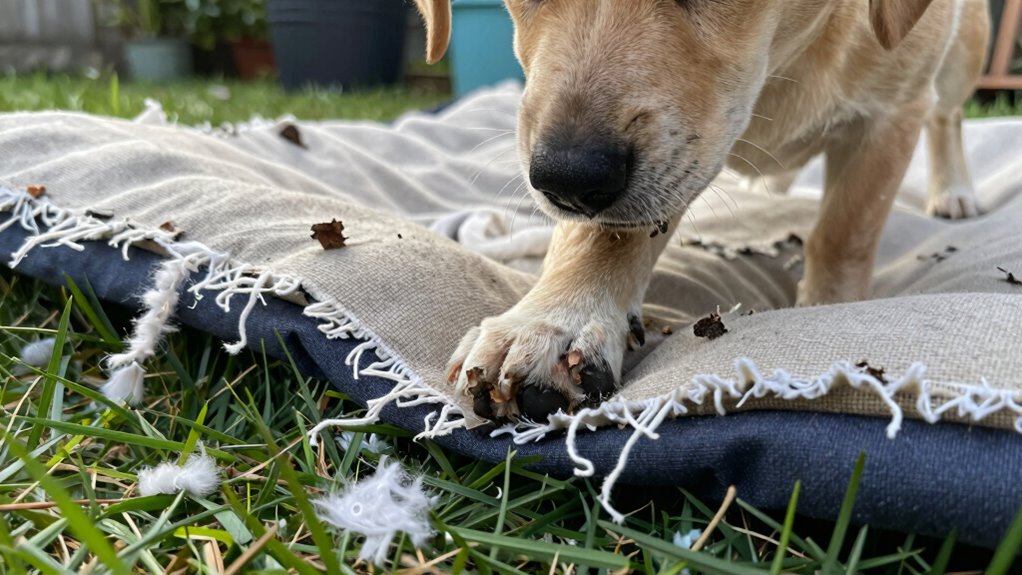
Understanding why your dog chews and ruins their bedding is essential to addressing the behavior effectively. Chewing motivation varies; some dogs chew out of boredom, stress, or teething. Others may have specific bedding preferences, such as soft textures or familiar smells, that make certain bedding more appealing. Your dog might also be seeking comfort or trying to soothe anxiety through chewing. Recognizing these underlying reasons helps you target the root cause rather than just the symptoms. If your dog’s bedding is easily destroyed, it could be a sign they need more mental stimulation or alternative outlets for their natural chewing instincts. Providing appropriate chew toys and ensuring your dog’s mental needs are met can help prevent destruction and keep your dog safe. Regular appliance maintenance and providing suitable chew toys can help prevent destruction and keep your dog safe. By understanding their chewing motivation and bedding preferences, you can develop a safer, more effective strategy to prevent destruction.

KSIIA Orthopedic Dog Bed Dog Crate Bed Waterproof for Large Dogs Deluxe Plush Washable Pet Mat with Egg Crate Foam & Removable Cover, 35 x 22 Inch, Gray
Orthopedic Support – Our dog crate bed equips a 3-inch thick high-density egg crate foam, which helps evenly…
As an affiliate, we earn on qualifying purchases.
As an affiliate, we earn on qualifying purchases.
Choosing Durable, Safe Bedding to Prevent Chewing

Choosing the right bedding is key to preventing your dog from chewing and destroying it. Durable and safe bedding can deter destructive behavior, especially when addressing issues like separation anxiety or understanding puppy teething. Opt for materials that are chew-resistant and non-toxic. Consider bedding with reinforced seams or made from natural fibers that withstand chewing. Avoid soft, easily torn fabrics that tempt your dog to chew. Here’s a quick comparison:
| Material | Benefits | Cautions |
|---|---|---|
| Memory Foam | Comfortable, long-lasting | Heavy, can be chewed apart |
| Orthopedic Foam | Supports joints, durable | May be costly |
| Heavy-duty Canvas | Chew-resistant, easy to clean | Less plush |
| Natural Fiber | Safe, eco-friendly | Can be less durable |
Choosing the right bedding helps create a safe, calming space, reducing the urge to chew.

havit Frozen Dog Treats Toy to Keep Them Busy, Cognitive Dog Enrichment Toys,Interactive Toys Long Lasting, Easy to Clean (Orange)
【Suitable for medium and small-sized dogs】 Please note that this product measures 2.8 inches *2.8 inches *2.4 inches…
As an affiliate, we earn on qualifying purchases.
As an affiliate, we earn on qualifying purchases.
Training Tips to Stop Bedding Destruction Humanely

Training your dog to stop destroying bedding humanely involves consistent, positive reinforcement techniques that encourage desirable behavior. Crate training is key; make sure your dog views the crate as a safe, comfortable space. When your dog refrains from chewing bedding, praise and reward immediately to reinforce good behavior. Using scent deterrents on bedding can also be effective—they make the material less appealing without causing harm. Avoid harsh punishments, as they can increase anxiety or fear. Instead, redirect your dog’s attention to appropriate chew toys or enrichment activities. Be patient and consistent, setting clear boundaries. Over time, your dog will learn that bedding destruction isn’t acceptable, and humane training methods will foster trust and cooperation. Monitoring your dog’s piercing care and hygiene can also help reduce stress-induced behaviors that may lead to bedding destruction. Incorporating ergonomic tools and techniques into your training environment can further promote comfort for both you and your pet. Additionally, understanding dog behavior cues can help you recognize early signs of stress or frustration that might contribute to destructive habits.
Enrichment Ideas to Reduce Bedding Chewing Behavior

To keep your dog from chewing bedding, try offering engaging enrichment activities like interactive play sessions and puzzle feeders. Providing safe chew toys and alternatives can also redirect their attention away from bedding. These strategies can make a big difference in reducing destructive behaviors and keeping your dog happy. Incorporating cultural activities into your routine can also help stimulate your dog’s mind and reduce boredom-related chewing. Additionally, introducing enrichment techniques that promote mental engagement can further diminish unwanted behaviors. Engaging your dog in mental stimulation can help address underlying boredom and prevent destructive habits.
Interactive Play Sessions
Interactive play sessions are an effective way to keep your dog mentally and physically engaged, reducing the urge to chew bedding out of boredom or anxiety. By actively engaging your dog, you help improve their behavior and make bedding maintenance easier. Imagine your dog:
- Chasing a tug toy across the floor, tail wagging.
- Snapping at a flirt pole, muscles flexing.
- Fetching a ball with focused determination.
- Steering through agility obstacles with enthusiasm.
These activities tire them out and satisfy their need for stimulation, decreasing destructive tendencies. Regular play not only curbs bedding chewing but also strengthens your bond. Keeping your dog engaged prevents boredom-driven behaviors, making your bedding last longer and your home calmer. Incorporating best vacuums for dust removal into your cleaning routine can help manage the mess created when bedding does get torn up. Additionally, providing appropriate chew toys can redirect their chewing instincts away from bedding. Incorporating interactive enrichment sessions into your daily routine can significantly reduce bedding destruction and promote a happier, well-behaved pup.
Puzzle Feeders and Toys
Puzzle feeders and toys are excellent tools to keep your dog mentally stimulated and distracted from bedding-chewing urges. Understanding dog psychology helps you recognize that engaging your dog’s mind reduces boredom, a common trigger for destructive behavior. These toys challenge your dog to work for treats, providing both entertainment and mental exercise. When your dog is occupied with a puzzle feeder, they’re less likely to focus on bedding maintenance or chew on their bedding out of frustration or curiosity. Incorporating these enrichment ideas into your daily routine can markedly cut down bedding destruction. Plus, puzzle toys promote healthy chewing habits, helping your dog develop better behaviors and reducing the need for strict supervision. Using training tools like puzzle feeders can also enhance your overall pet training efforts. Ultimately, these tools support a happier, more balanced dog.
Safe Chewing Alternatives
When your dog shows a desire to chew bedding, providing safe, alternative objects can redirect their chewing instinct effectively. These alternatives support dog dental health and complement crate training techniques. Consider offering:
- Durable rubber toys designed for heavy chewers, which help clean teeth and soothe gums.
- Frozen marrow bones or chew treats that keep your dog engaged and promote healthy chewing habits.
- Rope toys or braided fabrics that are safe and satisfying for them to gnaw on.
- Puzzle feeders filled with treats that challenge their mind and reduce boredom-induced chewing.
- Using appropriate chew toys can also help prevent the development of destructive behaviors and encourage positive habits.
These options not only protect bedding but also promote healthier chewing, reduce anxiety, and reinforce positive behaviors during crate training. Always supervise initial use to ensure safety and effectiveness.
Setting Up Your Dog’s Space to Protect Bedding and Minimize Damage

To protect your dog’s bedding and reduce damage, start by selecting durable materials that can withstand chewing. Make sure the space you create is comfortable yet secure, so your dog feels safe without risking destruction. Properly setting up this area helps keep bedding intact and minimizes your need for constant repairs. Incorporating Free Floating elements can also create a more natural and stress-reducing environment for your pet. Using appropriate materials that are safe and sturdy can further prevent bedding destruction and promote healthier chewing habits. Additionally, choosing high-quality, chew-resistant bedding can provide a long-lasting solution that discourages destructive behavior. Paying attention to environmental enrichment can also reduce boredom-related destruction and encourage positive habits, while incorporating DIY safety tips ensures your setup remains safe and effective.
Choose Durable Bedding Materials
Choosing the right bedding materials is essential if you want to protect your dog’s space from damage caused by chewing or digging. Durable bedding options can withstand rough play and reduce the need for frequent replacements. When selecting materials, think about strength and safety.
Imagine these options:
- Heavy-duty orthopedic mats that stay in place during crate training.
- Thick, chew-resistant blankets designed for dog grooming areas.
- Waterproof, tear-proof pads to prevent messes and damage.
- Natural fiber beds that resist fraying and are easy to clean.
These choices help create a sturdy environment that discourages destructive behaviors. Using durable bedding helps your dog feel comfortable while minimizing damage, making crate training and everyday grooming sessions smoother and less stressful for both of you.
Design Comfortable, Secure Spaces
Creating a comfortable, secure space for your dog involves carefully arranging their bedding and environment to prevent damage and promote calmness. Focus on indoor comfort by choosing a designated area that feels safe and inviting. A well-designed crate should be just the right size—big enough for your dog to stand, turn, and lie down comfortably, but not so large that bedding shifts or becomes a playground. Use sturdy, chew-proof bedding materials inside the crate to reduce damage. Consider adding soft, washable bedding that encourages your dog to rest peacefully. Keep the space free of unnecessary items that could be chewed or torn. Proper crate ventilation and airflow are essential for your dog’s comfort and safety, preventing overheating and ensuring a fresh environment. Good crate design and layout can help minimize bedding destruction by making the space more appealing and secure. Proper crate size and layout contribute significantly to your dog’s comfort and can reduce destructive behaviors. By optimizing crate design and setting up a cozy, secure environment, you help minimize bedding destruction and create a calming sanctuary for your dog. Incorporate appropriate crate size to ensure your dog’s comfort and safety.
What to Do If Bedding Destruction Still Continues?
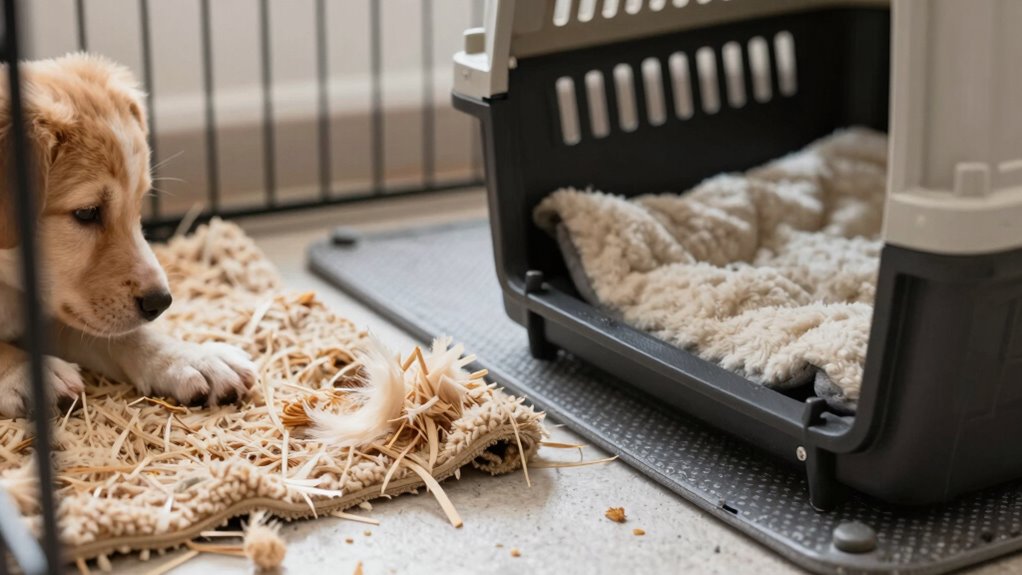
If bedding destruction persists despite your efforts, it’s time to reassess your approach. Dog behavior can be stubborn, and bedding maintenance might need an upgrade. First, observe when and why your dog chews or tears bedding—are they bored, anxious, or seeking attention? Second, try providing more mental or physical stimulation, like puzzle toys or extra walks. Third, consider swapping out old bedding for more durable, tear-resistant options. Fourth, reinforce positive behavior with rewards when your dog stays calm and keeps bedding intact. Additionally, using appropriate gear such as durable, top-rated dog beds can help prevent destruction. Incorporating supporting caregivers’ emotional well-being by practicing patience and staying consistent can also help you manage the challenges of this behavior. If destruction continues, consult a professional trainer or veterinarian to rule out underlying issues. Remember, patience and consistency are key in understanding and modifying your dog’s behavior to protect their bedding safely.
Frequently Asked Questions
Can Bedding Destruction Indicate Underlying Health Issues?
Bedding destruction can sometimes be a sign of underlying health concerns or stress indicators. If your dog suddenly starts tearing apart bedding, it’s essential to observe their behavior and consult your vet. Stress, anxiety, or discomfort might be causing this behavior. Ensuring your dog’s health and well-being by addressing potential issues can help reduce destructive habits and improve their overall happiness.
Are Certain Breeds More Prone to Bedding Destruction?
Certain breeds are more prone to bedding destruction due to breed tendencies and genetic predispositions. For example, high-energy breeds like terriers and hounds often chew and shred bedding more than calmer breeds. You notice this pattern, and it’s tied to their instincts. While breed traits play a role, providing mental stimulation and appropriate outlets can help curb destructive behaviors, regardless of your dog’s breed.
How Long Does It Typically Take to See Behavioral Improvements?
You can usually notice behavioral improvements within a few weeks of consistent training. It takes patience and consistency, as behavioral modification doesn’t happen overnight. Stick to your routine, reinforce positive behaviors, and avoid punishment. Over time, your dog’ll learn to stop destroying bedding, and you’ll see progress. Keep in mind, some dogs may take a bit longer, but steady effort will bring the best results.
Is It Safe to Use Deterrent Sprays or Smells?
Deterrent sprays and smells can be safe if you choose products with proven deterrent effectiveness and follow safe application instructions. Always read labels carefully and test a small area first to avoid adverse reactions. If used correctly, these deterrents can help redirect your dog’s chewing behavior without harm. Remember to monitor your pet’s response and adjust usage if you notice any signs of discomfort or aggression.
When Should I Consult a Professional for Severe Destruction?
Think of it like trying to fix a tangled mess—you should see a professional when your dog’s destructive behaviors become severe and unmanageable. If your dog’s chewing or bedding destruction worsens despite your efforts, it’s time to seek expert help. A trainer or veterinarian specializing in dog training can identify underlying issues and develop a tailored plan, ensuring your furry friend gets the support they need to stop damaging behaviors safely.
Conclusion
By understanding why your dog destroys bedding and providing the right enrichment, training, and durable options, you can curb the behavior humanely. Some say dogs chew out of boredom or stress, but recent research suggests it’s also a natural instinct. So, instead of punishment, offer safe outlets and patience. With consistent effort, you’ll create a peaceful space where your pup feels secure and bedding stays intact—proving kindness and understanding truly make the difference.