To calm your puppy and ease separation anxiety, establish a consistent routine with positive crate training. Make the crate comfortable with toys, treats, and your scent, encouraging your puppy to see it as a safe haven. Use soothing music or white noise and keep departures low-key to prevent stress buildup. Be patient and persistent, gradually increasing alone time. Staying consistent and calm helps your pup feel secure—continue exploring more effective strategies to make goodbyes easier.

Get pet supplies delivered free — and shop member deals
- Fast, free delivery on millions of items
- Access to Prime Big Deal Days deals on October 6–7
- Prime Video, Amazon Music and more included
Key Takeaways
- Gradually introduce crate training with positive reinforcement to create a safe, comfortable space for your puppy.
- Use calming sounds, scents, and routines to soothe your puppy during alone time.
- Keep departures and arrivals low-key to prevent increasing anxiety.
- Maintain a consistent schedule for feeding, potty, and crate time to reduce stress.
- Avoid punishing anxiety; reward calm behavior and gradually increase alone periods.
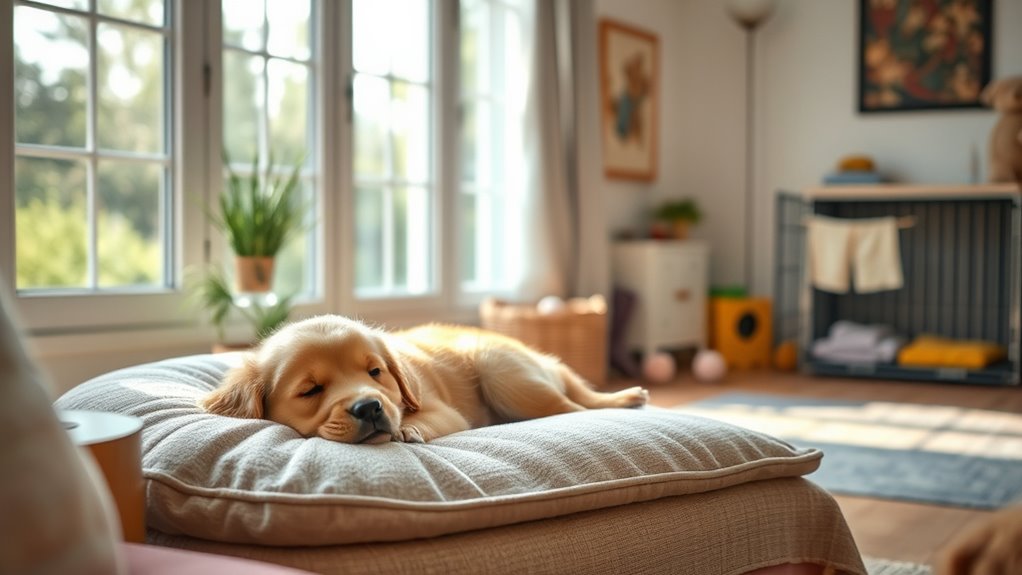
Separation anxiety is a common challenge many puppy owners face as their furry friends struggle with being left alone. When your puppy whines, chews, or becomes distressed whenever you’re out of sight, it can be heartbreaking and frustrating. The good news is, you can help your puppy feel more secure and calm through consistent crate training combined with effective soothing techniques. These methods not only create a safe space for your pup but also teach them that being alone isn’t something to fear.
Start by introducing crate training gradually. Make the crate a positive environment by placing soft bedding, toys, and treats inside. Encourage your puppy to explore the crate on their own, rewarding them with praise and rewards when they go inside voluntarily. Keep initial sessions short, so they associate the crate with comfort rather than confinement. Over time, extend the duration of crate periods, always ensuring your puppy is relaxed before leaving them alone. This process helps them see the crate as their safe haven, reducing anxiety when you’re not around.
While your puppy is in the crate, incorporate soothing techniques to ease their distress. Playing calming music or white noise can drown out sounds that might trigger separation anxiety. You can also leave a piece of clothing with your scent inside the crate, which provides reassurance. Establishing a predictable routine** for your puppy, including consistent crate times, helps reduce their anxiety by making their environment more stable. When you’re preparing to leave, keep your departures low-key—avoid making a big fuss or saying emotional goodbyes, as this can increase your puppy’s anxiety. Instead, give a quick, calm farewell and leave without delay. When you return, greet your pup softly and calmly, avoiding overly excited reactions that might reinforce anxious behaviors**.
Consistency is key. Stick to a predictable schedule for feeding, potty breaks, and crate time. This routine helps your puppy know what to expect and reduces uncertainty, which can heighten anxiety. Also, avoid making your departures and arrivals a big event; instead, treat them as normal parts of the day. Over time, your puppy will learn that being alone isn’t scary and that you always come back.
Patience and persistence are essential. Some puppies take longer to adapt than others, but with regular practice, most will learn to feel more comfortable when left alone. Always pair your crate training with soothing techniques, and never punish your puppy for anxious behaviors. Instead, reward calmness and independence, and gradually increase their alone time. With consistent effort, your puppy will develop confidence and better handle being alone, making both your lives happier and less stressful.
puppy crate with soft bedding and toys
As an affiliate, we earn on qualifying purchases.
As an affiliate, we earn on qualifying purchases.
Frequently Asked Questions
How Long Does Puppy Separation Anxiety Typically Last?
Separation anxiety in puppies varies, but with consistent training techniques and environmental modifications, you can help reduce it over time. Usually, it lasts a few weeks to several months, depending on the puppy’s age and temperament. You should gradually desensitize your pup by leaving for short periods and increasing them as they improve. Patience and routine are key, and you’ll see progress as your puppy learns to feel comfortable alone.
Are Certain Breeds More Prone to Separation Anxiety?
Some breeds are more prone to separation anxiety due to breed tendencies and anxiety triggers. For example, breeds like Labrador Retrievers and Cocker Spaniels often seek constant companionship, making them more vulnerable. On the other hand, independent breeds like the Basenji tend to handle alone time better. Understanding your puppy’s breed tendencies helps you anticipate anxiety triggers, so you can tailor your training and environment to reduce stress and foster confidence.
Can Separation Anxiety Affect Adult Dogs?
Yes, separation anxiety can affect adult dogs. If your dog hasn’t had proper dog socialization or consistent crate training, they might develop anxiety when left alone. It’s essential to gradually desensitize your dog to being alone, using positive reinforcement and safe spaces like crates. Addressing these issues early helps prevent anxiety from worsening, ensuring your adult dog remains calm and confident when you’re away.
What Are Common Signs of Severe Separation Anxiety?
Severe separation anxiety shows through signs like barking excessively and destructive behaviors when you leave. You might notice your dog scratching doors, chewing furniture, or escaping from confined spaces. They may also urinate or defecate indoors despite previous training, and show signs of distress like pacing or whining. Recognizing these symptoms early helps you address their anxiety and seek effective solutions to keep them calm when you’re apart.
Is Medication Necessary to Treat Puppy Separation Anxiety?
Imagine your puppy whines and destroys furniture when you leave; you wonder if medication necessity is the answer. Usually, behavioral training is the first step to address separation anxiety effectively. Medication may be necessary if your vet determines your pup’s anxiety is severe and unresponsive to training alone. Always consult a veterinarian to evaluate your dog’s specific needs before considering medication, as it’s not a universal solution.
Conclusion
By understanding your puppy’s separation anxiety and using these calming strategies, you can help them feel secure even when you’re not around. Think of it like teaching a puppy to build a cozy nest—over time, they’ll learn to relax and trust in your return. Patience and consistency are key, so stay calm and reassuring. Before you know it, your puppy will be as calm as a sleeping baby, ready to face your departures with confidence.
Halloween Picks
halloween
As an affiliate, we earn on qualifying purchases.