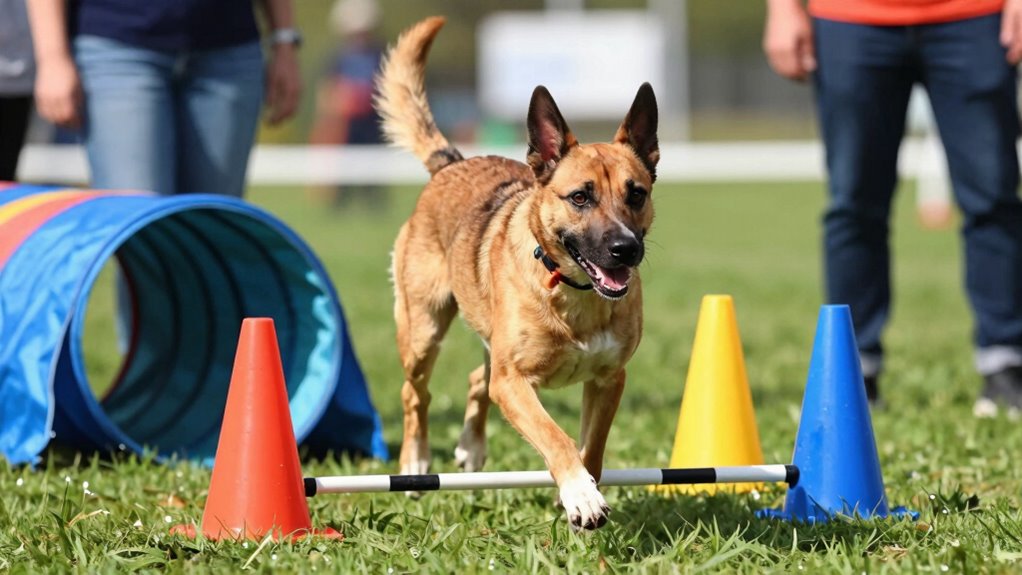

To help your high-energy dog build patience and self-control, incorporate frustration tolerance games like teaching them to wait calmly for treats or toys, and using puzzle games that challenge their focus. Redirect impulsive energy into structured activities and reward calm behavior consistently. Practice patience-building exercises daily, combining mental and physical stimulation. If you keep exploring, you’ll discover even more effective techniques to foster lasting patience and better behavior in your dog.

Get pet supplies delivered free with Prime
- Fast, free delivery on millions of items
- Prime Video, Amazon Music and more included
- Member-only deals all year
Key Takeaways
- Incorporate puzzle toys that challenge your dog to think and work for rewards, fostering patience and problem-solving skills.
- Practice “wait” or “stay” commands with gradually increasing durations to build impulse control.
- Use controlled frustration games, like fetch with breaks, to teach dogs to manage excitement calmly.
- Reward calm, focused behavior during activities to reinforce self-control and patience.
- Incorporate routine patience exercises into daily training to develop long-term frustration tolerance.
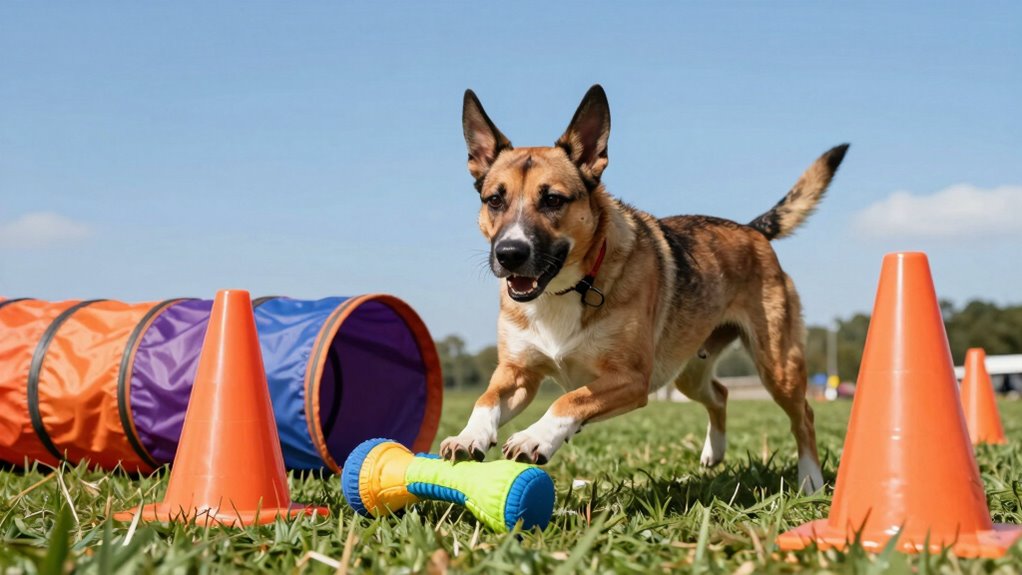
High-energy dogs often struggle with patience and impulse control, which can lead to frustration and destructive behaviors. To help manage these tendencies, you need to focus on effective training methods and behavioral strategies. Frustration tolerance games are a fantastic way to teach your dog how to handle disappointment calmly and develop better self-control. These games not only improve your dog’s patience but also strengthen your bond by making training more engaging and positive.
High-energy dogs benefit from patience-building games that foster calmness and strengthen your bond through positive, engaging training.
Start with simple exercises that encourage your dog to wait for a reward. For example, teach your dog to stay or wait calmly before getting a treat or toy. You can use treats or toys as motivators, but the key is to gradually increase the duration and difficulty. This helps your dog learn that patience pays off and builds resilience against impulsive reactions. Consistency is vital; practice these exercises daily, reinforcing the idea that controlled patience results in positive outcomes.
Behavioral strategies like rewarding calm behavior over excitement are essential here. When your dog exhibits patience, praise enthusiastically and give treats. Conversely, avoid rewarding impulsive behaviors; instead, redirect your dog’s focus to a more appropriate activity. This approach helps your dog understand what behaviors are acceptable and encourages self-regulation over time. Incorporating training methods such as positive reinforcement and clicker training makes these lessons clearer and more effective. These methods emphasize rewarding desired behaviors, which motivates your dog to repeat them.
To add more challenge, introduce puzzle toys that require your dog to think and work for their reward. These toys stimulate your dog mentally and physically, helping to tire them out and reduce impulsivity. When your dog struggles with frustration during these activities, guide them through with patience and calmness. Use behavioral strategies like encouraging your dog to take deep breaths or providing encouragement to persevere. Additionally, understanding the importance of positive reinforcement in training can significantly enhance your dog’s learning process. Recognizing the role of emotional resilience can help you better support your dog’s development and patience in challenging situations. Incorporating mindful training techniques can further improve your dog’s ability to stay calm and focused. Building self-control is fundamental to helping dogs manage their emotions effectively. The goal is to teach your dog that frustration can be managed without resorting to destructive behaviors or excessive excitement.
As your dog progresses, you can also incorporate calmness routines that help them settle down after engaging in these games. Remember, the purpose of frustration tolerance games is to teach your dog that patience and self-control lead to positive reinforcement, not punishment. By combining effective training methods with consistent behavioral strategies, you’ll help your high-energy dog develop the emotional resilience needed to handle everyday challenges calmly. Over time, these games will become a natural part of your training routine, leading to a more balanced, happier, and well-behaved dog.
dog puzzle toys for mental stimulation
As an affiliate, we earn on qualifying purchases.
As an affiliate, we earn on qualifying purchases.
Frequently Asked Questions
How Do I Know if My Dog Is Ready for Frustration Tolerance Games?
You’ll know your dog is ready for frustration tolerance games when they can stay calm and focused during basic training techniques. Watch for signs of patience, like waiting quietly for commands and not becoming overly excited or anxious. If your dog can handle short periods of restraint or delayed gratification without losing composure, they’re ready to build dog patience through frustration tolerance games, helping them stay balanced and confident.
Are These Games Suitable for Puppies or Only Adult Dogs?
These frustration tolerance games are suitable for both puppies and adult dogs, but with some adjustments. During puppy development, keep the games gentle and short to avoid overwhelming them. For adult dog training, you can increase difficulty and duration. Always observe your dog’s reactions, ensuring they stay comfortable. These games help build patience and resilience at any age, making them valuable for a wide range of training stages.
How Long Should Each Game Session Last?
You should aim for game sessions lasting about 10 to 15 minutes, adjusting based on your dog’s attention span. Keep game variety in mind to maintain their interest and prevent boredom. Use reward timing effectively—praise or treats should come immediately after your dog succeeds, reinforcing positive behavior. Short, engaging sessions with a mix of activities help build frustration tolerance, ensuring your high-energy dog stays happy and well-trained.
What Signs Indicate My Dog Is Becoming Overwhelmed?
You might notice your dog showing signs of overwhelm, like excessive panting, yawning, or lip licking—classic behavioral cues of dog anxiety. These signs suggest your dog is becoming overwhelmed and needs a break. It’s important to observe closely because pushing through can increase stress. When you see these cues, pause the game, give your dog space, and offer calming reassurance. Recognizing these signs helps keep training positive and effective.
Can These Games Help With Aggressive Behavior?
Yes, these games can help with aggressive behavior through dog training and behavior modification. By engaging your dog in controlled activities, you teach patience and impulse control, reducing aggression triggers. These games encourage positive interactions and build confidence, making your dog less reactive. Consistent practice helps your dog learn appropriate responses, ultimately improving behavior. Just make sure you tailor the games to your dog’s needs and always monitor their reactions for the best results.
Conclusion
By weaving these frustration tolerance games into your high-energy dog’s routine, you’re sculpting a resilient spirit that can weather any storm. Think of these games as the gentle tide shaping a sturdy sandcastle—building patience brick by brick. With each challenge, your dog learns to dance with disappointment rather than be swept away by it. Soon, you’ll see a calmer, more confident companion, ready to face life’s waves with the steady grace of a seasoned sailor.
Halloween Picks
halloween
As an affiliate, we earn on qualifying purchases.