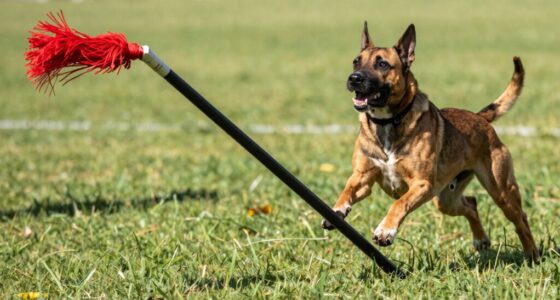
To help your distracted dog focus, try engaging games like the “look at me” game, where you reward eye contact, and using designated areas or targets to improve impulse control. Incorporate routines like walk-focused exercises or waiting at doorways to build attention in real-life situations. Keep training positive, short, and consistent, gradually adding distractions. Stay patient—these methods can transform your dog’s focus skills over time, and you’ll find even more effective tips ahead.

Get pet supplies delivered free with Prime
- Fast, free delivery on millions of items
- Prime Video, Amazon Music and more included
- Member-only deals all year
Key Takeaways
- Use highly rewarding treats to capture and hold the dog’s attention during focus exercises in distracting environments.
- Incorporate target and spot training to direct focus and improve impulse control despite external stimuli.
- Gradually increase environmental distractions while maintaining positive reinforcement to strengthen focus under real-world conditions.
- Keep training sessions short and engaging to prevent overstimulation and sustain interest.
- Consistently practice focus games during daily routines to build resilience and attentiveness in noticing everything.

Many dogs struggle to stay focused, especially in busy or distracting environments, which can make training and daily routines challenging. If your dog notices everything around them, it’s a sign they need some extra help sharpening their attention. Focus games are a fantastic way to improve your dog’s concentration while also providing essential mental stimulation. These games don’t just keep your pup busy; they help them learn to ignore distractions and pay attention to you. When you incorporate these exercises into your training routine, you’ll notice a significant difference in how quickly your dog responds and how calmly they handle distractions.
Many dogs need help focusing amidst distractions to improve training and daily life.
To get started, choose simple focus games that require your dog to look at you and listen. One effective game is the “look at me” exercise. Hold a treat near your face, then slowly move it away while saying “look at me.” When your dog makes eye contact, praise them and give the treat. Repeat this several times, gradually increasing the distance and duration of eye contact. This game enhances your dog’s ability to pay attention to you, even amid distractions, and is a core part of dog training that emphasizes mental stimulation. You want your dog to associate focusing on you with positive reinforcement, which makes it easier for them to ignore other stimuli.
Another excellent focus game involves using a target or a specific spot. Place a mat or a designated area and encourage your dog to focus on it. When they sit or stay on the spot, reward them. This teaches impulse control and helps your dog learn to concentrate on the task at hand, rather than everything else in their environment. Over time, you can add distractions to make the game more challenging, like clapping or making noise, so your dog learns to stay focused despite external stimuli. Developing attention span is an important part of fostering better focus and behavior, and consistent practice can significantly improve your dog’s ability to ignore distractions. Incorporating mental stimulation through these games can significantly enhance your dog’s ability to remain calm and attentive in various situations.
You can also turn everyday activities into focus exercises. For example, during walks, ask your dog to “wait” at doorways or “heel” beside you, rewarding their focus and patience. These small, consistent practices build mental resilience and improve overall dog training. Remember, the key to success is patience and consistency. Incorporate these focus games daily, and keep training sessions short and engaging. Your dog will gradually learn to filter out distractions, stay attentive, and respond reliably. As your dog becomes more focused, you’ll find daily routines and training sessions become much easier and more enjoyable for both of you.
As an affiliate, we earn on qualifying purchases.
Frequently Asked Questions
Can These Focus Games Be Adapted for Small or Large Dog Breeds?
Yes, you can adapt focus games for both small and large breeds by considering breed-specific challenges and size adaptations. For small dogs, use smaller, lighter toys and keep activities close to their eye level. For large breeds, incorporate bigger toys and more space, ensuring safety. Tailoring the game complexity and physical demands to your dog’s breed and size helps maintain engagement and prevents frustration, making the activities effective and enjoyable.
How Long Should Each Focus Game Session Last for Optimal Results?
You should aim for 10-15 minute focus game sessions to keep your dog engaged without overdoing it. This allows you to use different training techniques and game variations effectively. Short, frequent sessions prevent your dog from tuning out and help build concentration gradually. Remember, patience is key; if your dog gets distracted easily, break the sessions into even smaller chunks and increase duration as their focus improves.
Are There Any Safety Concerns to Consider During Focus Games?
Yes, safety concerns are important when using training techniques and enrichment activities. You should supervise your dog closely to prevent choking hazards or ingestion of unsafe objects. Guarantee the environment is secure and free from hazards like sharp items or toxic plants. Avoid overstimulating your dog, which could cause stress or anxiety. Always tailor the focus games to your dog’s age and health, and stop if signs of discomfort or fatigue appear.
How Quickly Will My Dog Improve Their Focus Skills?
Your dog’s focus improves with consistent training and motivation techniques, but the speed varies based on individual temperament. If you stay consistent and keep sessions engaging, you’ll notice progress within a few weeks. Dogs that notice everything may take longer, but patience pays off. By maintaining regular practice and rewarding their efforts, you’ll help your dog sharpen their focus over time. Remember, persistence and positive reinforcement are key.
Can Focus Games Help With Dogs That Have Anxiety or Hyperactivity?
Yes, focus games can help with dogs that have anxiety or hyperactivity. By engaging your dog in calming techniques and mental stimulation, you help redirect energy and ease anxious feelings. Playing these games fosters focus, reduces restlessness, and builds a bond. Consistent, calming challenges encourage your dog to concentrate, calm their nerves, and channel hyperactivity into positive, productive play, ultimately promoting peace and patience.
Conclusion
By engaging in focus games, you help your distracted dog sharpen their attention, making them less reactive to outside stimuli. Surprisingly, some studies suggest that such mental exercises can even boost a dog’s cognitive resilience, helping them adapt better to new environments. So, while it may seem like simple play, these games tap into your dog’s natural instincts, fostering a more attentive and balanced companion. Ultimately, consistent practice can create a calmer, more focused dog who notices everything—without getting overwhelmed.
Fall Picks
fall essentials
As an affiliate, we earn on qualifying purchases.