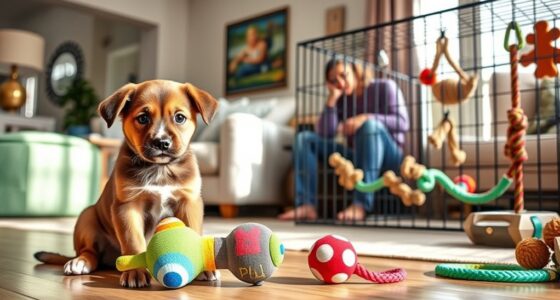

To help your dog feel comfortable around automatic devices, introduce them gradually without turning them on initially, using treats and praise to create positive associations. Allow your dog to observe the devices at a distance, slowly moving closer while monitoring their comfort. Reinforce calm behavior and confirm the devices are safe and well-maintained. Patience and consistent positive experiences are key—continue exploring these strategies to build your dog’s confidence around new technology.

Get pet supplies delivered free with Prime
- Fast, free delivery on millions of items
- Prime Video, Amazon Music and more included
- Member-only deals all year
Key Takeaways
- Introduce automatic devices gradually from a distance, using treats and praise to create positive associations.
- Reward calm behavior around devices to build trust and reduce fear.
- Ensure devices are safe, properly installed, and free of hazards before exposure.
- Observe your dog’s behavior closely and proceed at their comfort level, avoiding force.
- Supervise initial interactions and reinforce positive experiences to foster confidence around devices.
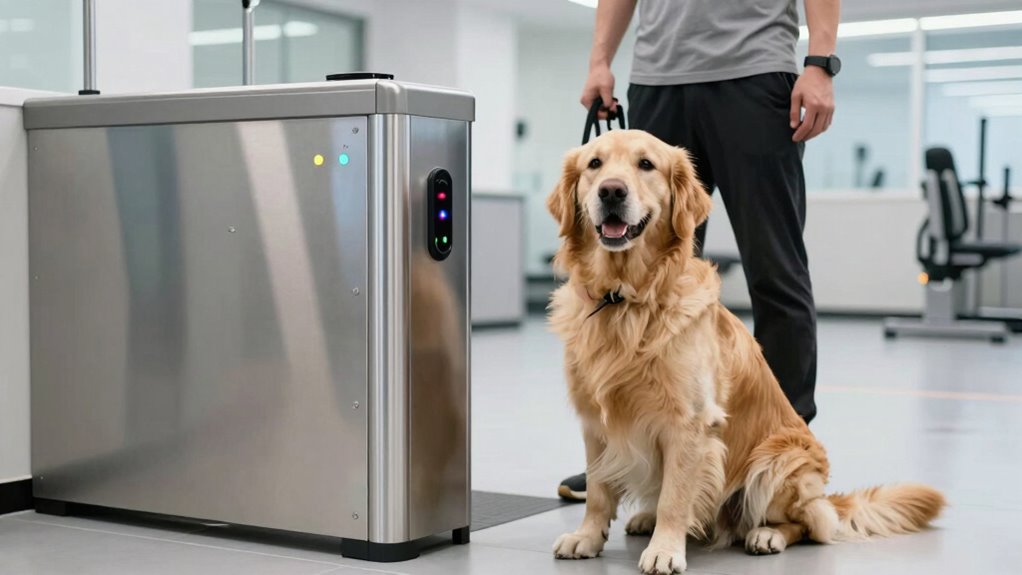
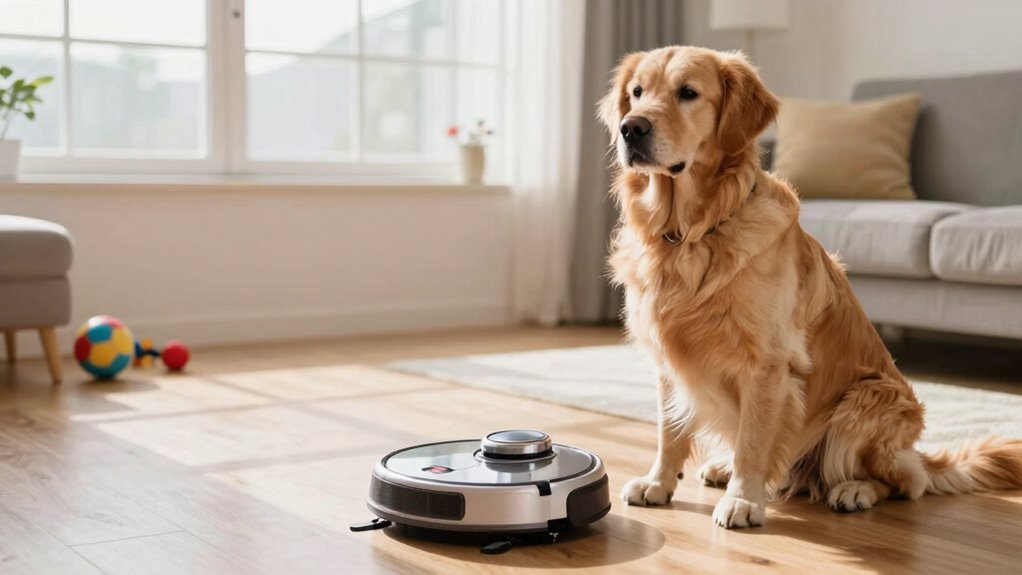
Have you ever wondered how to train your dog effectively around automatic devices like pet doors, feeders, or cameras? It’s a common concern, especially if you want your dog to feel comfortable and safe in a home filled with technology. The key lies in understanding dog behavior and guaranteeing device safety while gradually introducing your pup to these gadgets. Dogs are naturally wary of new objects, and sudden movements or unfamiliar sounds from automatic devices can trigger fear or mistrust. To prevent this, you need to approach training with patience, consistency, and positive reinforcement.
Start by familiarizing your dog with the device from a distance. Don’t rush to turn it on or activate it immediately. Instead, let your dog observe the device without any pressure. Use treats and praise to create positive associations. For example, if you’re introducing a pet camera, place it in a visible spot and reward your dog when they glance at it calmly. Over time, gradually bring the device closer, always watching for signs of discomfort. If your dog shows fear or aggression, back off and give them time to adjust. Forcing them too soon can lead to long-lasting fear, making future interactions more difficult.
Introduce devices gradually, rewarding calm behavior and respecting your dog’s comfort to build positive associations.
When introducing automatic pet doors, assure your dog understands that the device is safe. Initially, leave the door open and encourage your dog to pass through with treats. Reward calm behavior immediately after they pass through, reinforcing the idea that the door is a safe, positive experience. If your dog hesitates or shows signs of anxiety, don’t push them. Instead, try using a leash or guiding them gently through the door, always rewarding them for their bravery. Remember, consistency is crucial. Regularly reinforce positive experiences so your dog learns that these devices are not threats but helpful tools. Understanding dog behavior is essential for successful training, as it helps you recognize when your dog is ready for the next step.
Device safety is just as important as addressing dog behavior. Make sure all devices are installed correctly, with no sharp edges or loose parts that could harm your pet. Keep cords out of reach and ensure that automated feeders or doors operate smoothly without sudden jerks or loud noises that could startle your dog. Always supervise initial interactions with new devices until your dog is fully comfortable. This not only prevents accidents but also reassures your dog that the environment is safe. Additionally, understanding biodiversity and choosing pet-friendly devices can further enhance your pet’s comfort and safety at home. Moreover, being aware of device safety guidelines can help prevent potential hazards before they occur. Recognizing dog safety considerations is vital for creating a secure environment for your pet around these devices.
Training your dog around automatic devices takes patience, but the payoff is a confident, comfortable pet who isn’t afraid of technology. By understanding their behavior and securing device safety, you help your dog adapt seamlessly, creating a happier, more harmonious home environment for both of you.
As an affiliate, we earn on qualifying purchases.
Frequently Asked Questions
How Long Does It Take for a Dog to Get Used to Automatic Devices?
It usually takes a few days to a few weeks for your dog to get used to automatic devices. Using desensitization techniques helps gradually reduce their fear, while positive reinforcement encourages calm behavior. You should start by exposing your dog to the device at a distance, rewarding calm responses, and slowly decreasing the distance over time. Patience and consistency are key to helping your dog feel comfortable and safe around these devices.
Can Training Methods Vary for Different Dog Breeds?
Yes, training methods can vary for different dog breeds. You should consider breed-specific training and temperament considerations to tailor your approach effectively. Some breeds are more sensitive or energetic, requiring gentler, more positive reinforcement techniques, while others may respond well to firm commands. Understanding your dog’s breed traits helps you choose the right methods, ensuring they stay comfortable and confident around automatic devices without fear or anxiety.
Are There Specific Automatic Devices That Are Harder for Dogs to Tolerate?
Some automatic devices, like loud bark deterrents or motion-activated sprinklers, can be harder for dogs to tolerate due to their sudden automatic device noise. You notice your dog cowering or retreating when these devices activate. Dog breed differences play a role; some breeds are more sensitive to noise or startling stimuli. To help, introduce the device gradually, using positive reinforcement, so your dog learns to feel safe rather than fearful.
What Signs Indicate a Dog Is Still Fearful of an Automatic Device?
You’ll notice signs like your dog’s body language showing tension—ears back, tail tucked, or trembling—indicating fear. If they show noise sensitivity, they might jump or bark at the device’s sound. Watch for avoidance behaviors, like avoiding eye contact or trying to escape. These signs suggest your dog remains fearful, and you should slow down the exposure, offering comfort and positive associations to help them feel more secure around the device.
Should Training Be Done Indoors or Outdoors for Best Results?
For best results, combine indoor training with outdoor exposure. Start indoors where you control the environment, gradually introducing automatic devices at a comfortable pace. Once your dog shows confidence indoors, take the training outside, where distractions are more natural. This approach helps your dog adapt steadily, reducing fear. Consistent exposure in both settings builds positive associations, ensuring your dog remains calm and confident around automatic devices in any environment.
Conclusion
By gradually introducing your dog to automatic devices, you build trust, reduce fear, and foster confidence. You show patience, provide positive reinforcement, and create a safe environment. You help your dog understand that these devices are not threats but part of everyday life. You empower your pet to feel comfortable, confident, and calm around automatic devices. And in doing so, you strengthen your bond, improve their well-being, and make a happier, more harmonious life together.
Evergreen bestsellers Picks
bestsellers
As an affiliate, we earn on qualifying purchases.