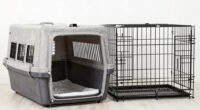
If your dog keeps escaping from their crate, it’s often because they feel stressed, uncomfortable, or curious. Signs include scratching, pacing, or trying to squeeze out. To prevent this, make sure the crate is secure, comfortable, and a positive space for your dog by using proper training, secure latches, and familiar items. Keep an eye on behavior and consider expert advice if escapes persist; there’s more to uncover that can help keep your dog safe and calm.
Key Takeaways
- Dogs may escape due to stress, anxiety, or discomfort inside the crate.
- Signs include scratching, chewing, pacing, vocalizing, or trying to squeeze through gaps.
- Prevent escapes by using secure, appropriately sized crates and positive reinforcement training.
- Make the crate cozy with soft bedding, familiar items, and a quiet location to reduce stress.
- Seek professional help if escape behaviors escalate or persist despite training efforts.
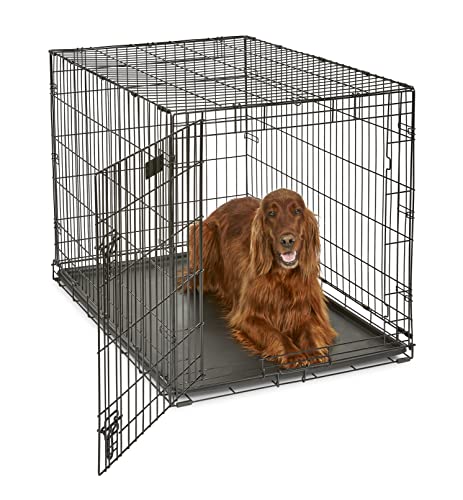
MidWest Homes for Pets 42-Inch iCrate for Large Breeds, 71-90 lbs, Single Door Folding Dog Crate with Divider Panel, Leak-Proof Tray & Secure Latch, Portable, Durable & Easy to Assemble
IDEAL FOR 71-90 LB DOGS: Measures 42.5 x 28.5 x 30.5 inches – perfect for Australian Shepherds, Boxers,…
As an affiliate, we earn on qualifying purchases.
As an affiliate, we earn on qualifying purchases.
Why Do Some Dogs Escape From Their Crates?
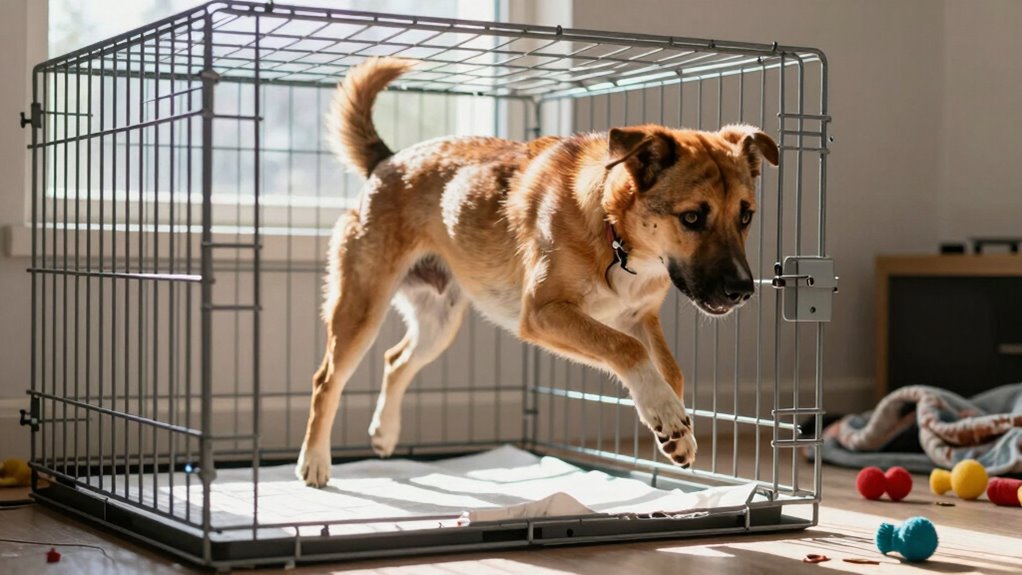
Some dogs escape from their crates because they’re uncomfortable or anxious inside. During crate training, you might notice your dog’s natural instincts to explore and find ways out. Dogs have strong instincts to escape when they feel trapped or stressed, especially if they haven’t fully adjusted to the crate. If the crate is too small, poorly ventilated, or if your dog associates it with negative experiences, they’ll try to break free. Anxiety can also trigger their desire to escape, especially if they’re left alone for long periods. Understanding that escape can be driven by instinct helps you address the root cause. Proper crate training, positive reinforcement, and creating a comfortable space can reduce their need to escape. Additionally, ensuring the crate has appropriate body measurements and materials can improve comfort and reduce stress. Using appropriate crate size and comfortable bedding can make your dog feel more secure and less inclined to try escaping.

Dog Beds Crate Pad for Medium/Large Dogs Fit Metal,Ultra Soft, Washable & Anti-Slip Kennel Pad for Dogs Cozy Sleeping Mat,Gray 36inch
SIZE GUIDE: Ideal dog bed for wire dog crates.This pad measures approximately 36inch*23inch.Fit for dogs weighing 40 to…
As an affiliate, we earn on qualifying purchases.
As an affiliate, we earn on qualifying purchases.
How Can I Tell If My Dog Is Prone to Escaping?
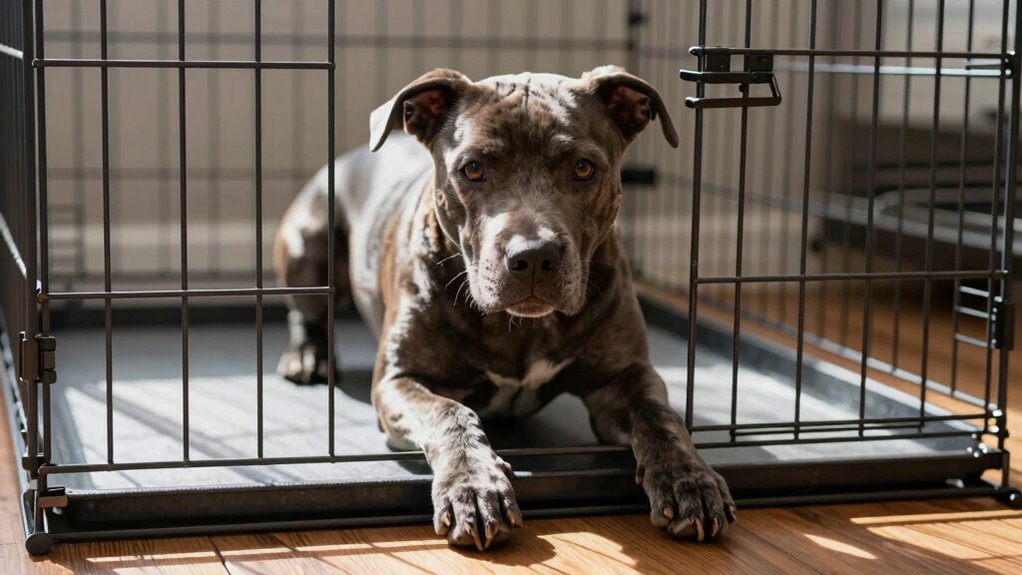
Dogs that are naturally curious or have a high prey drive are more likely to try escaping their confinement. To tell if your dog is prone to escaping, observe their behavior signs and escape tendencies. Do they scratch, bite, or chew at the crate? Do they seem anxious or restless? Notice if they attempt to climb or squeeze through gaps. A table can help identify specific signs:
| Behavior Signs | Escape Tendencies |
|---|---|
| Excessive scratching or biting | Trying to chew or break out |
| Pacing or restlessness | Climbing or pushing against bars |
| Vocalizing (whining, barking) | Escaping when left alone |
| Obsessive behaviors | Repeated escape attempts |
Recognizing these signs early can help you address your dog’s needs before they break out. Additionally, understanding water safety is important if your dog tends to escape near pools or bodies of water. Being aware of your dog’s escape triggers like loud noises or unfamiliar environments can also prevent incidents. Observing your dog’s behavioral patterns can provide valuable insight into their tendencies and help establish effective preventative measures. Incorporating positive reinforcement training can effectively reduce their desire to escape by rewarding calm and contained behavior. Furthermore, providing adequate mental stimulation can help reduce their urge to escape out of boredom or frustration.

ChengFu Interactive Dog Toys, Crate Training Aids for Puppies, Reduce Stress Anxiety Peanut Butter Dog Food Treat Dispenser Toys
Food Dispenser Toy:Spread peanut butter on the ball, stuff the dog food inside the ball, then tie the…
As an affiliate, we earn on qualifying purchases.
As an affiliate, we earn on qualifying purchases.
What Are the Best Ways to Prevent Your Dog From Escaping?

To effectively prevent your dog from escaping, start by ensuring their environment is secure and appropriately designed for their size and behavior. Proper crate training is essential; gradually introduce your dog to the crate, making it a positive space with treats and praise. This helps reduce their desire to escape out of curiosity or anxiety. Additionally, consistent dog supervision is vital—keep an eye on your dog when they’re outside the crate to catch any escape attempts early. Reinforce boundaries and correct behaviors calmly and promptly. Make sure the crate is sturdy, with no gaps or weak points that your dog could exploit. Using positive reinforcement techniques can also encourage your dog to see the crate as a safe and comfortable space. Recognizing escape behaviors early allows you to address underlying issues before they become habitual. Ensuring your crate has appropriate size and ventilation can significantly reduce the likelihood of escape attempts. Paying attention to cultural artifacts and incorporating familiar, comforting items inside the crate may help ease anxiety and discourage escape attempts. Additionally, considering safety measures like adding secure latches or locks can further prevent escapes. By combining secure crate training with attentive supervision, you markedly decrease the chances of your dog escaping.

BOLDBONE 48 inch Heavy Duty Indestructible and Escape-Proof Dog Crate Cage Kennel for Large Dogs, High Anxiety Dog Crate with Removable Wire Trays and Wheels, Extra Large XL XXL, Black
【Indestructible & Safe】Upgraded 20-gauge steel frame and reinforced 0.5-inch-diameter steel tubes make our metal dog crate much sturdier…
As an affiliate, we earn on qualifying purchases.
As an affiliate, we earn on qualifying purchases.
How Can I Make the Crate a Safe and Cozy Space for My Dog?
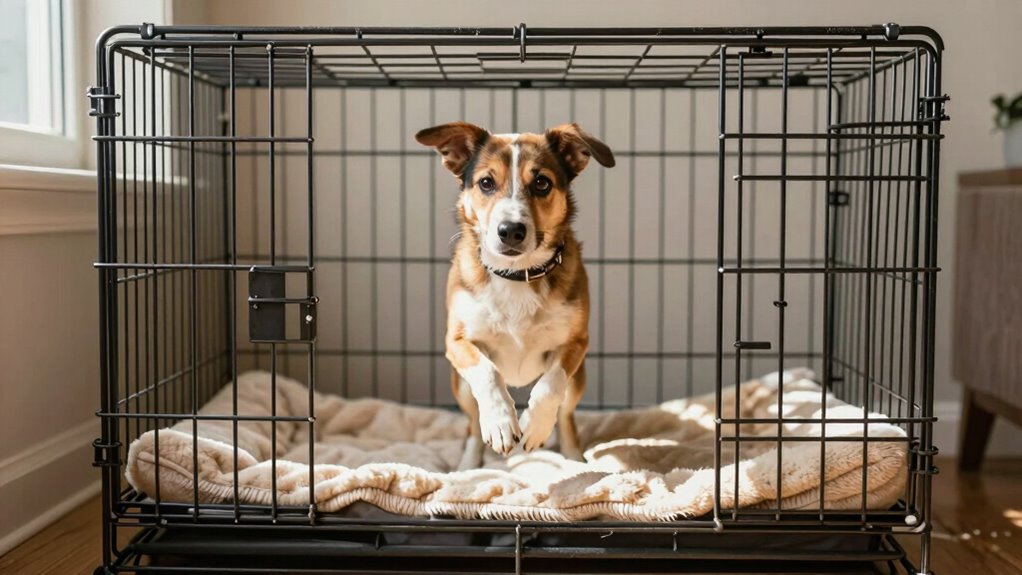
Creating a safe and cozy crate starts with choosing the right size—your dog should comfortably stand, turn around, and lie down without feeling cramped. Prioritize crate comfort by adding soft bedding that’s easy to clean and supportive. This makes the space inviting and reduces stress. To prevent damage and guarantee safety, use chew proof solutions like durable, non-toxic materials on crate edges or doors. Remove any items that could be chewed or swallowed, and avoid placing tempting objects inside. Keep the crate in a quiet, familiar spot to help your dog feel secure. Additionally, incorporating training tools like a gentle leash or positive reinforcement can encourage your dog to view the crate as a safe haven. Understanding appliance safety and ensuring the crate and surrounding environment are free from hazards can further prevent accidents. Proper crate placement and environment management can also significantly reduce the likelihood of escape attempts. To further enhance safety, consider using safe containment techniques that promote your dog’s confidence and comfort. Implementing behavioral training can also help your dog feel more relaxed in the crate. By making the crate comfortable and secure, you help your dog associate it with positive experiences, reducing anxiety and the urge to escape.
When Should I Seek Professional Help for Persistent Escaping?

Persistent escaping can become a serious concern when your dog repeatedly tries to break free despite your efforts to make the crate safe and comfortable. If this behavior continues, it’s time to seek professional help. A canine behaviorist can perform a thorough behavioral assessment to identify underlying causes, such as anxiety or boredom. They can also provide tailored training support to address these issues effectively. Consider consulting a professional if:
- Your dog’s escape attempts escalate or become dangerous.
- You notice signs of stress or anxiety during crate time.
- Previous training efforts haven’t improved the situation.
- Recognizing behavioral issues early can prevent escalation and ensure your dog’s safety.
Additionally, understanding canine behavioral cues can help you identify early warning signs and intervene more effectively.
Seeking expert guidance can prevent injury and help your dog feel more secure, making crate time a positive experience rather than a source of frustration.
Frequently Asked Questions
What Are the Signs of Stress or Anxiety in Escape Artist Dogs?
You’ll notice signs of stress or anxiety in your escape artist dog through body language cues like pinned-back ears, tucked tail, or trembling. Vocalizations such as whining, barking, or howling also indicate discomfort. If your dog shows these signs, it’s a good idea to assess their environment and provide more mental stimulation or comfort, helping reduce their anxiety and prevent escape attempts.
Can Certain Breeds Be More Prone to Escape Behavior?
Think of breed tendencies as a map guiding your dog’s escape routes. Some breeds, like Jack Russells or Beagles, have personality traits that make them more prone to escape because they’re curious and energetic. You notice this firsthand when your energetic Labrador keeps trying to break free from its crate. Recognizing these traits helps you tailor training and safety measures, ensuring your escape artist stays secure and happy.
How Does Age Influence a Dog’s Likelihood to Escape?
As your dog ages, their likelihood to escape can change due to age-related behavior and puppy independence. Younger dogs, especially puppies, often test boundaries and seek independence, making them more prone to escape attempts. As they mature, they might become calmer, but some older dogs still try to escape out of curiosity or anxiety. Understanding these age-related behaviors helps you tailor training and crate environment to keep your dog safe and secure.
Are There Specific Training Techniques to Discourage Escape Attempts?
You can discourage escape attempts by using positive reinforcement and boundary training. When your dog stays calm and respects the crate, reward them with treats and praise. Consistently reinforce boundaries by gradually increasing crate time and teaching your dog to see the crate as a safe space. Avoid punishment, and instead, focus on making the crate a positive environment, which helps prevent escape behaviors and builds your dog’s confidence.
What Safety Hazards Should I Watch for During an Escape?
You should watch for hazardous objects like sharp tools, electrical cords, or toxic substances that your dog might encounter during an escape. Also, check for potential escape routes, such as loose bars or gaps in the crate, that could cause injuries. Keep the area secure and free of dangers, and guarantee your dog’s environment is safe before leaving them alone. Vigilance helps prevent accidents during their escape attempts.
Conclusion
Remember, preventing your pup’s persistent pretext for breaking free requires patience, practice, and proper preparation. By building a bond of trust, creating a cozy, calming cage, and consulting professionals when needed, you can curb their clever escapes. Stay consistent, secure, and supportive, turning anxious attempts into adorable, obedient adventures. With dedication and details, you’ll develop a doggy haven that’s safe, secure, and stress-free—making your journey joyful and your dog’s days delightful.