To teach your dog to accept touch calmly, observe their body language for signs of discomfort like tucked tails or pinned ears. Use gentle, predictable routines, calm voices, and slow movements to prevent startling them. Gradually introduce touch, rewarding calm behavior with treats and praise. Patience and consistent practice are key, as building trust takes time. By understanding and respecting their signals, you’ll foster a confident, relaxed dog—more tips await as you explore this essential skill.

Get pet supplies delivered free — and shop member deals
- Fast, free delivery on millions of items
- Access to Prime Big Deal Days deals on October 6–7
- Prime Video, Amazon Music and more included
Key Takeaways
- Recognize and interpret signs of stress, such as tucked tails and lip licking, to adjust handling accordingly.
- Use calm voice, slow movements, and positive reinforcement to create a safe, predictable environment.
- Introduce touch gradually, starting with comfortable areas, and reward calm behavior consistently.
- Progress at the dog’s pace, avoiding force and celebrating small improvements to build trust.
- Develop a routine to reinforce positive associations and make handling easier over time.
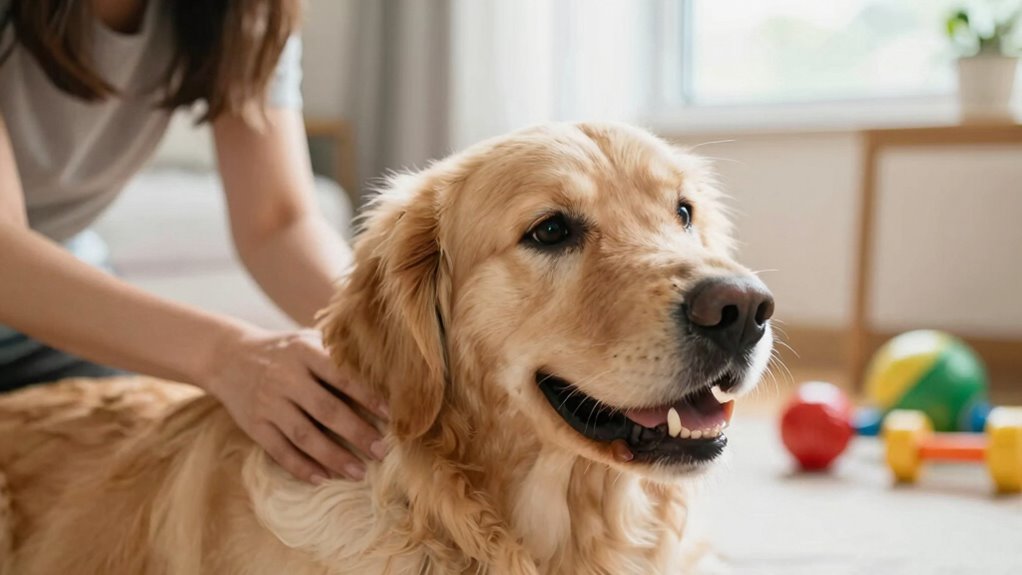
Have you ever wondered how to effectively handle sensitivity in yourself or others? When it comes to dogs, sensitivity often manifests in their reactions to touch or new situations. Recognizing dog body language is essential in understanding what your dog feels and how they communicate discomfort or stress. Watch for signs like tucked tails, pinned ears, lip licking, or stiff body posture. These cues indicate that your dog might be feeling overwhelmed or anxious. By paying close attention to these signals, you can better tailor your approach to help them feel safe and secure.
To help your dog accept touch calmly, you need to employ calming techniques that build trust and reduce anxiety. Start by creating a gentle, predictable routine for handling your dog. Use a calm voice and slow movements to avoid startling them. Gradually introduce touch by starting with areas they’re comfortable with, such as their chest or shoulders, before moving to more sensitive zones like paws or ears. Keep sessions short and positive, rewarding your dog with treats or praise after each gentle contact. This positive reinforcement teaches them that touch leads to good things, helping them associate handling with comfort rather than fear. Additionally, understanding dog body language is crucial for recognizing their comfort levels and adjusting your approach accordingly. Being aware of stress signals can further enhance your ability to interpret their reactions and respond appropriately. Developing a consistent approach can also promote desensitization, making handling easier over time. Incorporating positive reinforcement techniques can significantly increase your dog’s willingness to accept handling.
Remember that patience is vital. Every dog has a unique threshold for handling sensitivity, so never force them into situations where they’re clearly distressed. Instead, go at their pace, and celebrate small victories. Over time, you’ll notice improvements in their dog body language, such as relaxed tail wagging or softer posture, indicating they’re becoming more comfortable. Incorporating desensitization techniques into your training can make a significant difference in helping your dog accept handling. Handling sensitivity isn’t about quick fixes but about building a trusting relationship where your dog feels safe to accept touch without fear. With attentive observation, calming techniques, and patience, you can help your dog become more accepting of handling, ultimately strengthening your bond and making both of you more comfortable during interactions.
As an affiliate, we earn on qualifying purchases.
Frequently Asked Questions
How Long Does It Typically Take to Desensitize a Sensitive Dog?
The desensitization timeline varies depending on your dog’s sensitivity level, but you can usually see progress within a few weeks. It’s important to have training patience and stay consistent with short, positive sessions. Some dogs may take longer—up to several months—while others respond quickly. Remember, every dog is different, so focus on steady progress and rewarding calm behavior to help your dog accept touch more comfortably.
Are Certain Breeds More Prone to Touch Sensitivity?
It’s ironic, but yes, certain breeds are more prone to touch sensitivity due to breed predispositions and genetic factors. For example, herding or sight hound breeds often have heightened sensitivity, possibly because of their roles requiring close contact. These genetic factors influence how dogs perceive touch, making some more naturally reactive. Knowing this can help you tailor your approach, ensuring you handle your dog with patience and understanding, no matter the breed.
Can Medication Help With a Dog’s Touch Sensitivity?
Yes, medication assistance can help with a dog’s touch sensitivity, especially if behavioral training alone isn’t enough. Veterinarians might recommend calming supplements or medication to reduce anxiety and make your dog more receptive to touch. These options can work alongside gentle training techniques, helping your dog feel more comfortable and relaxed during handling. Always consult your vet before starting any medication to guarantee it’s safe and appropriate for your dog.
What Signs Indicate a Dog Is Overwhelmed During Training?
You’ll notice signs that your dog is overwhelmed through their body language and stress signals. Look for tucked tails, pinned-back ears, yawning, lip licking, or avoiding eye contact. They might also freeze, tremble, or try to escape. If you see these signs, pause the training, give your dog space, and employ calming techniques. Recognizing these signals helps prevent stress and ensures a positive, trusting training experience.
How Do I Prevent My Dog From Becoming More Sensitive?
Your dog’s sensitivity won’t be a mountain you can’t climb. To prevent it from worsening, use calming techniques like gentle, slow movements and positive reinforcement during grooming routines. Keep sessions short and consistent, gradually increasing touch. Always respect your dog’s comfort zone, avoiding forcing interactions. These practices build trust, helping your pup stay calm and confident, even when faced with new experiences.
Conclusion
Remember, patience and gentle handling are your best allies, much like a seasoned knight learning to trust his steed. When you consistently approach your dog with calmness and respect, you’ll build a bond stronger than any medieval chainmail. Over time, your pup will accept touch with ease, turning nervousness into confidence. So, keep at it—your efforts today will guarantee a happy, relaxed companion tomorrow, proving that even in the digital age, kindness remains timeless.
Fall Picks
fall essentials
As an affiliate, we earn on qualifying purchases.