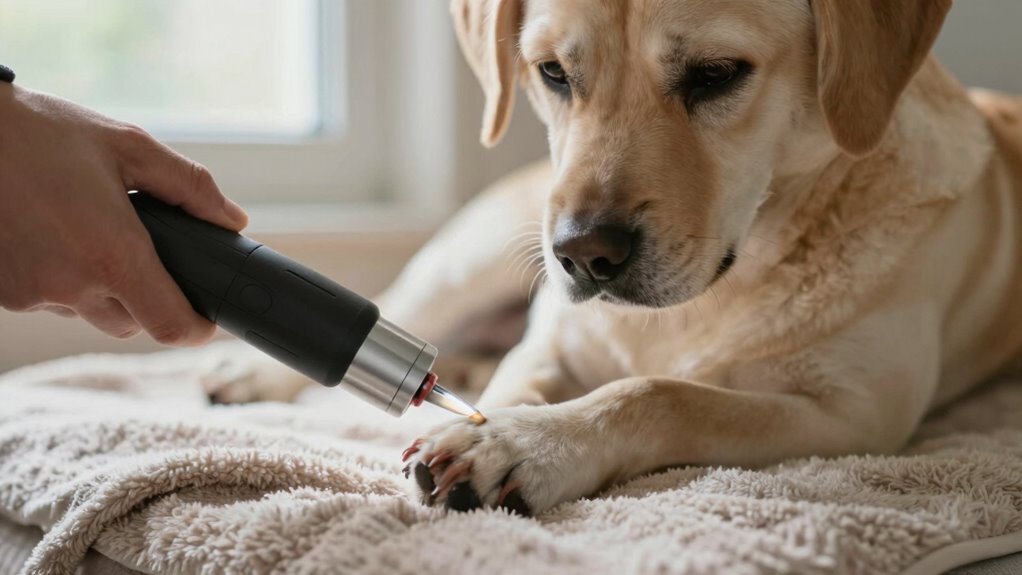
To nail grind your dog without drama, follow a simple 3-step desensitization plan. First, create a calm environment and gently introduce the grinder using treats and positive reinforcement. Next, gradually get your dog comfortable with the tool by turning it on nearby and rewarding calm behavior. Finally, slowly bring the grinder closer to the paw for short sessions, always praising patience and calmness. If you continue, you’ll discover how to overcome common hurdles and build your dog’s confidence.
Key Takeaways
- Gradually introduce the grinder using positive reinforcement and low-volume sounds to build comfort.
- Pair the grinder with treats and calm handling to create positive associations.
- Follow a consistent, step-by-step routine, ending on a relaxed note to reinforce confidence.
- Observe body language closely and adjust pace to reduce stress and prevent setbacks.
- Keep sessions short, patient, and always end with praise to foster trust and prevent drama.

LOPSIC Whisper Quiet Dog Nail Grinder with LED Light, Safe & Stress-Free for Sensitive Dogs of All Breeds & Sizes, 3 Grinding Bits, 3-Speed, Pet Nail Trimmers, Rechargeable Painless Grooming Kit
𝐖𝐡𝐢𝐬𝐩𝐞𝐫 𝐐𝐮𝐢𝐞𝐭 & 𝐒𝐭𝐫𝐞𝐬𝐬-𝐅𝐫𝐞𝐞 𝐆𝐫𝐨𝐨𝐦𝐢𝐧𝐠: Ultra-quiet and low-vibration design keeps sensitive dogs calm. No more fear, shaking, or…
As an affiliate, we earn on qualifying purchases.
As an affiliate, we earn on qualifying purchases.
Why Dogs Resist Nail Trimming: And How Desensitization Can Help
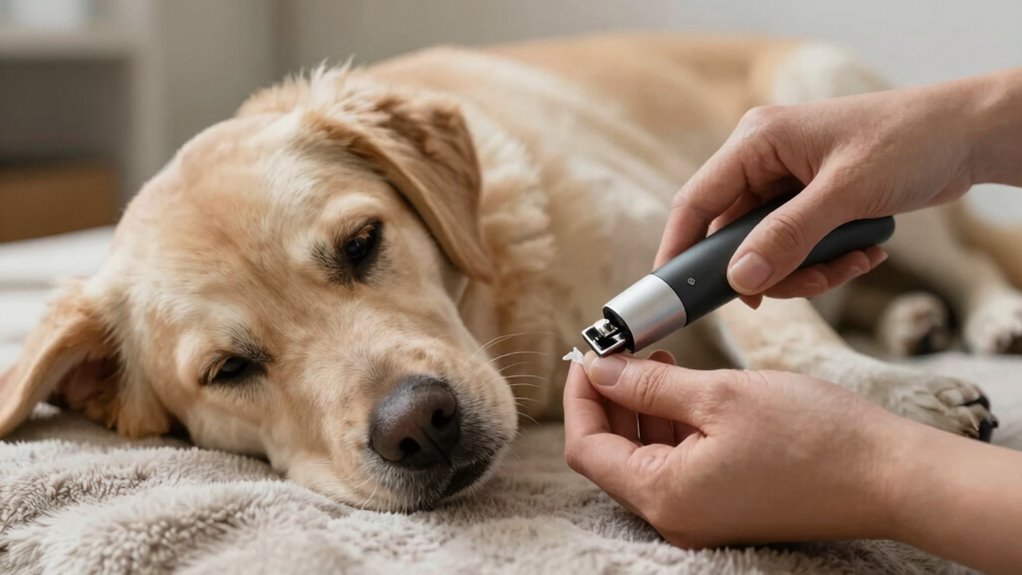
Have you ever wondered why some dogs resist nail trimming? It often comes down to paw pad sensitivity; some dogs find the touch uncomfortable or even painful. Breed-specific behaviors also play a role. For example, dogs with thick fur or protective instincts may be more sensitive or anxious about their paws being handled. Additionally, past negative experiences or rough handling can increase resistance. Understanding these factors helps you see why nail trimming can be stressful for your dog. Resistance isn’t about disobedience—it’s a natural response to discomfort or fear. Recognizing this Free Floating sets the stage for effective desensitization, which gradually helps your dog tolerate and even accept nail trims. Proper handling techniques are essential to minimize discomfort and build trust and confidence during the process. Incorporating gentle handling techniques can also reduce anxiety and promote cooperation. Consistent training and patience are crucial, as they help your dog associate nail trimming with positive experiences, making future sessions smoother. Patience and understanding are key to making the process easier for both of you.
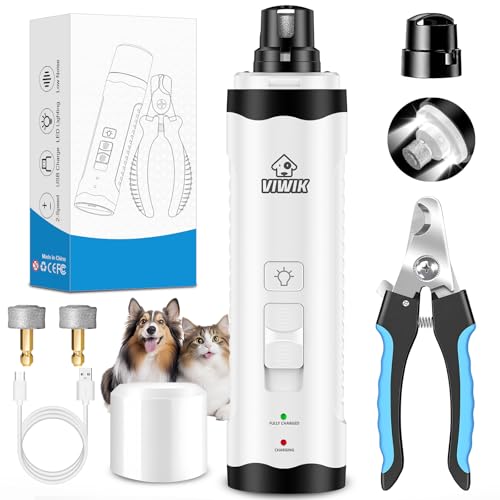
VIWIK Dog Nail Trimmers with Light, Cat Dog Nail Clippers, Dog Nail Grinder Quiet for Large Medium Small Dogs Paw & Cats Claw, Electric 2-Speed Pet Toenail Grooming Supplies, Gifts for Dog Lovers.
Efficient Electric Grinder & Safe: Keep your furry friend's nails trimmed and healthy with our professional dog toenail…
As an affiliate, we earn on qualifying purchases.
As an affiliate, we earn on qualifying purchases.
How to Prepare Your Dog and Create a Calm Nail-Trimming Environment
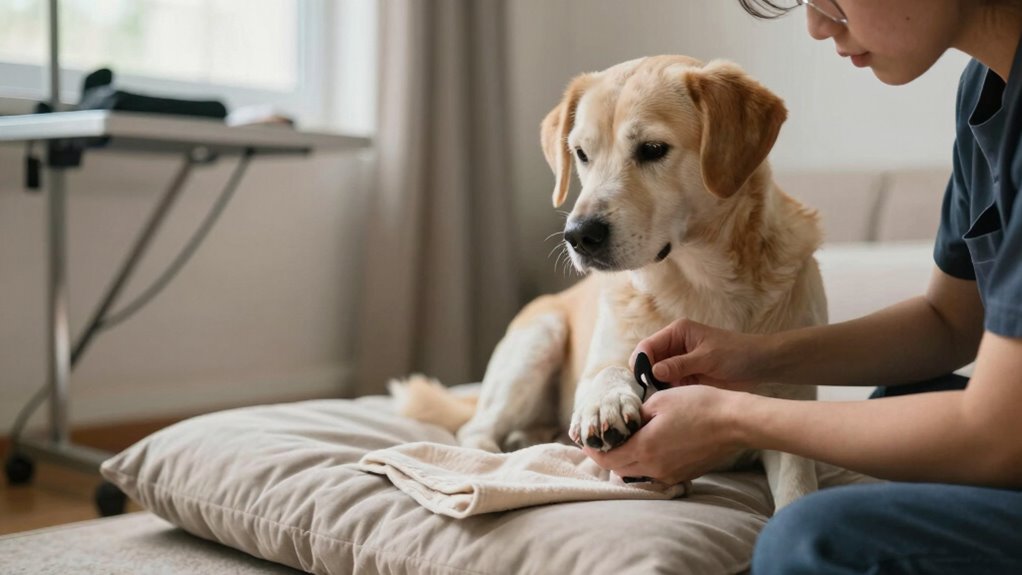
Preparing your dog and setting up a calm environment are essential steps before starting nail trimming. Understanding your dog’s behavior helps you choose the right time and approach, reducing stress. Create an environmental setup that minimizes distractions—choose a quiet space, use soft lighting, and keep tools within reach. Calm your dog by offering gentle petting or a treat beforehand, which helps establish trust. Guarantee the area is free of loud noises or sudden movements that could trigger anxiety. Keep the mood relaxed and positive, so your dog associates the environment with comfort. Additionally, paying attention to your dog’s body language can help you recognize signs of stress early and adjust your approach accordingly. Being aware of your dog’s emotional state can further enhance your ability to maintain a peaceful grooming experience. Maintaining an appropriate lighting level can also reduce glare and help keep your dog relaxed during the process. Incorporating an understanding of environmental factors can help you modify the space to better suit your dog’s needs.

Calming Chews for Dogs 200ct, Dog Calming Chews – Anxiety and Stress Relief Treats Melatonin Bites Sleep Aid for Small/Medium/Large Dogs Calm Dog – Separation, Fireworks, Thunder, Barking – Chicken
Promote Dog Calm and Anxiety Relief for Dogs: Whether it’s thunderstorms, separation, car rides, or vet visits, calming…
As an affiliate, we earn on qualifying purchases.
As an affiliate, we earn on qualifying purchases.
The 3-Step Desensitization Plan for Stress-Free Nail Grinding
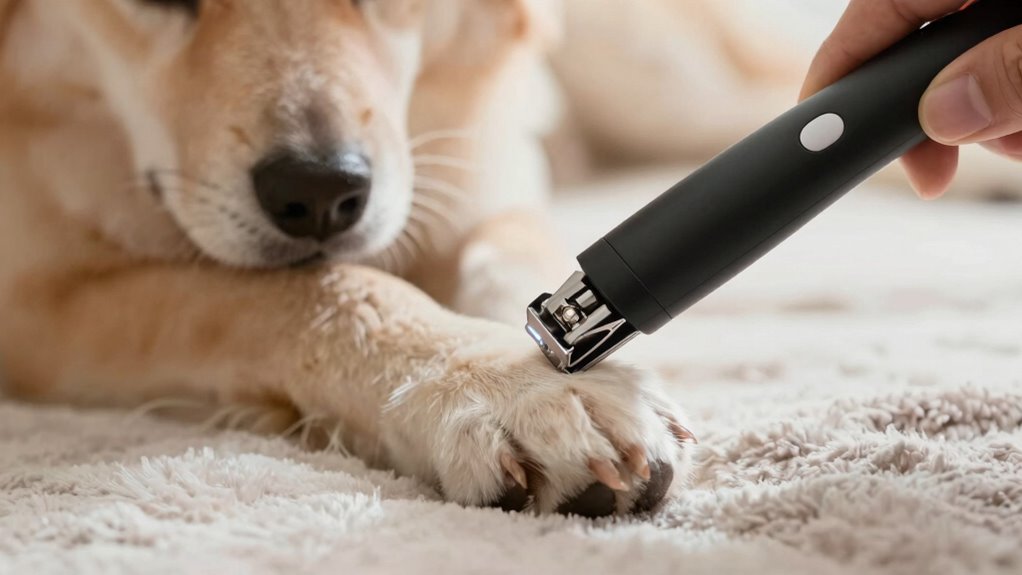
To make nail grinding stress-free, you’ll want to follow a simple 3-step plan that emphasizes gradual exposure and positive experiences. Using consistent routines and positive reinforcement helps your dog stay calm and confident throughout the process. Smart Home Technology can be integrated into your training environment to monitor your dog’s reactions and ensure a comfortable setting. Incorporating safety precautions specific to tools like nail grinders can further prevent accidents and promote a secure training experience. Understanding fandom’s cultural significance can help you recognize the importance of patience and positive associations during training, just as fans develop loyalty through positive experiences. Additionally, being aware of consumer deals like cash back and discounts can help you save on essential supplies and tools for your pet care routines. By practicing these techniques regularly, you’ll build trust and make nail grinding a much easier task. Additionally, understanding affiliate disclosure policies can help you stay informed about recommendations and potential biases during your training journey.
Gradual Desensitization Techniques
Gradual desensitization is essential for helping your pet become comfortable with nail grinding without unnecessary stress. Start by introducing the grinder in a calm environment, letting your dog sniff and explore it without turning it on. Use treats to create positive associations, reinforcing relaxed behavior around the tool. Gradually, turn the grinder on at a low volume, rewarding calmness, and slowly bring it closer to your dog’s paw. This step-by-step approach helps improve nail health by preventing injury and reducing discomfort, while also shaping better dog behavior during grooming. Patience is key; rushing can cause setbacks. Over time, your dog will associate the grinding process with positive experiences, making future sessions smoother and less stressful for both of you.
Positive Reinforcement Strategies
Positive reinforcement is a powerful tool to encourage calm and cooperative behavior during nail grinding. By rewarding your pet’s good behavior, you reinforce positive associations and support effective behavior modification. Use treats, praise, or gentle petting immediately after each calm moment to strengthen their response. Consistency is key—every successful step counts. When your pet remains relaxed, they learn that staying calm leads to pleasant rewards. This approach minimizes stress and builds trust, making future nail sessions easier. Remember, patience and timing are essential for success. Incorporating positive reinforcement strategies into your routine helps create a stress-free environment during nail grinding, helping your pet feel safe and secure. Understanding the importance of behavior reinforcement can significantly improve your training outcomes and foster a stronger bond. Utilizing global chaos awareness can help you prepare for unexpected disruptions during training sessions, ensuring your pet remains calm even in stressful environments. Being mindful of environmental factors further enhances your ability to maintain a peaceful and effective training experience. Additionally, paying attention to your pet’s body language can provide valuable cues about their comfort level, allowing you to adjust your approach accordingly. With this strategy, calm cooperation becomes their new normal.
Consistent Routine Practice
Establishing a consistent routine is essential for successfully desensitizing your pet to nail grinding. Regular practice helps build familiarity and reduces anxiety. Incorporate calming scents like lavender or chamomile to create a soothing environment, and use distraction methods such as treats or toys to keep your pet focused. Consistency means practicing at the same time each day and following the same steps to reinforce positive associations. To visualize, consider the following routine:
| Step | Activity |
|---|---|
| 1 | Apply calming scents |
| 2 | Use distraction methods (treats/toys) |
| 3 | Gradually introduce the grinder |
| 4 | Reward and praise |
| 5 | Repeat daily for progress |
Sticking to this routine builds confidence and eases stress during nail grinding sessions. Additionally, understanding the importance of proper drying and cleaning can help prevent skin irritation or infections that may arise from stress-related behaviors. Regular cleaning and infection prevention are crucial to ensure your pet remains comfortable and healthy throughout the process. Incorporating a minimalist approach to your pet care routine can also reduce clutter and simplify the desensitization process, making it more manageable and less overwhelming. Being mindful of proper drying techniques ensures your pet’s skin stays healthy, reducing discomfort and potential complications. Proper drying not only promotes healing but also minimizes the risk of fungal growth, which can occur if moisture remains on the skin.

Bodhi Dog Natural Calming Spray for Dogs – Anxiety Relief for Grooming, Travel, Fireworks & More – Gentle Care for Pets – Made in USA – Calming Lavender Scent (8 Fl Oz)
Natural Calming Care for Pets: Help your dog or cat stay calm during vet visits, grooming, storms, travel,…
As an affiliate, we earn on qualifying purchases.
As an affiliate, we earn on qualifying purchases.
Common Challenges in Desensitizing Your Dog and How to Overcome Them
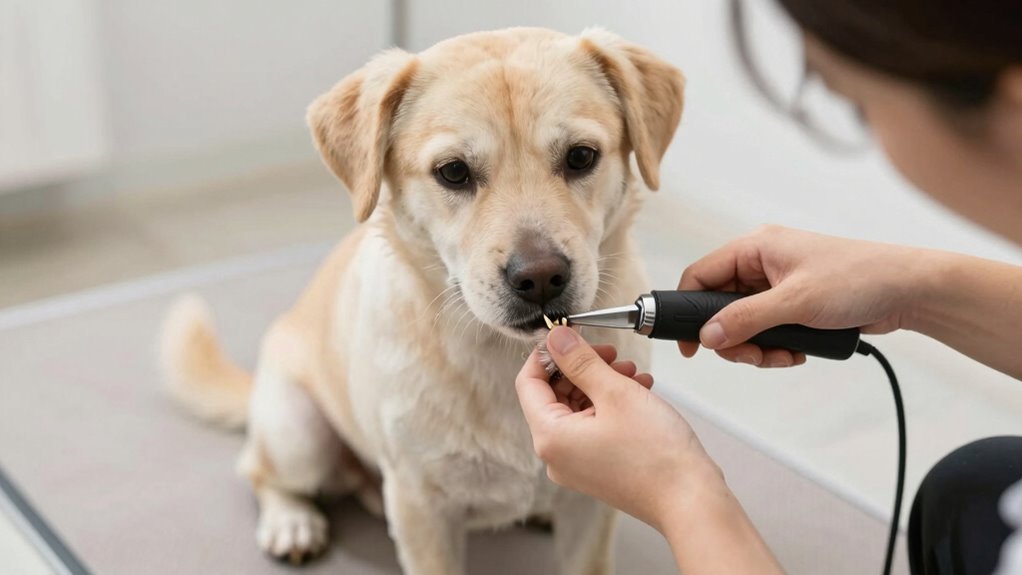
Desensitizing your dog to nail grinding can be challenging because many dogs find the noise and sensation unfamiliar or uncomfortable. You might encounter setbacks like resistance, fear, or even aggression, which can be discouraging. To overcome these obstacles, focus on behavior modification and stress reduction techniques. Patience is key, and progress may be slow. Remember, setbacks are normal, and consistency is essential. Incorporating holistic SEO approaches such as creating well-structured and engaging content can also help maintain motivation and build confidence throughout the desensitization process. Additionally, understanding regional flavors and techniques in training can help tailor your approach to your dog’s unique responses. Recognizing the importance of positive reinforcement can significantly improve your training outcomes and reduce anxiety for your dog.
Tips for Maintaining Your Dog’s Confidence During Nail Care
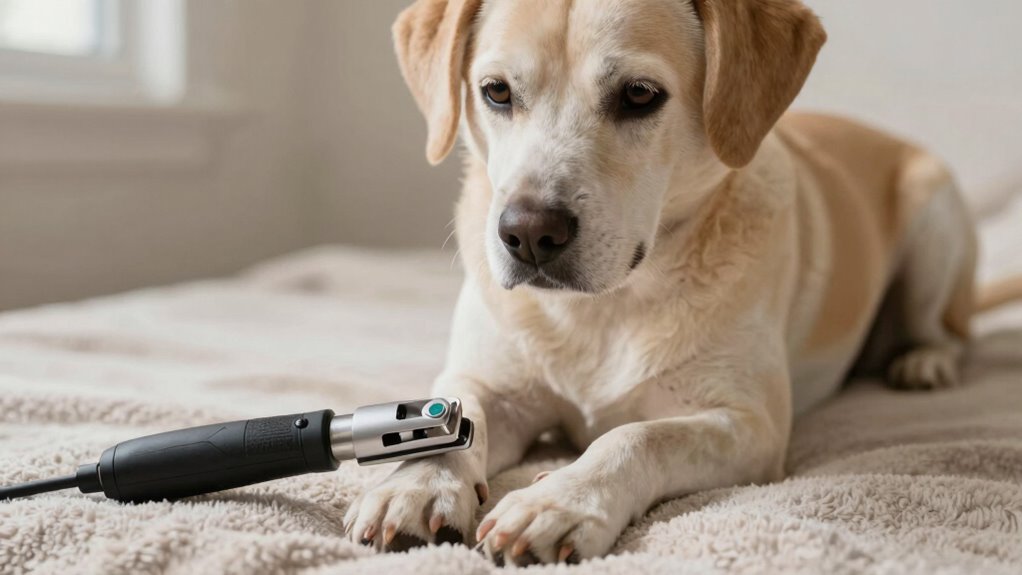
To keep your dog confident during nail care, use gentle handling techniques that make the process comfortable. Pair this with positive reinforcement to create a calm, rewarding experience. These strategies help your dog stay relaxed and trust you throughout grooming sessions.
Gentle Handling Techniques
Gentle handling is essential for keeping your dog calm and confident during nail care. Using proper handling techniques can considerably reduce stress and build trust. Focus on slow, deliberate movements that avoid startling your dog. Keep sessions short and positive, ending on a calm note. Use soothing voices and gentle touch to reinforce security. Remember, your calm demeanor directly influences your dog’s confidence.
Here are key tips to enhance stress reduction:
- Approach with patience, avoiding sudden movements
- Use treats to create positive associations
- Maintain a relaxed posture to convey calmness
- Gradually introduce handling of paws before trimming
- Always praise your dog for cooperation
These techniques foster a sense of safety, making nail care a less stressful experience for both of you.
Positive Reinforcement Strategies
Have you noticed how positive reinforcement can transform nail care into a more confident and relaxed experience for your dog? Using positive reinforcement encourages your dog to associate nail grinding with good things, making behavior modification easier. Praise, treats, or gentle petting after each successful step boost their confidence and help them stay calm. Consistently rewarding calm behavior reinforces the idea that nail care is safe and manageable. Keep sessions brief and positive, gradually increasing exposure as your dog becomes more comfortable. Remember, patience is key—celebrate small wins to build trust. By applying these positive reinforcement strategies, you’ll help your dog develop a positive attitude toward nail care, reducing stress and making the process smoother for both of you.
When to Seek Professional Help for Nail Trimming Resistance
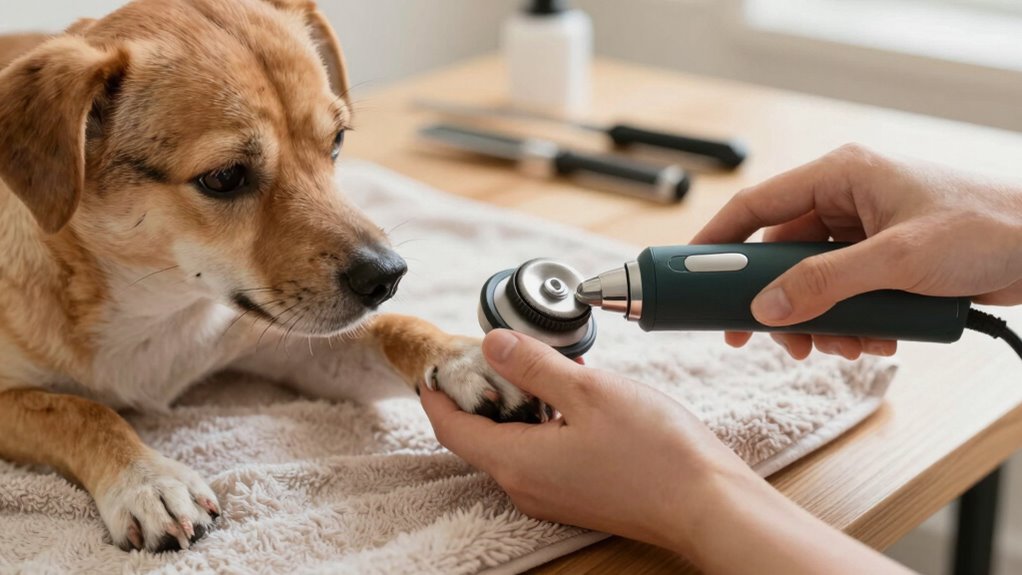
Sometimes, despite your best efforts with a nail grinding desensitization plan, your pet may continue to resist nail trimming. If you’ve tried behavior modification and built emotional resilience, but resistance persists, it’s time to seek professional help. Recognizing when your pet’s resistance is beyond your control is essential for their well-being.
Consider reaching out if you notice:
- Persistent fear or aggression during grooming
- Increased stress or anxiety signs
- Resistance that worsens despite patience
- Past trauma affecting cooperation
- Your emotional resilience is strained, and progress stalls
A professional can assess underlying issues, develop tailored strategies, and guarantee your pet’s comfort. Sometimes, expert guidance is indispensable to break through barriers and maintain a positive grooming experience.
Frequently Asked Questions
Can All Dogs Be Successfully Desensitized to Nail Grinding?
Not all dogs can be fully desensitized to nail grinding, but most respond well with patience and consistent training. Your dog’s temperament influences how easily they adapt, so some may need more time and gentle approaches. By maintaining training consistency, you help your dog build positive associations with nail grinding. Keep calm, use treats, and go slow—most dogs can learn to tolerate or even enjoy the process with your dedication.
How Long Does the Desensitization Process Typically Take?
The desensitization process generally takes several weeks, but progress tracking helps you see improvements over time. Patience duration varies for each dog, depending on their comfort level and past experiences. You might notice small wins within a few sessions, but consistent, gentle training is key. Stay patient and keep observing your dog’s reactions, adjusting your pace as needed to ensure a stress-free experience for both of you.
What Signs Indicate My Dog Is Stressed During Nail Trimming?
Did you know that nearly 25% of dogs show signs of stress during nail trimming? You’ll notice paw sensitivity if your dog tenses or pulls away. Vocalization cues like whining, growling, or yelping are common stress signals. Watch for trembling or lip licking too. Recognizing these signs helps you pause, reassure, and proceed more gently, making nail trimming a calmer experience for your furry friend.
Are There Specific Breeds More Prone to Nail Trimming Resistance?
Some breeds are more prone to trimming challenges due to breed tendencies, like small or sensitive dogs such as Chihuahuas or Yorkies. These breeds often resist nail trimming because they’re more anxious or have delicate nails. You might notice more stress signs or resistance during grooming. To ease the process, focus on gradual desensitization and positive reinforcement, making nail trimming a less stressful experience for your dog.
How Often Should I Repeat Desensitization Sessions for Best Results?
Think of your training as planting a garden—you’ll need to tend it regularly. For best results, repeat desensitization sessions weekly or bi-weekly, adjusting based on your dog’s comfort level. Use frequency tips like short, consistent sessions that build trust without overwhelming. Schedule sessions at the same time each day to create predictability. With patience and steady practice, you’ll see your dog grow more confident and relaxed during nail grinding.
Conclusion
By following this simple 3-step plan, you can turn nail grinding into a calm, stress-free experience for your dog. Did you know that over 70% of dogs initially resist nail trimming? With patience and consistency, you’ll build their confidence and make grooming a positive routine. Remember, every small step forward counts—your persistence can transform nail care from a stressful chore into a peaceful bonding moment.