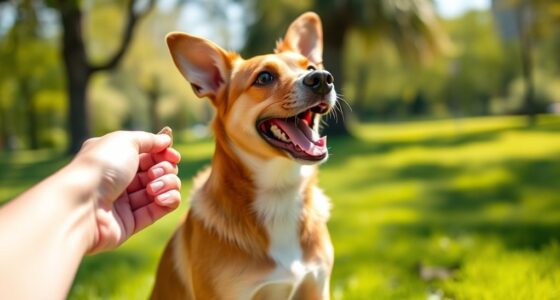
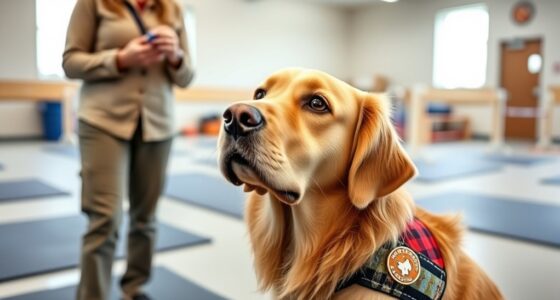
When training around squirrels, bikes, and other distractions, start in quiet areas to establish focus. Gradually introduce mild distractions and reward your dog for staying attentive. Use clear commands and redirect their attention gently if they get distracted. Practice in different environments to help your dog generalize focus skills and learn to filter out noise. With patience and consistent effort, you’ll build a confident, reliable dog ready for real-world challenges—if you continue, you’ll discover more effective techniques.
Key Takeaways
- Start training in quiet areas, gradually introducing distractions like squirrels or bikes to build focus over time.
- Use consistent, high-value rewards to reinforce attention despite external stimuli.
- Keep commands clear and maintain control with a short leash to redirect focus effectively.
- Practice in various environments to help dogs generalize focus skills across different distractions.
- Be patient and avoid punishment, emphasizing positive reinforcement to strengthen reliable attention in real-world situations.
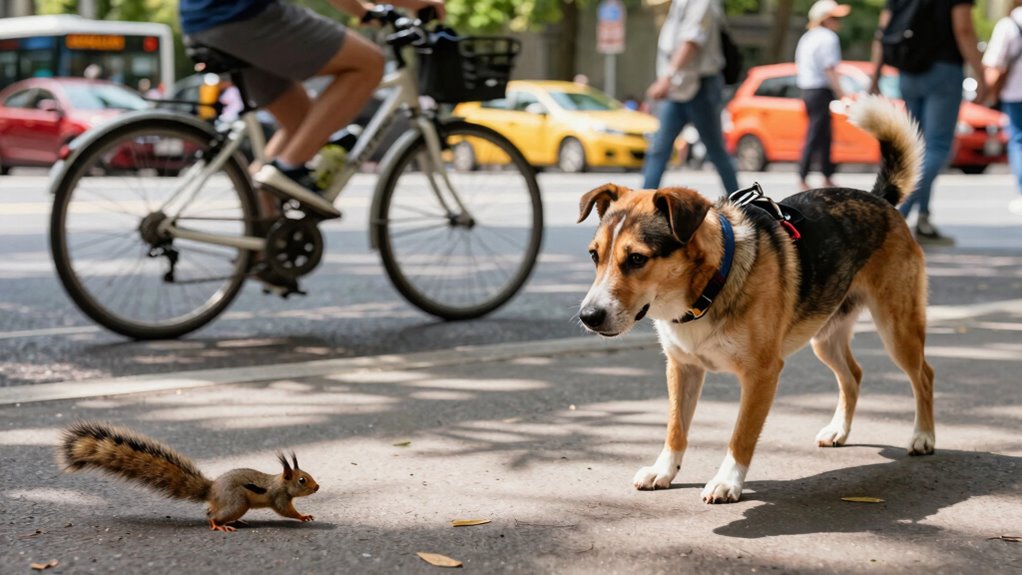
Training your dog to stay focused amid squirrels, bikes, and other everyday distractions can be challenging but essential for reliable behavior. When you’re in real-world situations, your dog encounters countless stimuli that can divert their attention. That’s where distraction management comes into play — it’s about teaching your dog to ignore these distractions and stay engaged with you. Focus reinforcement, on the other hand, helps solidify their ability to concentrate despite external chaos. Combining these two strategies creates a solid foundation for dependable obedience outside the training environment.
Teaching your dog to stay focused amid distractions builds reliable, confident obedience in real-world situations.
To start, you need to set your dog up for success by gradually increasing the level of distraction. Begin in a quiet area where your dog can focus easily, then slowly introduce mild distractions, like a friend walking by or a toy rolling nearby. As your dog gains control, bring in more tempting distractions, such as a squirrel sighting or a bike passing by. The goal is to teach your dog that staying focused on you is more rewarding than chasing or reacting to external stimuli. When they do stay attentive, immediately reward with praise or treats to reinforce the behavior, making focus a positive experience. This consistent focus reinforcement helps your dog understand what you expect in the presence of distractions.
When training around busy environments, it’s crucial to keep your commands clear and your leash short enough for control. If your dog’s attention drifts, gently redirect their focus back to you using a cue they know well, like “watch me” or “focus.” Do not punish or scold for looking away; instead, calmly re-engage them and reward their return to focus. This approach teaches them that paying attention to you is more beneficial than reacting to squirrels or bikes. Patience is key — some distractions will be harder than others, but with persistent practice, your dog will learn to ignore them. Remember, distraction management is a vital aspect of real-world training that helps your dog adapt to unpredictable environments. Developing a strong attention span is fundamental for successful obedience in dynamic settings. Regular training in different environments further enhances their ability to maintain focus despite new challenges. Incorporating positive reinforcement techniques also boosts their motivation to stay attentive, making the process more effective and enjoyable.
Incorporate frequent training sessions in different locations to generalize their focus skills. Every new environment will test their distraction management, but consistent practice and focus reinforcement will help them adapt. Remember, the goal isn’t to eliminate all distractions — that’s impossible — but to teach your dog that their best move is to stay attentive to you. Over time, they’ll learn to filter out the noise and react calmly regardless of what’s happening around them. With dedication and patience, your dog will become more reliable and confident, even when squirrels dart across the yard or bikes whiz past on the street.

Dog Training Clicker with Sring Wrist and Keyring – Pet Dog Training Clickers for Puppy, Cat, Potty, Bird, Horse, Pet, Trainer Training Tools, Behavior Aids
- New Communication Tool: Enhances interaction with your pet
- Versatile Pet Training: Suitable for dogs, cats, birds, horses
- Easy Behavior Marking: Press to mark desired actions
As an affiliate, we earn on qualifying purchases.
As an affiliate, we earn on qualifying purchases.
Frequently Asked Questions
How Do I Prevent My Dog From Chasing Squirrels During Walks?
To prevent your dog from chasing squirrels during walks, you need to understand squirrel behavior and implement distraction management techniques. Keep your dog’s focus on you with high-value treats and commands like “heel” or “leave it.” Practice in low-distraction environments first, then gradually introduce real-life distractions. Consistent training, patience, and rewarding calm behavior will help your dog learn to ignore squirrels and stay focused on you.
What Equipment Can Help Reduce Bike Distractions for Dogs?
To reduce bike distractions for your dog, use a sturdy leash and harness to maintain control during walks. Incorporate distraction techniques like rewarding your dog for focusing on you instead of bikes, and gradually expose them to cycling sounds and sights. Consider a no-pull harness to help with leash training, ensuring your dog stays attentive. Consistent practice and positive reinforcement will help your dog stay calm and focused around bikes.
How Long Does It Typically Take to Train a Dog to Ignore Real-Life Distractions?
Think of training your dog to ignore distractions as sculpting a masterpiece; it takes patience and consistent effort. Usually, it takes several weeks to a few months, depending on your dog’s temperament and commitment. You’ll want to focus on building mental focus through short, frequent sessions, and perfect your reward timing to reinforce good behavior. With perseverance, your dog will learn to stay calm amid chaos, like a lighthouse guiding ships through stormy waters.
Are There Specific Training Techniques for Different Dog Breeds?
Yes, there are breed-specific training techniques you should consider. Different breeds have unique characteristics, driven by their genetic predisposition, which influence how they respond to training. Using breed-specific communication helps you connect more effectively and tailor your approach. For example, herding breeds might need more mental stimulation, while retrievers respond well to positive reinforcement. Adjusting your methods based on these traits guarantees more successful training outcomes.
How Can I Gradually Increase Distraction Levels During Training Sessions?
To gradually increase distraction levels, you should follow a distraction hierarchy, starting with minimal distractions like quiet environments. As your dog masters focus reinforcement, introduce slightly more distracting elements, such as nearby people or quiet outdoor noises. Always guarantee your dog maintains focus before moving up the hierarchy. Patience is key—reward calm behavior consistently, and avoid rushing to prevent frustration or loss of focus.
Conclusion
Remember, just like Odysseus steering through treacherous waters, your training journey requires patience and resilience amid life’s distractions. Squirrels, bikes, and daily chaos are simply the sirens singing to test your focus. Stay steady, keep your eyes on the prize, and trust that with consistent effort, you’ll master the art of calm amidst chaos. Embrace the challenge, knowing that every distraction is a stepping stone toward a stronger, more disciplined partnership with your dog.