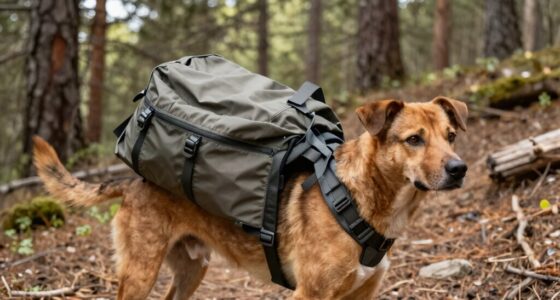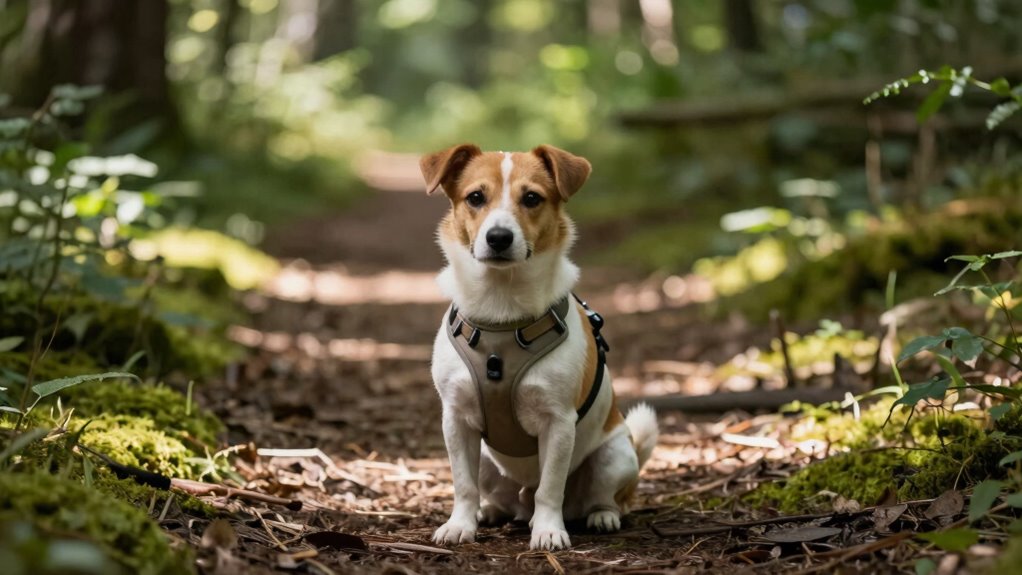

To help your shy dog enjoy outings with less pressure, focus on quiet environments like calm neighborhoods or peaceful nature trails. Use gentle techniques such as positive reinforcement and allowing your dog to approach stimuli at their own pace. Keep outings short and relaxed, helping your dog build confidence gradually. Creating positive experiences and being patient can make a big difference. Keep exploring these gentle strategies to nurture your dog’s trust and enjoyment together.
Key Takeaways
- Choose quiet, less crowded locations like peaceful nature trails or neighborhood walks to minimize stress.
- Use positive reinforcement and treats to create a calm, rewarding experience during outings.
- Allow your dog to approach stimuli at their own pace, providing space and time if they show hesitation.
- Keep walks slow and gentle, avoiding sudden movements or loud noises that may overwhelm shy dogs.
- Gradually introduce new environments to build confidence and foster a positive, pressure-free association.
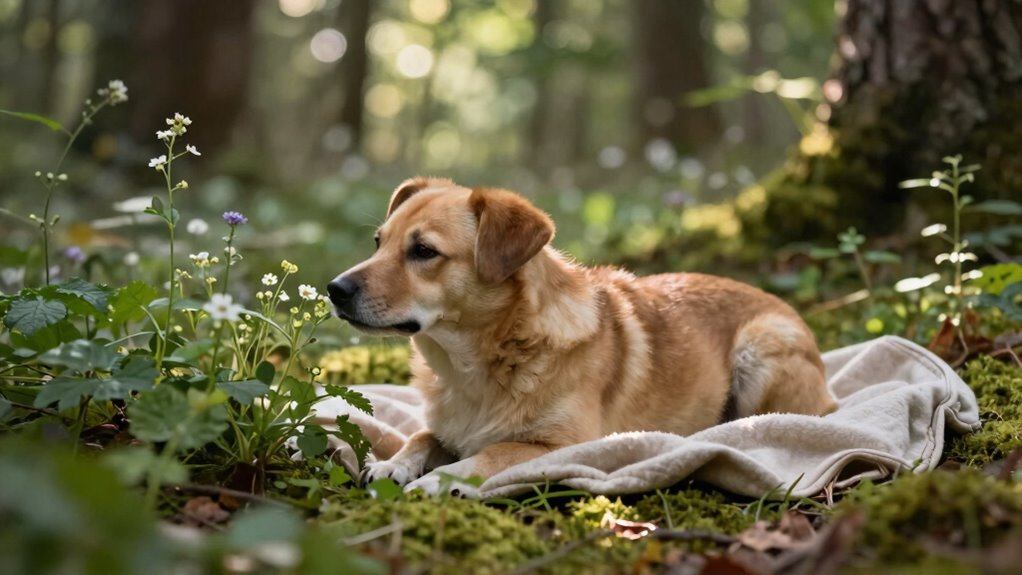
If your shy dog finds busy, noisy outings overwhelming, there are plenty of quiet adventures that can help them enjoy new experiences without added stress. These low-pressure outings are perfect for gentle training and gradual dog socialization, allowing your dog to build confidence at their own pace. Instead of thrusting them into crowded parks or bustling streets, you can start with calm environments that won’t trigger anxiety or fear. Think about taking short walks in quiet neighborhoods or exploring peaceful nature trails where your dog can observe the world without feeling threatened. These subtle experiences help your dog become familiar with different sights, smells, and sounds, all while feeling safe and secure. Incorporating positive reinforcement techniques during these outings can further enhance your dog’s comfort and trust.
Quiet walks and nature trails help shy dogs build confidence in a calm, safe environment.
When planning these adventures, focus on creating positive associations. Bring treats, toys, or their favorite blanket to reward calm behavior and reinforce that these quiet outings are enjoyable. Keep the pace slow and gentle, letting your dog approach new stimuli on their own terms. If they show signs of stress or hesitation, give them space and time to settle down before moving forward. Patience is key. Over time, repeated positive experiences will help your dog develop trust and feel more comfortable in unfamiliar settings. Incorporating dog socialization techniques can make these quiet outings even more effective in helping your shy dog adapt gradually. Socialization is not just about exposure but about creating positive, meaningful connections that foster confidence and trust. These quiet adventures give your shy dog the chance to learn how to navigate the world without feeling pressured. By focusing on gradual exposure, you can help your dog become more comfortable in new environments and reduce their overall anxiety. Over time, you’ll notice your dog becoming more curious and confident, eager to explore at their own pace. By prioritizing gentle training and calm environments, you help your dog develop a positive outlook on new experiences—making outings enjoyable instead of stressful. Remember, the goal isn’t to rush but to create a foundation of trust and comfort that encourages your dog to blossom into a more confident companion.

ThunderShirt for Dogs, Medium, Heather Gray Classic – Dog Anxiety Relief Calming Vest
- Vet Recommended: Trusted calming wrap for dogs
- Drug-Free Solution: Gentle pressure to soothe anxiety
- Versatile Use: Ideal for thunderstorms, fireworks, vet visits, and more
As an affiliate, we earn on qualifying purchases.
As an affiliate, we earn on qualifying purchases.
Frequently Asked Questions
How Can I Tell if My Dog Prefers Quiet Activities?
You can tell if your dog prefers quiet activities by observing their body language and behavior. If your dog seems relaxed, avoids loud places, or seeks calm environments, their dog personality leans toward quieter activities. Notice if they prefer gentle walks, cozy spots, or calm play. Paying attention to these cues helps you choose activity options that match your dog’s activity preferences, making outings enjoyable and stress-free for them.
Are There Specific Breeds Better Suited for Quiet Adventures?
Certain breeds with calmer temperaments and lower activity preferences are better suited for quiet adventures. Dogs like Bulldogs, Shih Tzus, and Cavalier King Charles Spaniels tend to enjoy peaceful outings, making them ideal for shy dogs needing less pressure. You’ll notice their relaxed nature makes them more comfortable in calm environments, allowing you to plan quiet adventures that match their temperament and activity level, ensuring a positive experience for both of you.
What Safety Precautions Should I Take for Shy Dogs Outdoors?
Did you know that nearly 40% of dogs experience anxiety outdoors? To keep your shy dog safe, focus on leash training to prevent escapes and guarantee control. Always bring water, avoid crowded areas, and monitor your dog’s reactions closely. Recognize signs of dog anxiety and give your dog space when needed. Using calming techniques and familiar items can make outdoor adventures less stressful and safer for your sensitive pup.
How Long Should Quiet Outings Last for Shy Dogs?
You should keep quiet outings for shy dogs around 15 to 30 minutes, gradually increasing as they become more comfortable. During these trips, focus on leash training to guarantee they feel secure and practice noise desensitization to reduce anxiety. Pay attention to your dog’s cues, and if they seem stressed, end the outing early. Short, calm experiences help build confidence without overwhelming your dog.
Can Shy Dogs Benefit From Socialization During Quiet Activities?
Like a delicate flower, your shy dog can blossom through gentle socialization during quiet activities. Yes, they benefit, but it’s key to follow dog park etiquette—keeping interactions calm and brief. Incorporate calming products, like soothing sprays or collars, to ease nerves. These low-pressure outings help build confidence without overwhelming your pup, creating positive experiences that encourage gradual social growth while respecting their gentle nature.
Conclusion
So, next time your shy dog needs a gentle escape, remember these quiet adventures. They’re your ticket to building trust without overwhelming your furry friend. With patience and understanding, you’ll see your dog blossom faster than a sunflower in summer. These low-pressure outings aren’t just good for your pup—they’re a game-changer for your bond, turning tiny steps into giant leaps of confidence. Get ready for peaceful adventures that feel just right for your sensitive, sweet companion.