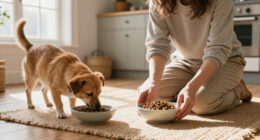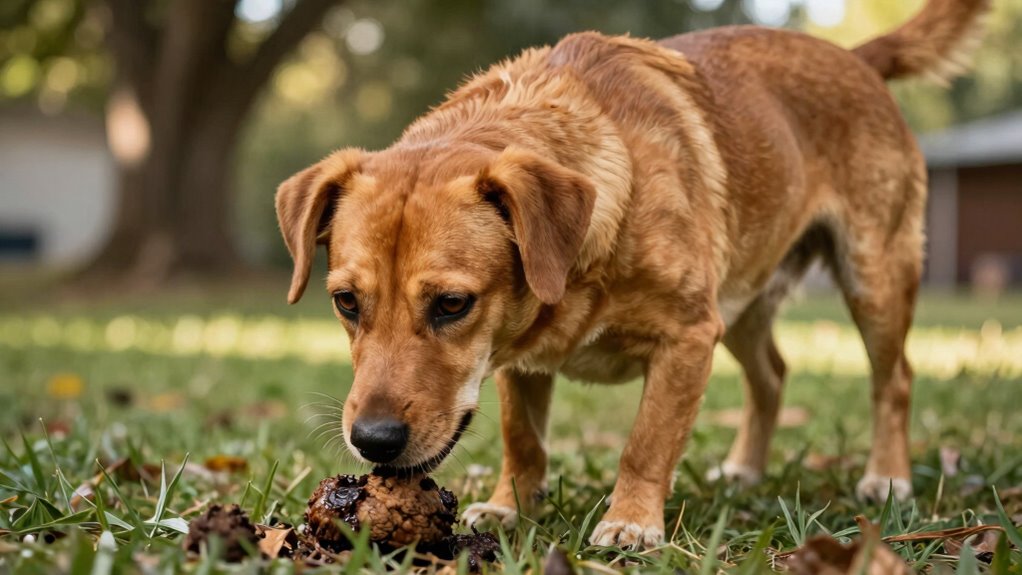

Dogs eat poop for various reasons, including boredom, stress, nutritional gaps, or health issues. They might do it because they lack enough mental or physical stimulation, have unbalanced diets, or are trying to address digestive deficiencies. Training, supervision, and providing a complete diet can help reduce this behavior. If it persists, health problems could be involved. Exploring these causes further can help you find the best solution for your dog.

Get pet supplies delivered free with Prime
- Fast, free delivery on millions of items
- Prime Video, Amazon Music and more included
- Member-only deals all year
Key Takeaways
- Dogs may eat poop due to boredom, stress, or lack of mental and physical stimulation.
- Nutritional deficiencies or unbalanced diets can trigger coprophagia as a way to seek missing nutrients.
- Proper training, supervision, and prompt removal of feces help prevent the habit from developing or continuing.
- Health issues like parasites or digestive problems may cause coprophagia; veterinary checks are recommended.
- Addressing nutritional gaps, maintaining consistency, and consulting professionals can effectively modify the behavior.
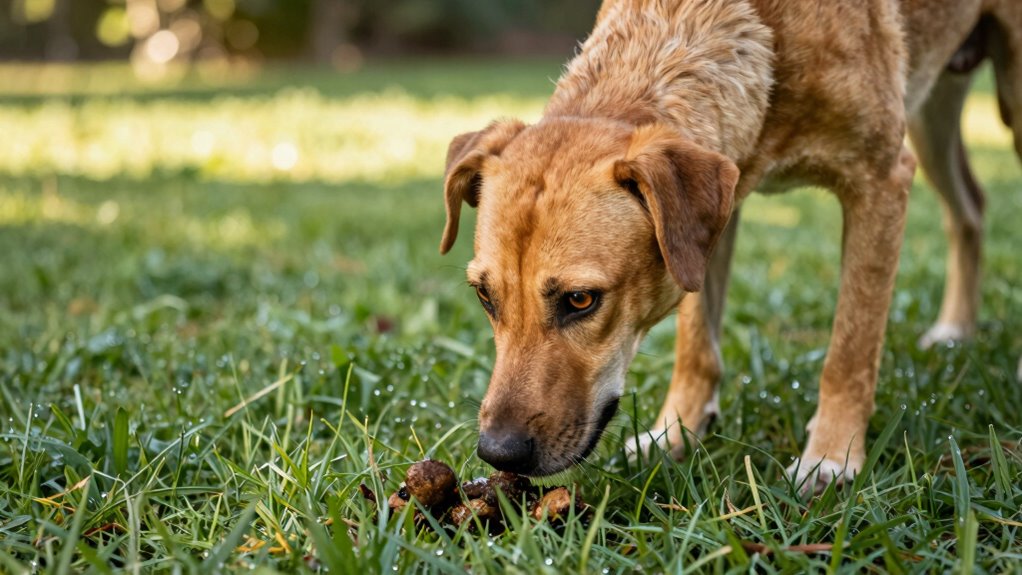
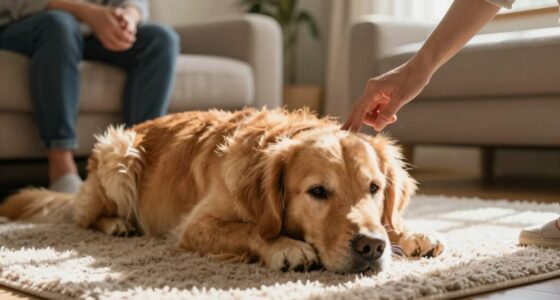
Many dog owners are surprised and often concerned when their pets start eating poop, but understanding why dogs do this can help address the behavior. Dogs may resort to coprophagia for various reasons, and pinpointing the cause is the first step toward managing it. One common reason is boredom or stress; if your dog isn’t getting enough mental or physical stimulation, they might turn to unusual behaviors like eating poop. Providing more exercise, interactive toys, and consistent routines can help reduce this urge.
Another essential factor to consider is nutritional deficiencies. When a dog’s diet lacks vital nutrients, they might instinctively seek out feces to compensate. This behavior is sometimes seen in dogs on unbalanced diets or those with digestive issues. To prevent this, you should review your dog’s diet with your veterinarian, ensuring it’s complete and well-balanced. Sometimes, adding supplements or switching to a high-quality dog food can resolve deficiencies that drive poop-eating. Ensuring your dog’s diet includes proper nutrient balance is crucial for overall health and behavior.
Training techniques are also vital in curbing this habit. If your dog is already eating poop, it’s important to interrupt the behavior calmly and consistently. Using commands like “leave it” or “no” can help teach your dog to ignore feces during walks or in your yard. When they resist the urge, reward them with treats or praise to reinforce positive behavior. Consistent supervision is key—promptly removing feces from your yard or walk areas can prevent your dog from practicing the habit. Additionally, positive reinforcement for good behavior encourages your dog to focus on you, making it easier to redirect their attention away from feces.
Sometimes, medical issues can contribute to coprophagia. Parasites, poor digestion, or certain health conditions might cause your dog to eat poop. If you notice other symptoms like vomiting, diarrhea, or lethargy, consult your veterinarian for a thorough check-up. Addressing underlying health problems can considerably reduce or eliminate the behavior. Incorporating indoor air quality improvements such as proper ventilation and purification can also support your dog’s overall health and digestion. Understanding the importance of nutritional balance can help prevent deficiencies that lead to such behaviors.
In many cases, addressing nutritional gaps, providing adequate training, and ensuring your dog’s environment is stimulating and clean can effectively stop poop-eating. It requires patience and consistency, but with the right approach, you can help your dog develop healthier habits. Remember, understanding the root cause is essential—whether it’s nutritional, behavioral, or medical—so don’t hesitate to seek professional advice if needed.
dog interactive toys for mental stimulation
As an affiliate, we earn on qualifying purchases.
As an affiliate, we earn on qualifying purchases.
Frequently Asked Questions
Can Eating Poop Harm My Dog’s Health?
Eating poop can harm your dog’s health, especially if it leads to infections or exposes them to parasites. It might also indicate dietary deficiencies or behavioral triggers like boredom or stress. You should monitor your dog closely and consult your vet to identify underlying issues. Ensuring a balanced diet and addressing behavioral triggers can help reduce this habit, safeguarding your dog’s well-being and preventing potential health risks.
How Can I Prevent My Dog From Eating Poop?
An ounce of prevention is worth a pound of cure. To stop your dog from eating poop, use consistent training techniques like positive reinforcement and redirection. Dietary adjustments, such as adding fiber or supplements, can also reduce cravings. Keep your yard clean and promptly pick up waste. By staying vigilant and patient, you can curb this behavior and keep your dog healthy and happy.
Is Coprophagia a Sign of Underlying Health Issues?
Coprophagia can sometimes signal underlying health issues, but it’s often related to behavior patterns or nutritional deficiencies. If your dog eats poop frequently, it’s wise to consult your vet to rule out medical problems. They might recommend blood tests or dietary changes. Addressing nutritional gaps or modifying behavior patterns can help reduce this habit, ensuring your dog stays healthy and happy.
Do Certain Dog Breeds Tend to Eat Poop More?
Certain dog breeds tend to eat poop more, mainly due to breed tendencies and dietary influences. For example, some terriers and hunting breeds are more prone to coprophagia because of their instinctual behaviors. Dietary factors also play a role; if your dog isn’t getting enough nutrients or has a poor diet, they might resort to eating poop. Understanding these tendencies can help you address the behavior more effectively.
When Should I Consult a Vet About Poop-Eating?
You should consult a vet if your dog’s poop-eating persists despite addressing behavioral triggers and environmental factors. If you notice sudden changes in behavior, signs of illness, or if your dog eats poop excessively, it’s time to seek professional advice. A vet can evaluate potential health issues, recommend training strategies, or identify underlying causes, ensuring your dog’s well-being and helping you manage this behavior effectively.
Conclusion
Just like a detective follows clues to solve a mystery, understanding why your dog eats poop helps you address the root cause. Imagine trying to fix a leaky faucet without knowing where the drip starts – it’s frustrating and ineffective. If you notice this behavior, don’t ignore it. Instead, observe, consult your vet, and make necessary changes. With patience and knowledge, you’ll crack the case and help your furry friend develop healthier habits.
Halloween Picks
halloween
As an affiliate, we earn on qualifying purchases.