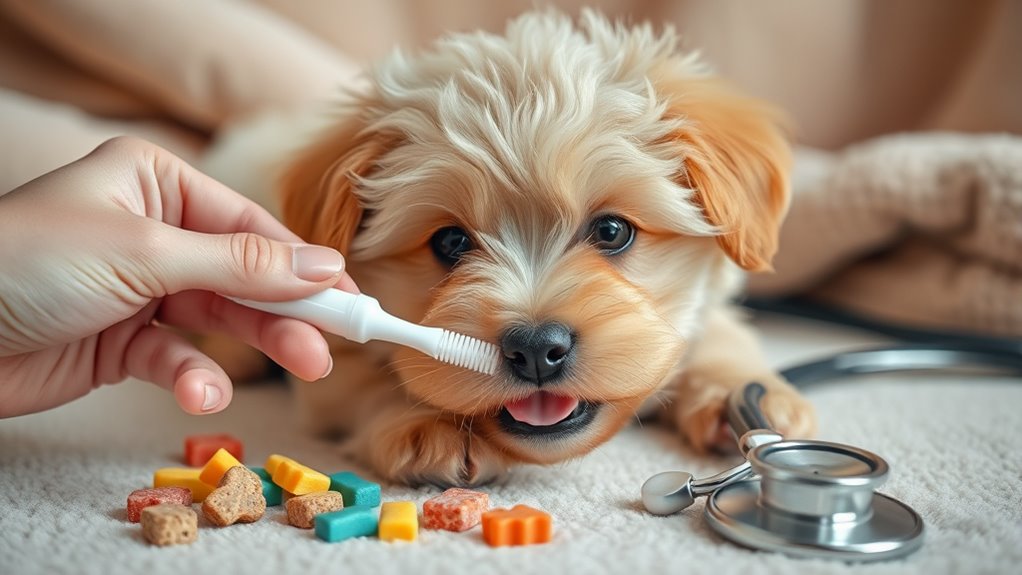

To guarantee your puppy’s dental health, start brushing their teeth with puppy-safe toothbrushes and toothpaste regularly, making it a positive experience. Offer dental treats approved by vets to help reduce plaque and keep their breath fresh, and never forget scheduled vet visits for professional cleanings and advice. Establishing strong habits early on will prevent future issues. Keep going to discover more tips for keeping your puppy’s smile bright and healthy.
Key Takeaways
- Begin dental care early with gentle brushing using puppy-safe toothbrushes and toothpaste.
- Incorporate dental treats approved by veterinary organizations to reduce plaque and promote fresh breath.
- Use soft, puppy-specific teething toys and chilled chews to soothe sore gums during teething.
- Schedule regular veterinary checkups for professional cleanings and early detection of dental issues.
- Establish a consistent dental hygiene routine with positive reinforcement to prevent future oral health problems.
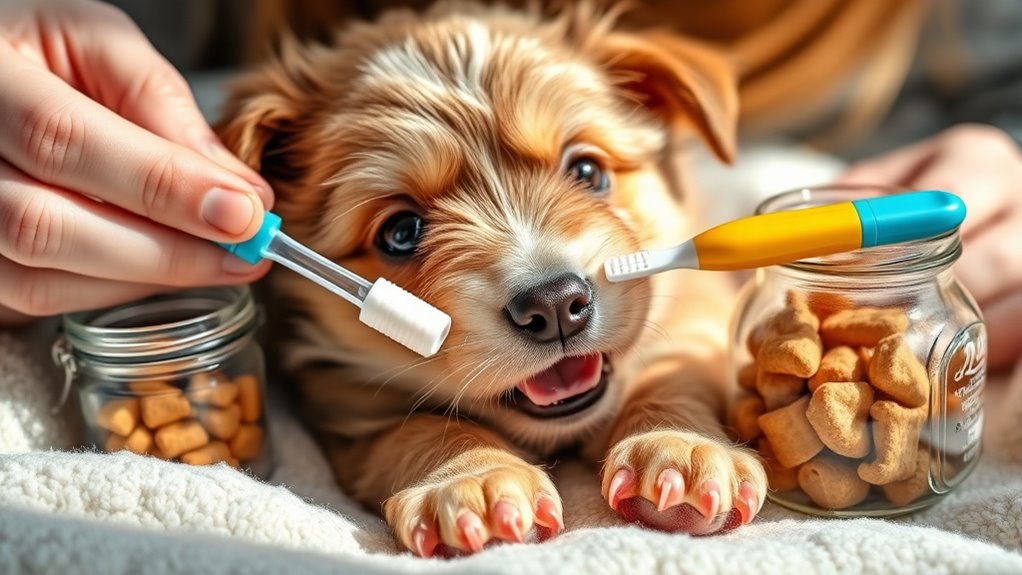
Taking care of your puppy’s teeth from a young age sets the foundation for a healthy smile throughout their life. During this early stage, your puppy will go through teething, which can be uncomfortable and challenging for both of you. To ease this process, providing teething relief is essential. You can do this by offering appropriate dental hygiene products designed specifically for puppies, such as soft rubber teething toys or chilled dental chews. These help soothe sore gums and reduce the urge to chew on inappropriate objects. Avoid giving them hard or small items that could damage their teeth or pose a choking hazard. Regularly inspecting their mouth for signs of discomfort or swelling is also a good idea.
Start dental care early with puppy-safe toys and regular inspections to ensure a healthy, happy smile.
Introducing dental hygiene products early can make a significant difference. Start with gentle, puppy-safe toothbrushes and toothpaste to establish a routine. Using a small amount of toothpaste formulated for puppies makes brushing more comfortable and helps prevent plaque buildup. Even if your puppy resists at first, patience and consistency will help them accept brushing over time. Keep sessions short and positive, offering praise and treats afterward to reinforce good habits. Building this routine early can prevent dental problems later in life, such as tartar accumulation and gum disease.
Beyond brushing, incorporating dental treats into their diet can further promote oral health. These treats are designed to reduce plaque and freshen breath, complementing your brushing efforts. When selecting treats, look for those approved by veterinary dental associations, as they’re formulated to support oral hygiene. Remember, treats should be given in moderation and as part of a balanced diet.
Visiting the vet regularly is vital for maintaining your puppy’s dental health. Your veterinarian can perform professional cleanings if needed and check for early signs of dental issues. They can also recommend specific dental hygiene products tailored to your puppy’s needs. In addition, your vet can advise you on how to improve your home dental care routine, ensuring you’re using the right techniques and products. Consistent veterinary checkups help catch problems early, saving you discomfort and costly treatments later on.
Frequently Asked Questions
When Should I Start Brushing My Puppy’s Teeth?
You should start brushing your puppy’s teeth as soon as they begin teething, usually around 3 to 4 months old. Early brushing helps establish good dental habits and prevents plaque buildup. Focus on gentle, consistent care during key dental milestones. Introducing a soft brush and puppy-friendly toothpaste early makes the process easier and less stressful. Regular brushing keeps your pup’s teeth healthy and promotes fresh breath as they grow.
Can Puppy Dental Treats Replace Brushing?
Think of puppy dental treats as the lighthouse guiding your pup’s chewing habits, but not as a full replacement for brushing. While treats serve as great treat alternatives and help reduce plaque, they can’t reach every nook and cranny like brushing does. Regular brushing is essential for thorough cleaning, ensuring your pup’s teeth stay healthy and strong. Use treats to complement, not substitute, your oral care routine.
How Often Should I Schedule Vet Dental Checkups?
You should schedule vet dental checkups every six to twelve months to prevent dental plaque buildup and reduce the risk of mouth infections. Regular visits allow your vet to thoroughly examine your puppy’s teeth and gums, catching issues early. Consistent checkups are essential for maintaining oral health, especially if your puppy isn’t brushing frequently. Stay proactive to keep their mouth healthy and free from painful infections.
Are There Specific Toothbrushes for Puppies?
Yes, there are specific puppy toothbrushes designed for their smaller mouths and softer teeth. You should look for puppy toothbrushes or special dental brushes made with gentle bristles to avoid hurting your pup’s gums. These brushes typically have smaller heads and ergonomic handles, making it easier to clean your puppy’s teeth effectively. Using the right puppy toothbrushes helps establish good dental habits early and keeps your pup’s teeth healthy.
What Are Signs of Dental Problems in Puppies?
When it comes to your puppy’s dental health, look out for signs like persistent bad puppy breath and loose teeth. These could indicate problems needing attention. If your puppy’s breath smells especially foul or their teeth wobble, it’s a sign to consult your vet. Catching issues early saves you from a toothache in the long run, so stay alert and don’t ignore these warning signs.
Conclusion
By staying consistent with brushing, offering healthy treats, and scheduling regular vet visits, you set your puppy up for a lifetime of healthy teeth. For example, imagine a puppy named Max whose owner started dental care early—now, Max has no signs of plaque or bad breath at his annual checkup. Your dedication today can prevent costly dental issues tomorrow. Keep up the good work, and your pup will thank you with a bright, happy smile for years to come.