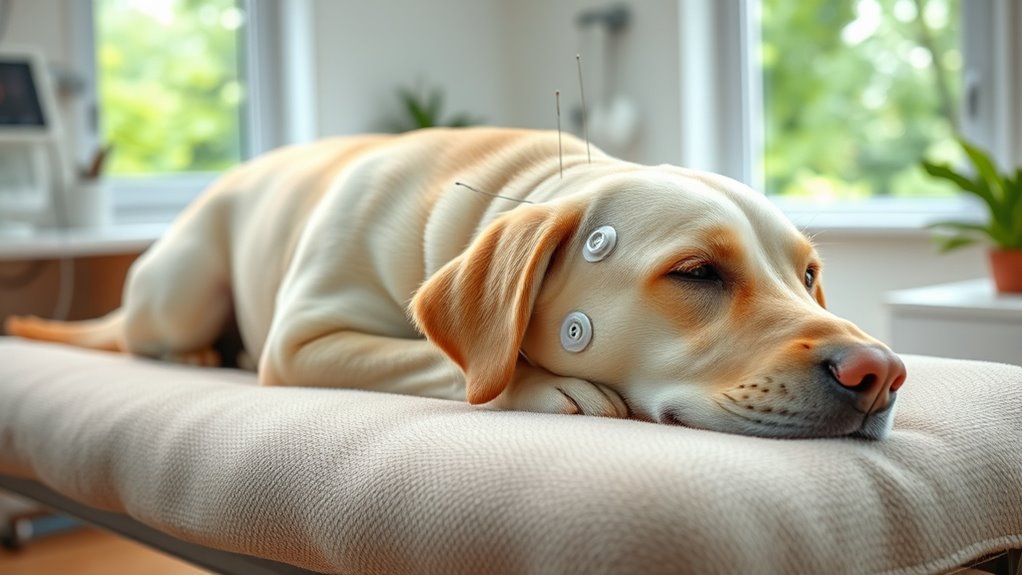

Acupuncture for dogs is a safe, natural therapy that can help manage chronic pain, improve mobility, and support overall health. During treatments, tiny needles are inserted into specific points to promote healing, reduce inflammation, and boost circulation. Most dogs tolerate the procedure well and often find it soothing. Regular sessions, often part of a holistic care plan, can enhance your pet’s quality of life. If you want to discover more about how this therapy works, keep exploring.
Key Takeaways
- Acupuncture stimulates specific points to promote healing, reduce inflammation, and manage chronic conditions like arthritis and nerve issues.
- The procedure involves inserting tiny, sterile needles; dogs often relax or sleep during treatment, which lasts 15-30 minutes.
- Benefits include pain relief without medication side effects, improved circulation, nerve function, and enhanced overall well-being.
- Typically, a series of sessions are recommended for chronic conditions, with regular treatments maintaining pain relief and mobility.
- Acupuncture is safe, suitable for dogs of all ages and sizes, and should be discussed with a veterinarian as part of a holistic pet care plan.
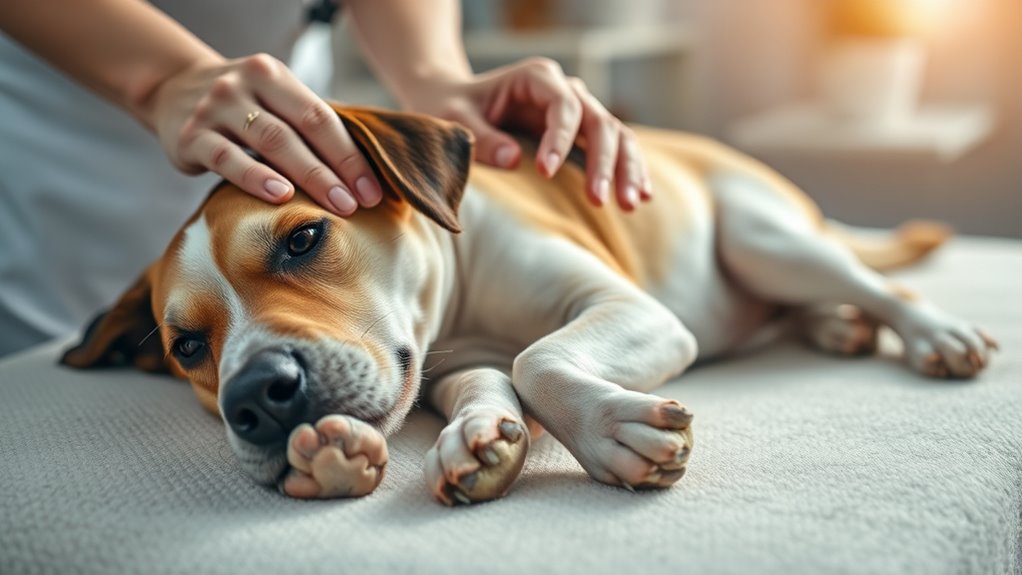
Have you ever considered acupuncture as a treatment option for your dog? Many pet owners are turning to this ancient therapy as part of a broader approach to pet pain management and holistic veterinary care. Unlike conventional treatments that often rely solely on medications, acupuncture offers a natural and drug-free way to help your dog feel better and regain mobility. It works by stimulating specific points on your dog’s body, which can promote healing, reduce inflammation, and alleviate pain. This method is especially appealing if your dog suffers from chronic conditions like arthritis, hip dysplasia, or nerve issues. It’s a gentle, non-invasive procedure that can complement your veterinarian’s overall treatment plan, aiming to improve your pet’s quality of life.
Acupuncture offers a natural, drug-free approach to easing your dog’s pain and improving mobility.
When you bring your dog for acupuncture, expect a calming and positive experience. The veterinarian will typically perform a physical exam first, evaluating your dog’s health history and current condition. During the session, tiny, sterile needles are inserted into specific points based on your dog’s needs. You might notice your dog relaxing during the treatment, and some may even fall asleep. The procedure itself is usually quick, often lasting between 15 to 30 minutes. You might be surprised at how well your dog tolerates the needles—most dogs find it quite soothing. Afterward, your vet may recommend a series of sessions, especially if your dog has a chronic condition. Regular treatments can help maintain pain relief and support your pet’s overall well-being.
One of the key benefits of acupuncture is its ability to provide relief without the side effects associated with some medications. It’s an integral part of holistic veterinary care, which considers all aspects of your dog’s health—physical, emotional, and energetic. Acupuncture can also boost circulation, improve nerve function, and promote natural healing processes. Many pet owners notice their dogs becoming more active, happier, and less dependent on pain medications after starting acupuncture. It’s a safe, gentle therapy suitable for dogs of all ages and sizes, making it an excellent addition to your pet’s health routine.
Ultimately, choosing acupuncture shows that you’re committed to a thorough approach to your dog’s health. When combined with proper veterinary guidance, it can considerably enhance your pet’s comfort and mobility. If you’re interested, discuss it with your veterinarian, who can help determine if acupuncture is the right fit for your dog’s specific needs. With patience and regular sessions, you can provide your furry friend with a natural path to relief and a better quality of life.
Frequently Asked Questions
How Long Does an Acupuncture Session Typically Last?
A typical acupuncture session lasts about 15 to 30 minutes, depending on your dog’s needs. The session duration can vary based on the treatment plan, and your vet may recommend treatment frequency, often weekly or biweekly at first. As your dog responds, the vet might adjust the session length or frequency to guarantee ideal benefits. Always follow your vet’s advice for the best results.
Are There Any Risks or Side Effects for Dogs?
You might wonder if acupuncture for dogs is a double-edged sword. Risks assessment shows minimal side effects, making it a gentle breeze for your pup. Some dogs may experience temporary soreness, fatigue, or mild bruising—like a light storm passing through. Overall, serious risks are rare. With proper vet guidance, you can sail smoothly, knowing this natural treatment offers benefits with only gentle ripples rather than tumultuous waves.
How Many Treatments Are Usually Needed for Noticeable Results?
You can usually expect to see noticeable results within 3 to 6 treatments, depending on your dog’s condition. Treatment frequency typically involves weekly sessions initially, then spreading out as your dog responds. Keep in mind, response timeline varies; some dogs show improvement sooner, while others may need more sessions. Regular assessments with your vet will help determine the most effective treatment plan for your furry friend.
Can Acupuncture Be Combined With Other Therapies?
Yes, you can definitely combine acupuncture with other therapies. Holistic integration allows your veterinarian to create an all-encompassing treatment plan tailored to your dog’s needs. Veterinary collaboration ensures that acupuncture complements other treatments like physical therapy, medication, or dietary changes. This coordinated approach can enhance your dog’s recovery and well-being, providing a more effective and balanced care plan that addresses all aspects of their health.
Is Acupuncture Suitable for All Dog Breeds and Ages?
Ever wonder if acupuncture suits your dog? Generally, it’s safe for most breeds and ages, but breed considerations and age suitability matter. Younger puppies and senior dogs might need special care or modified treatments. Always consult your veterinarian or a canine acupuncture specialist to determine if your dog’s breed and age are appropriate. With proper guidance, acupuncture can be a beneficial therapy for many dogs, regardless of breed or age.
Conclusion
While some might worry about the needles, imagine gently guiding your furry friend through a calming session, helping ease their pain and boost their well-being. Acupuncture isn’t just about the needles—it’s about restoring balance and comfort. With proper care and a skilled veterinarian, your dog can enjoy a gentle, relaxing experience that promotes healing. So, give it a try—you might be surprised at how much your pup can benefit from this natural, holistic approach.