Many dog owners underestimate how quickly temperatures can rise inside a parked car, often increasing over 20°F within just 10 minutes. Even on mild days, the interior can reach life-threatening levels, making heatstroke a real danger. Dogs can’t cool themselves effectively, so leaving them in a hot car is risky and often deadly. To learn essential safety tips and how to protect your pet, keep exploring these vital facts.
Key Takeaways
- Car interior temperatures can reach 120°F (49°C) in just 10 minutes, far exceeding outside temperatures.
- Dogs’ limited cooling mechanisms make them highly susceptible to heatstroke in hot cars.
- Owners often underestimate how quickly temperatures rise and the danger involved.
- Even with windows cracked or shade, car temperatures can become lethal within minutes.
- Immediate action, such as cooling and hydration, is critical if a dog shows signs of heat stress.

URPOWER Dog Car Seat Cover for Pets 100% Waterproof Seat Cover Hammock 600D Heavy Duty Scratch Proof Nonslip Durable Soft Back Seat Covers for Cars Trucks and SUVs
DOG HAMMOCK WITH SIDE FLAPS – URPOWER dog seat cover with side flaps can protect not only your…
As an affiliate, we earn on qualifying purchases.
As an affiliate, we earn on qualifying purchases.
Why Dogs Are at Risk of Heatstroke in Hot Cars
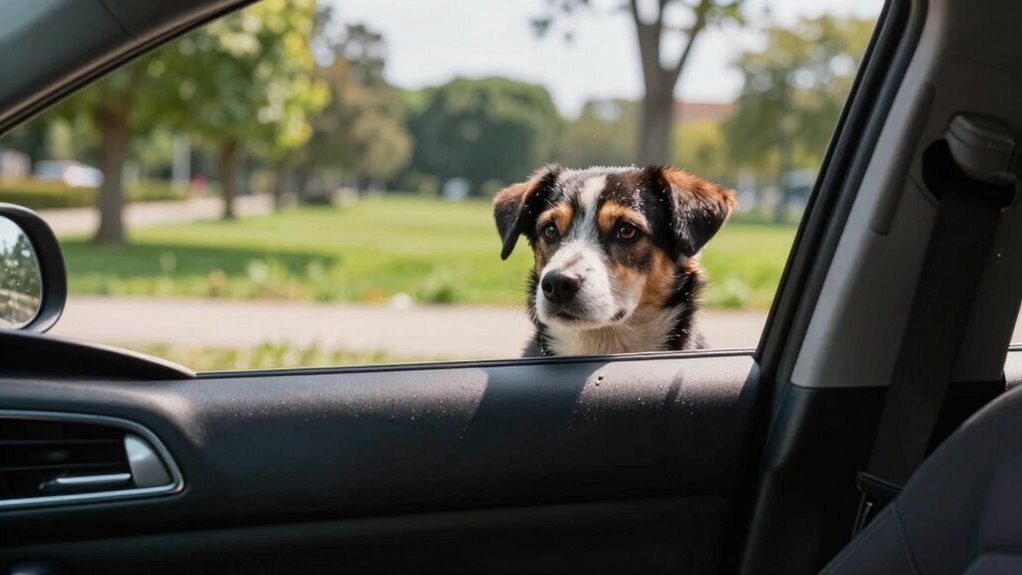
Have you ever wondered why dogs are especially vulnerable to heatstroke in hot cars? Dogs can’t cool themselves efficiently like humans, making them prone to heat exhaustion quickly. When trapped inside a hot vehicle, their body temperature rises rapidly, risking dangerous heatstroke. Unlike humans, dogs don’t sweat through their skin; instead, they rely on panting and limited dog cooling mechanisms. As the temperature inside the car climbs, their body struggles to dissipate heat, leading to signs of heat exhaustion such as drooling, weakness, and rapid breathing. Without immediate intervention, this can escalate to life-threatening heatstroke. That’s why it’s essential to recognize the risks and never leave your dog unattended in a hot car, especially during peak temperatures. Understanding canine physiology helps emphasize why dogs need extra protection in hot environments.

Portable Stroller Mini Fan, Small Rechargeable Personal Fan, Baby Travel Essentials for Wagon, Car Seat, Treadmill, Battery Powered Biking Gear Accessories, 360° Rotation, 3-Speed, Display, Black
3 SPEEDS & ROTATABLE HEAD: The stroller fan has 3 wind speeds (low/medium/high) and a 360°rotatable head, you…
As an affiliate, we earn on qualifying purchases.
As an affiliate, we earn on qualifying purchases.
How Fast Temperatures Can Skyrocket Inside a Vehicle

Inside a hot car, temperatures can rise rapidly, sometimes doubling in just 10 minutes. Sunlight intensifies the heat, trapping it inside and making conditions much worse than outside. Understanding how quickly these temperatures spike can help you stay safe and avoid dangerous situations. Additionally, knowing the capacity of your vehicle’s interior can help you recognize how much heat it can retain.
Rapid Temperature Rise
Temperatures inside a car can increase rapidly, often reaching dangerous levels in just a matter of minutes. Ventilation issues can worsen this effect, trapping hot air inside and preventing fresh air from cooling the cabin. Without proper airflow, the temperature can climb even faster. Cooling systems, like air conditioning, can help, but they rely on the vehicle being turned on and functioning properly. If the vehicle’s engine is off, these systems won’t work, and the temperature can skyrocket in a short time. Even a shaded car isn’t safe for long if your pet is left inside. The key is understanding how quickly heat can build up and never underestimate how fast conditions can become life-threatening. Acting swiftly is critical to prevent heatstroke and save your pet’s life. Proper airflow plays a crucial role in mitigating temperature buildup inside vehicles.
Sunlight Intensifies Heat
Sunlight can cause the temperature inside a car to rise incredibly fast, often reaching deadly levels in just minutes. When your vehicle is exposed to direct sun, the heat intensifies quickly, making it dangerous for pets. Even brief car sun exposure can cause temperatures to soar beyond safe limits. To reduce this risk, consider shade options like parking in shaded areas or using reflective sunscreens. Remember, the sun’s rays penetrate windows, trapping heat inside. Understanding heat buildup inside vehicles highlights the importance of these precautions to protect your furry friends.
- Park in shaded spots whenever possible
- Use sunshades or reflective window covers
- Crack windows slightly for airflow
- Avoid leaving pets in cars during peak sunlight
Understanding how sunlight amplifies heat inside your vehicle is vital. Taking these precautions can help prevent heat-related emergencies for your furry friends.
Inside vs. Outside
Because cars trap heat so efficiently, the temperature inside can rise dramatically within minutes, often much faster than outside. This rapid increase is due to ventilation concerns, as limited airflow prevents heat from escaping. Even on mildly warm days, interior temperature variation can be extreme—what feels comfortable outside can become dangerously hot inside. The interior can reach over 120°F (49°C) in as little as 10 minutes, creating a lethal environment for pets. Without proper ventilation, the trapped heat intensifies quickly, making it vital to understand how fast temperatures escalate inside a vehicle. Ventilation issues significantly contribute to the rapid temperature rise, further emphasizing how essential it is to never leave your dog unattended, even if you think you’ll be gone just a moment. Additionally, interior heat buildup can occur rapidly due to the insulation properties of car materials, which further exacerbates the danger. Moreover, trapped heat is often compounded by the reflective surfaces and materials inside the car, intensifying the temperature increase.

ARCA PET Cat & Dog First Aid Kit for Car – Pet Emergency Kit for Home Office Travel – Dog Camping Essentials with Digital Thermometer, Muzzle & Mini First Aid Pouch
ENSURE PET SAFETY ON THE GO with our dog travel accessories, dog must haves in pet travel. Our…
As an affiliate, we earn on qualifying purchases.
As an affiliate, we earn on qualifying purchases.
Debunking Myths About Leaving Dogs in Cars

Many people believe dogs are safe if they’re left in a car for a short time, but that’s a dangerous myth. Temperatures can rise rapidly, even in mild weather, putting your pet at risk before you notice any signs of distress. Just because a dog looks okay doesn’t mean they aren’t suffering from dangerous heat levels inside the vehicle. Heat buildup in cars can occur quickly, especially if the vehicle is parked in direct sunlight or if the windows are rolled up. Additionally, improper wiring practices inside the vehicle can contribute to safety hazards, including potential fires or electrical failures that pose risks to both pets and owners. Recognizing the importance of vehicle safety features can help prevent such hazards and ensure your pet’s safety. Being aware of temperature monitoring systems can further aid in protecting your dog from heat-related dangers. Proper ventilation inside the car is also crucial to maintaining a safe environment for your pet.
Common Misconceptions Persist
Despite common beliefs, leaving your dog in a parked car can quickly become deadly, even on days that don’t seem excessively hot. Many owners fall for myths that suggest cracking windows or leaving water is enough, but myth busting reveals these aren’t reliable safety measures. Increased owner awareness is essential to prevent tragedy. Additionally, understanding the free floating nature of heat buildup is crucial, as it can occur rapidly regardless of external conditions. Some misconceptions include:
- “A few minutes is safe” – heat can spike rapidly, and the internal temperature of a car can rise significantly in just minutes.
- “Cracking the window keeps it cool” – it offers little temperature relief, as hot air can still circulate inside.
- “My dog is comfortable” – dogs can’t communicate heat stress effectively.
- “It’s okay if I leave the AC on” – power failures or mechanical issues happen unexpectedly.
Being aware of these heat risks can help you make better decisions and keep your pet safe.
Temperature Rise Quickly
Leaving a dog in a parked car can lead to a dangerous temperature spike in just minutes. The interior temperature can rise rapidly, turning a seemingly safe situation into a deadly trap. Even on mild days, the heat can escalate quickly, making cooling methods like cracking windows or parking in the shade ineffective. To prevent tragedy, you must actively monitor the temperature inside the vehicle. Use a reliable thermometer or a temperature monitoring device to keep track of the car’s interior. Remember, the temperature can climb sharply, and what seems safe at first can become unbearable in minutes. Never rely on assumptions—always check and stay alert. Proper ventilation and monitoring are crucial to safeguarding your pet’s safety. Additionally, understanding indoor air quality can help you recognize environmental risks that may affect your pet’s health. Recognizing early signs of heat stress can enable prompt action to prevent emergencies. Being aware of environmental factors such as humidity and sunlight exposure can further help in assessing potential dangers. Regular temperature checks can make a vital difference in preventing heat-related emergencies for your dog. Quick action and proper monitoring are your best defenses against heat-related emergencies for your dog.
Visible Signs Are Not Enough
Relying solely on visible signs to determine if a dog is in danger can be misleading. Dogs often hide their discomfort, and behavioral signs might not be obvious. Just because a dog appears calm or normal doesn’t mean they’re safe.
Remember, visual cues like panting or drooling can be subtle or misinterpreted. Behavioral signs such as restlessness, whining, or attempting to escape may be overlooked, especially if you’re distracted.
To stay alert:
- Don’t assume silence means everything’s fine
- Watch for rapid or heavy breathing
- Notice if your dog is unusually still or agitated
- Check for signs of distress, like pawing at the door
Always check on your dog regularly, regardless of their outward appearance. Visible signs are just one part of the safety puzzle.

Car Windshield Sunshade with Pet Design, Cute Dog & Cat Cartoon Front Windshield Sun Shade Foldable Sunshade Blocks Heat UV Rays, Protect Interior Keep Cool, Fits Cars SUV Truck – Medium
PROFESSIONAL AUTOMOBILE SUN SHADE: IC ICLOVER Sun Shade is made of high quality polyester material with reflective coating,…
As an affiliate, we earn on qualifying purchases.
As an affiliate, we earn on qualifying purchases.
How to Recognize Heatstroke Signs in Dogs
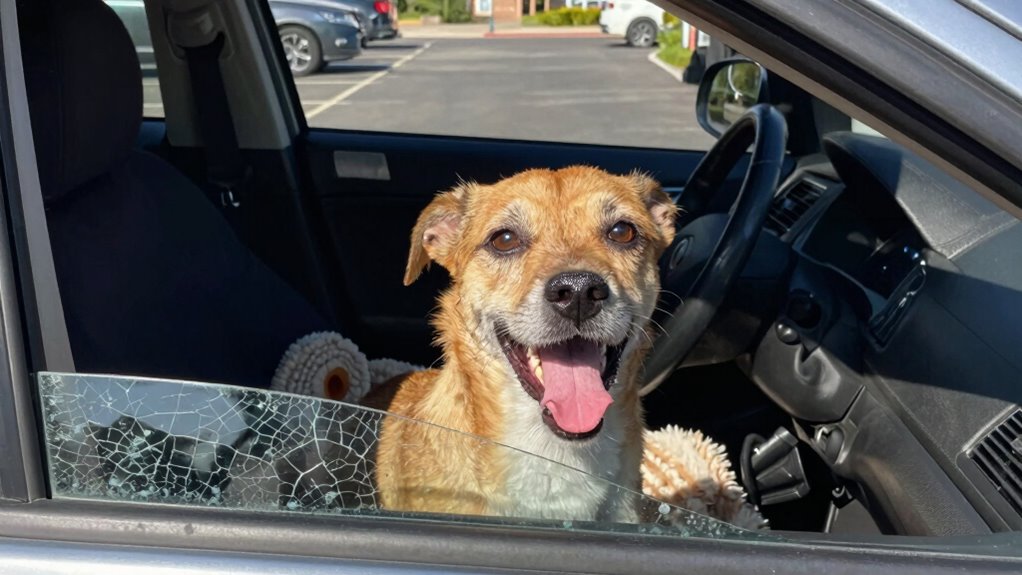
Heatstroke in dogs can develop quickly, especially in hot weather or when left in a hot car. Recognizing the signs early is essential for heatstroke prevention. Look for excessive panting or difficulty breathing—these are common indicators your dog is overwhelmed by heat. Watch for drooling, weakness, and uncoordinated movements, which suggest rising body temperature. Your dog may also appear anxious or disoriented, and their gums could turn bright red or purple. As dehydration worsens, they might collapse or lose consciousness. Regularly check on your dog’s behavior and physical cues, especially in high temperatures. Understanding heat tolerance is crucial to prevent overheating, and being aware of vehicle safety can help pet owners make safer choices when it comes to outdoor activities and vehicle safety. Immediate action is critical to cool your dog down and prevent serious health consequences. Recognizing early warning signs can help you respond swiftly and keep your dog safe from heat-related dangers. Additionally, being aware of preventive measures can significantly reduce the risk of heatstroke in your pet.
What to Do If You Find a Dog in a Hot Car

What should you do if you see a dog trapped in a hot car? Act quickly and decisively, as heatstroke can happen fast. Your first step is to assess the situation and determine if the dog is in immediate danger. Then, take emergency action by trying to get the dog out safely. If you can’t open the window or door easily, call emergency services right away for professional dog rescue. While waiting, do the following:
- Stay with the dog and keep it calm
- Move the dog to a cooler, shaded area
- Offer water if the dog is conscious and able to drink
- Use a cool, damp cloth to help lower its body temperature
- Remember that proper air purifier maintenance can help improve indoor air quality and reduce outdoor pollutants that may affect your pet’s health during emergencies. Additionally, it’s important to be aware of heat-related health risks and how to prevent them in pets, especially in hot weather. Taking immediate action can save the dog’s life and prevent serious health issues. Be mindful that outdoor temperature can increase rapidly in parked cars, creating a dangerous environment for pets, and understanding signs of heatstroke can help you respond quickly if needed.
How to Prevent Heat-Related Dangers for Dogs in Cars

Preventing heat-related dangers for dogs in cars starts with proactive measures. First, always guarantee your dog stays hydrated by providing fresh water before and during car trips. Keep water accessible to prevent dehydration in hot weather. Additionally, improve car ventilation by cracking windows slightly or using a vent fan to promote airflow and reduce temperature buildup. Never leave your dog alone in the car, especially during warm days, as temperatures can rise rapidly. If you notice signs of overheating, such as excessive panting or weakness, act immediately. Planning trips during cooler parts of the day and taking frequent breaks can also help keep your dog safe. By prioritizing hydration and proper ventilation, you greatly reduce the risk of heat-related dangers during car outings.
Your Legal Responsibilities When It Comes to Dogs in Hot Cars

When you see a dog trapped in a hot car, you’re legally responsible for taking immediate action to protect their safety. Your legal obligations vary by jurisdiction but generally prioritize preventing harm. Failing to act could lead to liability concerns if the dog suffers injury or death. Be aware that some areas permit you to break into a vehicle if the animal is in danger, but always verify local laws first. Your responsibilities include:
- Recognizing signs of heat stress and acting quickly
- Knowing your rights and limits under the law
- Reporting the situation to authorities if needed
- Documenting your actions to protect against liability concerns
Understanding your legal duties helps you act confidently and responsibly, potentially saving a life while avoiding legal repercussions.
How to Educate Others About the Dangers of Hot Cars
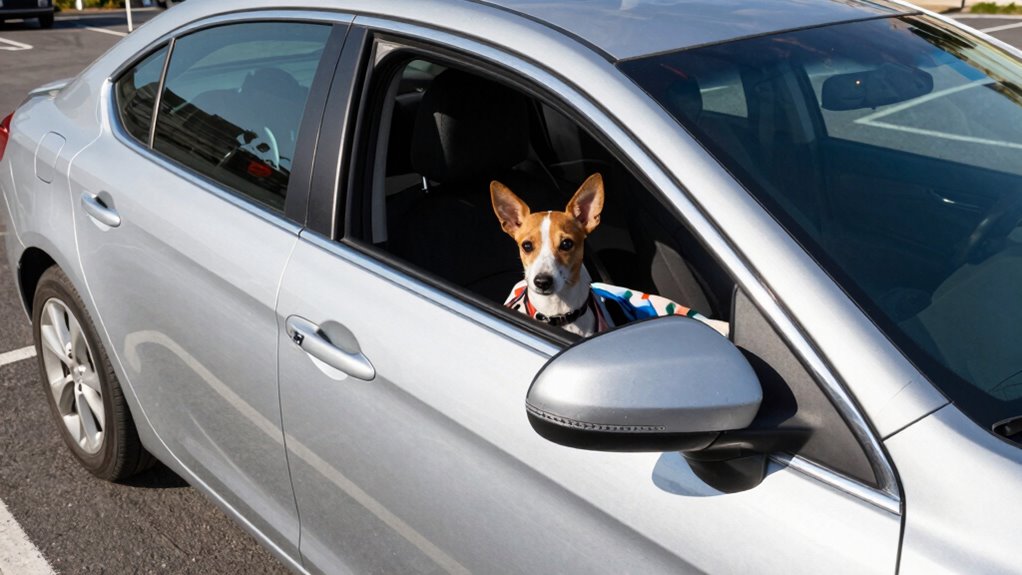
Educating others about the dangers of hot cars is essential to preventing tragedies before they happen. Start by sharing facts about how quickly temperatures rise inside a vehicle, even on mild days. Emphasize the importance of dog hydration and how dehydration can worsen heat-related illnesses during pet travel. Encourage pet owners to check in with friends, family, and neighbors to raise awareness. Use real-life stories to illustrate the risks and stress that no dog should be left unattended in a car, even for a short period. Offer practical tips, like leaving a note or using technology such as car alarms to alert others if a pet is inside. Your efforts can help save lives by spreading awareness and promoting responsible pet travel practices.
Preparing Your Car for Summer Travel With Pets

Getting your car ready for summer travel with pets can make all the difference in keeping them safe and comfortable. Address ventilation concerns by ensuring your vehicle has proper airflow. Keep windows slightly open or use a vented window screen to promote air circulation without risking window safety. Before traveling, check that windows can’t fully open, preventing pets from escaping or falling out. Keep a cool, shaded spot for your car and consider using reflective window shades to block heat. Pack water and a portable fan if possible, and avoid leaving pets alone in the car. Regularly inspect your car’s ventilation system and secure all windows. These precautions help prevent overheating and keep your furry friend safe during summer adventures.
Frequently Asked Questions
What Are the Long-Term Health Effects of Heatstroke in Dogs?
If your dog suffers from heatstroke, it can lead to long-term health issues like chronic health problems and neurological damage. You might notice persistent weakness, loss of coordination, or behavioral changes. These effects can be permanent, affecting your dog’s quality of life. To prevent this, always keep your dog cool and hydrated, especially in hot weather or confined spaces like cars. Acting quickly can save your dog’s health and prevent lasting damage.
Can Certain Dog Breeds Tolerate Higher Temperatures Better Than Others?
You might think some breeds can handle the heat better, but don’t count your chickens before they hatch. Certain breeds, like Labrador Retrievers or Beagles, have higher breed resilience and better temperature tolerance, yet all dogs are vulnerable in extreme heat. Always remember, even the most tolerant breeds need shade and water. Never assume they’re invincible—when it’s hot, your dog’s safety comes first.
How Do Interior Car Materials Influence Temperature Rise?
You should know that interior car materials, like dashboard surfaces and insulation, greatly influence how quickly temperatures rise. Smooth, dark, or non-reflective materials absorb more heat, increasing the overall interior temperature. Good car insulation helps keep the heat out, but if dashboard materials are poor, your car heats up faster. Always be aware of how these materials can trap heat, especially in parked cars, to protect your dog from overheating.
Are There Specific Times of Day When Parking Is Riskier for Dogs?
Imagine the sun as a relentless torch, its rays intensifying midday. You should be extra cautious during peak sun hours, typically between 10 a.m. and 4 p.m., when parking in full sun increases risks. Always seek shaded spots, especially during these times, to keep your dog cool and safe. Remember, even brief exposure can lead to dangerous heat buildup, so timing and shade are vital for your pet’s safety.
What Emergency Equipment Should I Keep in My Car for Heat-Related Incidents?
You should keep a well-stocked emergency kit in your car for heat-related incidents, including a first aid kit with supplies like antiseptic wipes, bandages, and cold packs. It’s also wise to carry extra water for both yourself and your dog, along with a towel or blanket for cooling. Being prepared helps you respond quickly if your pet shows signs of heat exhaustion or heatstroke, ensuring their safety until you get help.
Conclusion
Just like a oven heats up quickly, cars can turn deadly for dogs in minutes. Always stay vigilant, never leave your pet unattended, and educate others about these hidden dangers. By taking simple precautions, you can protect your furry friend from heatstroke and save a life. Remember, you’re their safest shield against the scorching trap of a hot car—because no one wants to see a tragedy unfold in a parking lot.