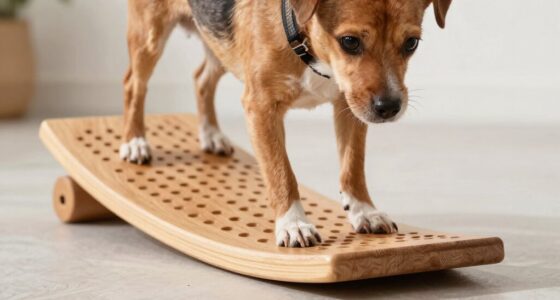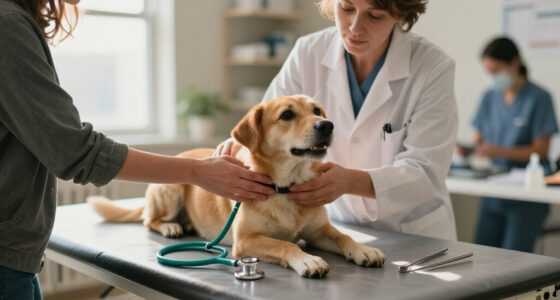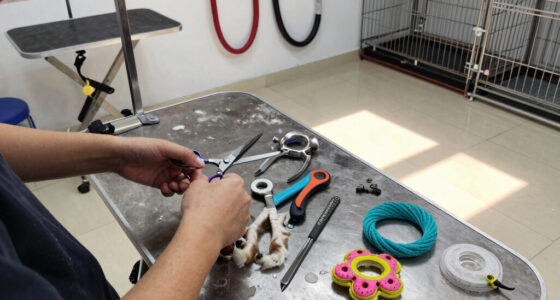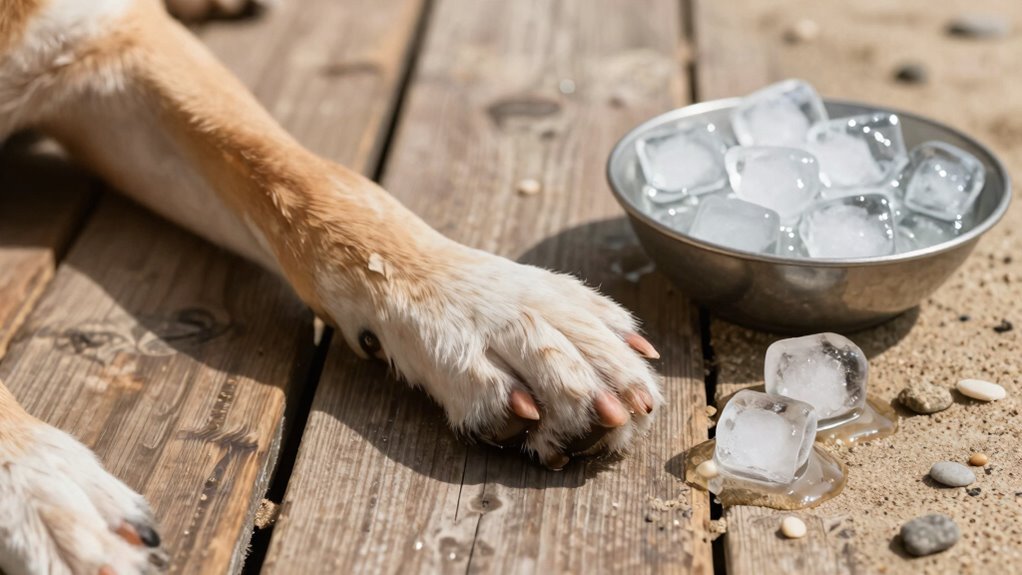
To protect your pet’s paw pads from heat, avoid walking during the hottest parts of the day, and check the ground temperature first. After winter outings, rinse paws to remove salt and chemicals, then dry and moisturize. For rough terrain, inspect paws for cuts or debris and clean them thoroughly. Consistent nail trims and awareness of environmental hazards help prevent injuries. Stay attentive to these tips to keep your pet’s paws healthy and resilient, even in tough conditions.

Get pet supplies delivered free — and shop member deals
- Fast, free delivery on millions of items
- Access to Prime Big Deal Days deals on October 6–7
- Prime Video, Amazon Music and more included
Key Takeaways
- Test ground temperature with your hand before walks to prevent paw burns on hot surfaces.
- Rinse paws with water after walking on icy or salted surfaces to remove irritants and prevent cracking.
- Regularly inspect paws for cuts, abrasions, or embedded debris after rough terrain exposure.
- Use paw-specific moisturizers to keep pads hydrated and resilient against extreme weather conditions.
- Trim nails regularly to reduce injury risk and improve traction on uneven or gritty surfaces.
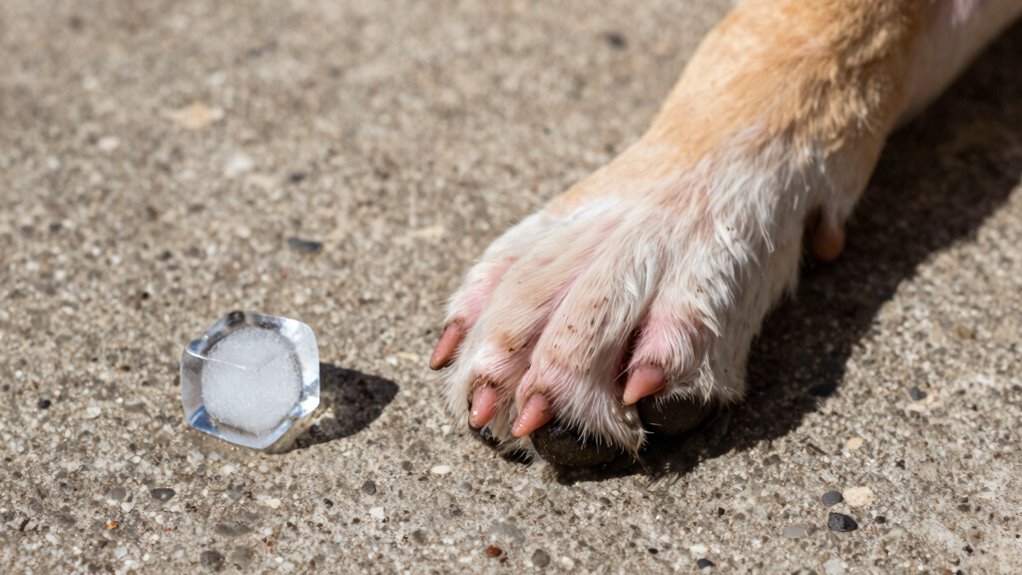
Your pet’s paw pads play an essential role in their mobility and comfort, so it’s important to keep them healthy and well-maintained. When navigating different surfaces—whether it’s hot pavement, icy sidewalks, or rough terrain—you need to pay special attention to their paw health. Exposure to extreme temperatures and abrasive surfaces can cause damage, so understanding how to care for their paw pads is crucial for their safety and well-being.
During hot weather, paw pads can easily become burned or cracked from contact with scorching pavement or asphalt. To prevent this, avoid walking your pet during the peak heat of the day, and always test the ground with your hand first. If it feels too hot for your skin, it’s too hot for their paws. After walks on hot surfaces, examine their paw pads for signs of redness or blistering, and consider applying skin hydration products to soothe any irritation. Regularly trimming their nails not only makes walks more comfortable but also prevents them from scratching or damaging their paw pads during rough surfaces. Well-maintained nails reduce the risk of tearing and help distribute pressure evenly, especially when walking on uneven or gritty terrain.
In winter, icy and salted sidewalks pose their own hazards. Ice can cause frostbite or cracking, while salt and chemicals used to melt ice can irritate and dry out the skin. After walks, rinse their paws with fresh water to remove any salt or chemicals, and thoroughly dry them. Applying a paw-specific moisturizer or skin hydration product helps maintain the natural suppleness of the paw pads, preventing cracks or dryness caused by cold exposure. Keep an eye out for any signs of bleeding or soreness, and avoid walks on icy patches when possible. If your pet’s paw pads are exposed to rough surfaces like gravel or rocky trails, check for cuts, embedded debris, or abrasions, and clean the area carefully to prevent infection. Additionally, understanding the importance of paw pad health can help you implement better care routines and prevent issues before they arise. Maintaining awareness of environmental hazards is also vital to ensure your pet’s paws remain healthy and resilient. Recognizing the significance of proper paw protection can further enhance their safety when exploring outdoors.
Taking these steps helps your pet’s paws adapt to various conditions, but consistent nail trimming remains an essential part of paw pad care. Short nails reduce the risk of scratches and injuries when navigating rough surfaces, and they also prevent your pet from slipping on slick or uneven ground. Remember, proper nail trimming and skin hydration support the overall health of your pet’s paw pads, especially when dealing with heat, ice, or rough terrain. By staying vigilant and proactive, you keep their paws resilient and comfortable, so they can explore and enjoy their surroundings safely.
As an affiliate, we earn on qualifying purchases.
Frequently Asked Questions
How Often Should I Check My Dog’s Paw Pads?
You should check your dog’s paw pads weekly to catch any cuts, cracks, or irritation early. During these checks, perform paw pad grooming by gently trimming any excess hair and applying paw pad moisturizers if you notice dryness. Regular inspections help prevent discomfort, especially after walks on rough surfaces or hot pavement. Keeping an eye on their paws guarantees your dog stays comfortable and healthy, no matter the terrain they explore.
Can Certain Paw Pad Treatments Cause Allergies?
In the blink of an eye, allergies can sneak up on you, and paw pad treatments are no exception. Certain treatments, especially those with harsh chemicals or fragrances, can trigger allergies. To keep your dog safe, always prioritize treatment safety and check ingredient labels. Allergy triggers vary, so monitor your pup’s reactions closely. If you notice redness or swelling, consult your vet to find a hypoallergenic solution.
Are There Specific Signs of Paw Pad Infections to Watch For?
You should watch for signs of infection, such as redness, swelling, or discharge, which are common paw pad symptoms. If your pet paws at their pads more than usual or seems sensitive when touched, these are red flags. Keep an eye out for any foul odor or persistent licking, as these indicate possible infection. Promptly consult your vet if you notice any of these paw pad symptoms to prevent further issues.
How Does Climate Affect Paw Pad Health?
They say “a healthy outside starts from the inside,” and climate impact plays a big role in paw health. Hot weather can cause cracking or burns, while cold can lead to frostbite. Humid conditions may encourage infections, and dry air can cause dryness and cracking. You need to monitor your pet’s paws closely, adjusting care as climate changes, to keep their paw pads strong and healthy no matter the weather.
Can Paw Pad Care Prevent Injuries During Outdoor Activities?
Yes, paw pad care can prevent injuries during outdoor activities. You should regularly use paw pad moisturizers to keep the pads healthy and flexible. Additionally, follow outdoor terrain tips by avoiding rough, hot, or icy surfaces that can cause damage. Checking your dog’s paws frequently and cleaning them after walks also helps prevent cuts, cracks, and other injuries. Proper paw care guarantees your dog stays comfortable and safe during outdoor adventures.
Conclusion
So, next time your pup’s paws look like they’ve been through a war zone, just toss them into a spa day of heat, ice, or rough surfaces. Who needs fancy pet salons when you can DIY with a dash of humor? Remember, caring for those precious paw pads isn’t rocket science—just a little TLC and maybe a sprinkle of sarcasm. Your dog’s happy, healthy paws will thank you, and you’ll get to be the hero of the neighborhood.
Fall Picks
fall essentials
As an affiliate, we earn on qualifying purchases.