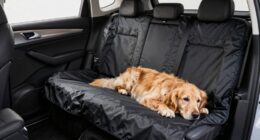
Scooterjoring is a fun, eco-friendly activity that combines scootering with your dog pulling alongside you. To get started, it’s important to train your dog with commands like “stop,” “go,” and “left,” and use a well-fitting harness for safety. Make sure your scooter and gear are in top shape and prioritize hydration and breaks for your dog. If you keep exploring, you’ll discover all the tips to enjoy safe and exciting scooterjoring adventures.
Key Takeaways
- Scooterjoring combines an eco-friendly scooter with a well-trained dog pulling alongside for outdoor recreation.
- Proper dog training ensures responsive commands like “stop,” “go,” “left,” and “right” for safety.
- Using high-quality, well-fitted harnesses and shock-absorbing tow lines promotes safety and comfort for the dog.
- Regular maintenance of scooter equipment and wearing safety gear are essential for a safe riding experience.
- Monitoring the dog’s hydration, fatigue, and comfort during rides ensures safety and enhances enjoyment.
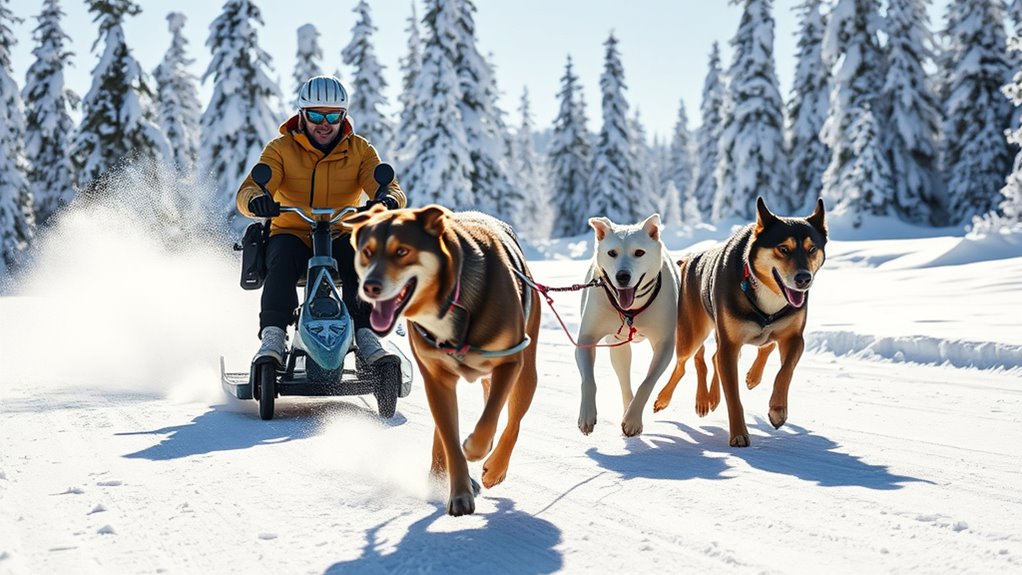
If you’re looking for a fun and eco-friendly way to stay active, scooterjoring offers an exciting blend of scootering and dog-powered adventure. This activity combines a sturdy scooter with a well-trained dog pulling alongside you, creating a unique experience that’s both exhilarating and rewarding. Before you hit the trail, it’s crucial to focus on dog training and equipment safety. Proper training ensures your dog understands commands, maintains good behavior, and stays safe during the activity. You should teach commands like “stop,” “go,” and “left” or “right” so your dog responds promptly to your cues, helping you keep control and prevent accidents. Consistent, positive reinforcement training is the key to developing a reliable, responsive pulling partner. Remember, a well-trained dog is not only safer but also happier during scooterjoring sessions.
Equipment safety is equally important. Start with a high-quality harness designed specifically for pulling activities. A good harness distributes pressure evenly across your dog’s chest and shoulders, reducing the risk of injury. Avoid using collars or makeshift restraints that can choke or harm your dog. Attach a sturdy, shock-absorbing tow line to the harness, ensuring it’s long enough to allow comfortable movement without slack that might cause tangling or jerking. Inspect all equipment before each ride—look for signs of wear, fraying, or damage, and replace anything that seems compromised. Properly fitted gear not only protects your dog but also ensures ideal control and comfort for both of you. Additionally, understanding the contrast ratio of your equipment can help optimize visibility and safety during low-light conditions.
In addition to harness and line safety, always check your own scooter and gear. Make sure your scooter is in good working condition—brakes work smoothly, wheels are secure, and the frame isn’t damaged. Wear appropriate safety gear like a helmet, gloves, and reflective clothing, especially if you’re riding in low-light conditions. Staying aware of your surroundings and maintaining a safe speed are crucial, particularly when sharing the trail with other people or animals. Hydrate your dog before and after rides, and watch for signs of fatigue or discomfort. If your dog seems tired or distressed, give them a break and reassess your equipment and training approach.

PetSafe Easy Walk No-Pull Dog Harness – The Ultimate Harness to Help Stop Pulling – Take Control & Teach Better Leash Manners – Helps Prevent Pets Pulling on Walks, Medium/Large, Raspberry/Gray
HELPS STOP PULLING: Patented Martingale loop design puts gradual pressure on your dog’s shoulders to safely and effectively…
As an affiliate, we earn on qualifying purchases.
As an affiliate, we earn on qualifying purchases.
Frequently Asked Questions
What Breeds Are Best Suited for Scooterjoring?
You’ll find that breeds like Siberian Huskies, Alaskan Malamutes, and Border Collies are best suited for scooterjoring because of their breed suitability and energetic temperament. These dogs have strong, athletic builds and thrive on physical activity, making them excellent partners. Their natural enthusiasm and stamina guarantee they enjoy the sport and perform well, so choose breeds with a temperament that matches the active, adventurous nature of scooterjoring.
How Do I Train My Dog for Scooterjoring?
To train your dog for scooterjoring, start with basic obedience and gradually introduce them to the scooter using positive reinforcement. Use motivational methods like treats and praise to encourage enthusiasm. Incorporate training techniques such as short, consistent sessions and gradual distance increases. Keep sessions fun and engaging, and always guarantee your dog is comfortable and not overwhelmed. Patience and positive reinforcement are key to developing a strong, enjoyable partnership.
What Safety Gear Is Recommended for Dog and Rider?
You should wear protective equipment like a helmet, gloves, and knee pads to stay safe. For your dog, use a well-fitted dog harness designed for scootering, which reduces strain and prevents injuries. Both rider and dog need gear that provides comfort and safety during rides. Make sure your dog’s harness is secure and appropriate for pulling, and always check your protective gear before heading out to verify everything stays in place.
Are There Age Restrictions for Participating in Scooterjoring?
You can start scooterjoring as young as 12, but age requirements vary by organization. Ensuring participant eligibility is essential for safety, so check specific event rules. While kids often participate with proper supervision and gear, younger children might need additional training and parental approval. Always prioritize safety and skill level over age. Remember, even a 12-year-old can be a racing legend with the right preparation—age restrictions are in place for your protection.
How Do I Find Local Scooterjoring Communities or Events?
To find local scooterjoring communities or events, start by searching online for local meetup groups or community groups dedicated to dog sports or outdoor activities. Check social media platforms like Facebook or Meetup.com, where enthusiasts often organize events. Visit local pet stores, dog parks, or outdoor recreation centers for bulletin boards or flyers. Connecting with other dog sport lovers will help you discover nearby events and build your scooterjoring network.

Bike Tow Leash Best Dog Bike Leash (Orange)
American Pet Association 5 star safety approved for safely riding with your dog
As an affiliate, we earn on qualifying purchases.
As an affiliate, we earn on qualifying purchases.
Conclusion
Whether you’re seeking adventure, exercise, or a stronger bond with your dog, scooterjoring offers all three. It’s about embracing the thrill, respecting the sport, and enjoying the companionship. It’s about pushing your limits, trusting your dog, and sharing the ride. With safety, training, and passion, you’ll find that scooterjoring isn’t just a sport—it’s a lifestyle. Embrace the challenge, enjoy the journey, and create memories that last a lifetime.
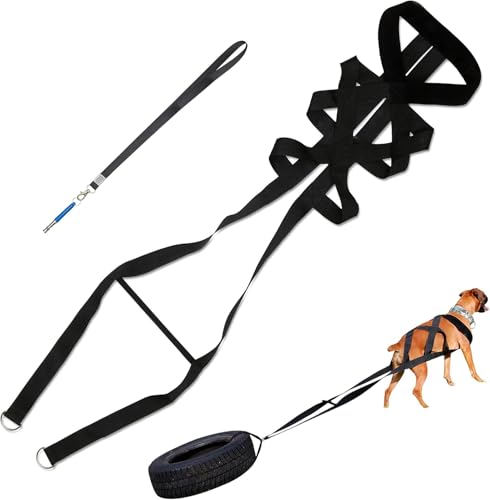
IRSTBL Dog Weight Pulling Harness with Training Whistle – Heavy-Duty X-Back Canicross Harness for Muscle Building, Sledding & Working Dogs, Large Breeds
Strength & Endurance Training: Supports controlled pulling exercises to help build muscle, stamina, and focus during working-dog activities.
As an affiliate, we earn on qualifying purchases.
As an affiliate, we earn on qualifying purchases.
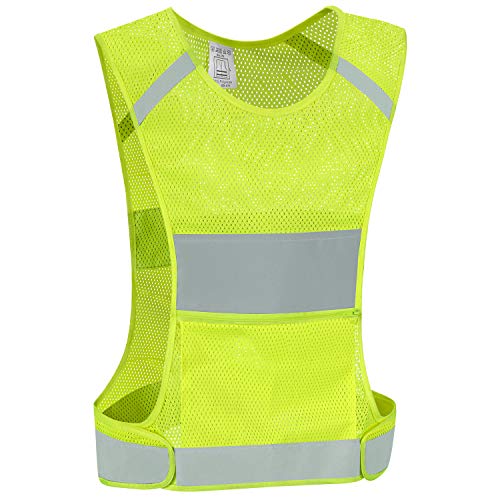
IDOU Reflective Vest Safety Running Gear with Pocket, Ultralight &Adjustable Waist&360°High Visibility for Running,Jogging,Biking,Motorcycle,Walking,Women & Men/Neon Yellow/L
True 360 °High-Intensity Feflection And All-Round Protection:Why IDOU Reflective Running Gear safer than others?First, the reflective materials are…
As an affiliate, we earn on qualifying purchases.
As an affiliate, we earn on qualifying purchases.