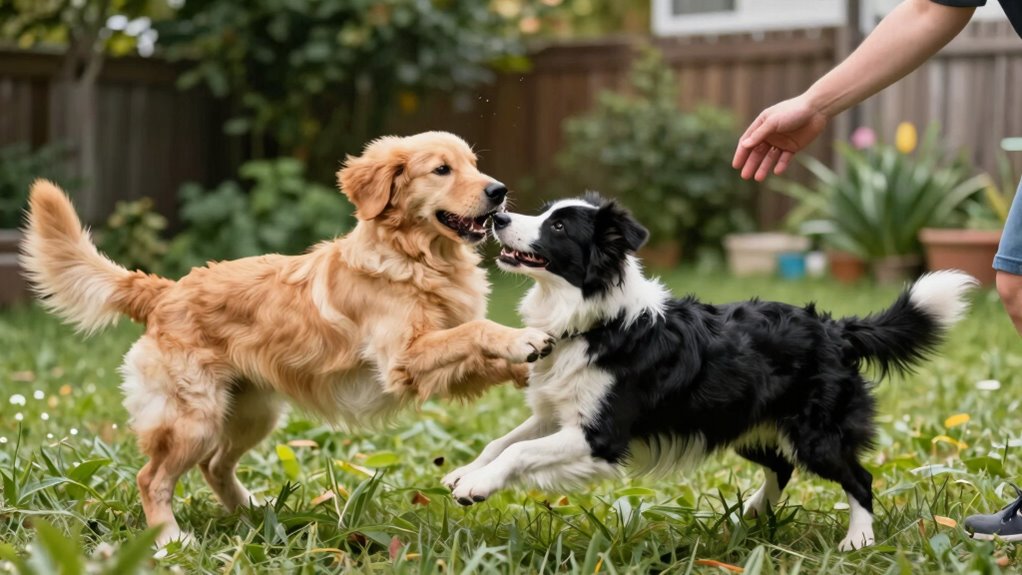

To politely interrupt your dog’s play before it tips too far, watch for body signals like stiff posture, raised hackles, or tense tail. Use a calm voice and gentle gestures, such as softly clapping or calling your dog’s name, to signal a break. Offering a toy or redirecting their attention helps prevent escalation. Recognizing these cues early guarantees safe, enjoyable play—continue to discover effective techniques that keep playtime positive and respectful.

Get pet supplies delivered free with Prime
- Fast, free delivery on millions of items
- Prime Video, Amazon Music and more included
- Member-only deals all year
Key Takeaways
- Recognize early calming signals like yawning or looking away to signal the need for a break.
- Use a calm voice and gentle gestures, such as soft clapping, to politely interrupt play.
- Redirect your dog’s attention with a toy or a different activity to prevent escalation.
- Take short breaks when signs of stress or tension appear to help dogs relax.
- Foster trust by responding promptly to signals and maintaining a consistent, respectful approach.
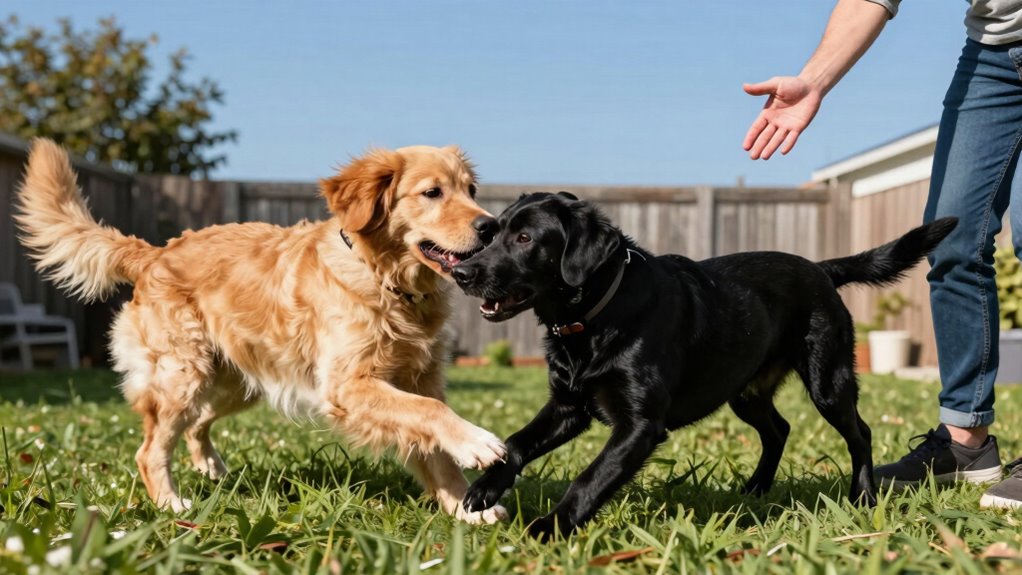
Dog play is essential for their physical and mental well-being, but knowing when to step in before it gets out of hand is key to a safe and enjoyable experience. As you observe your dog and their playmate, paying close attention to their body language helps you understand when things are getting too intense. Dogs communicate a lot through their body language, and recognizing these signals can prevent play from escalating into aggression or stress. For example, if you notice stiff body posture, raised hackles, or a tense tail, it’s a sign that your dog may be feeling overwhelmed or uncomfortable.
Pay attention to body language like stiff posture or raised hackles to prevent play from becoming stressful.
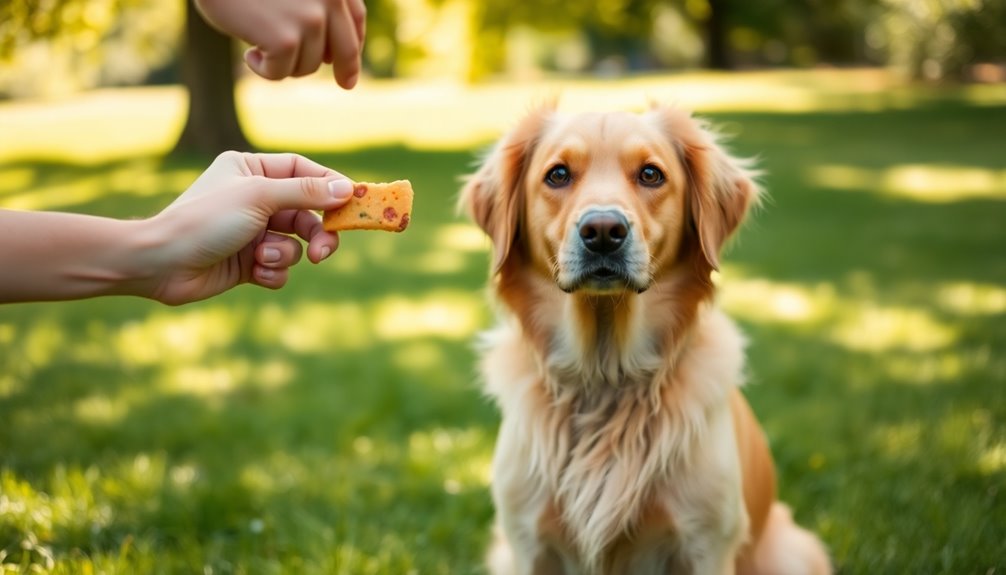
Calming signals are subtle gestures dogs use to diffuse tension and communicate their desire to pause or end the play session. Yawning, looking away, lip licking, and turning their head are common calming signals that indicate your dog needs a break. When you see these signals, it’s a good time to step in gently and redirect their attention. You might call their name softly, offer a toy, or give them a moment to relax. Recognizing these signals early can prevent play from turning into biting, growling, or other undesirable behaviors.
Interrupting politely is all about timing and tone. Instead of startling your dog or abruptly stopping the play, use a calm voice and gentle gestures. You could clap your hands softly or call their name in a soothing manner to signal that it’s time to pause. If your dog responds with calming signals, take that as a cue to give them space or a short break. Developing an understanding of dog communication cues helps foster a respectful and trusting relationship. This approach helps your dog understand that playtime is enjoyable but also needs to be balanced with periods of calm.
It’s important to be consistent and patient. If your dog gets overly excited, intervene before they reach a point of frustration or aggression. Redirect their energy with a different activity or bring them inside for a calming moment. Over time, your dog will learn that calming signals are signals for a change in activity, not a sign of punishment. Additionally, understanding dog body language better equips you to create a safe environment for play and prevents escalation.
dog calming signal training clicker
As an affiliate, we earn on qualifying purchases.
As an affiliate, we earn on qualifying purchases.
Frequently Asked Questions
How Can I Tell if My Dog Is Overstimulated During Play?
You can tell your dog is overstimulated during play by watching their body language. Signs like stiff movements, excessive barking, or intense staring indicate they’re reaching their limits. If your dog starts to growl or nip, it’s time to pause. Maintaining clear playtime boundaries helps prevent overstimulation. By observing these cues, you can interrupt play politely and give your dog a break, ensuring play remains fun and safe for everyone involved.
Are There Specific Signals to Watch for Before Interrupting Play?
You should watch for body language and calming signals that signal your dog’s threshold is near. If they stiffen, growl softly, or lick their lips excessively, it’s time to step in—like a flickering light warning of a storm. These signals act as a gentle alarm, showing your dog needs a break before play becomes too intense. Recognizing these cues helps you intervene kindly, keeping play fun and safe.
What Are Safe Ways to Pause a Dog’s Play Session?
To pause a dog’s play session safely, use calming techniques like a gentle voice or a calming word to signal a break. You can also redirect their attention with a toy or treat, ensuring the interruption is gentle and positive. Always watch for signs of overstimulation, and gently call your dog away. These methods promote a safe interruption, helping prevent play from escalating too far while keeping your dog calm and happy.
How Often Should I Interrupt Play to Prevent Escalation?
You should interrupt play every 10-15 minutes to prevent escalation, as dogs tend to become overstimulated quickly. Research shows that average play sessions lasting over 20 minutes risk increasing arousal levels. Incorporate short rest breaks during play, allowing your dog to relax and reset. This helps maintain control, ensuring play remains safe and enjoyable, and prevents behaviors like barking or biting from escalating too far.
Can Interrupting Play Affect My Dog’s Social Skills?
Interrupting play can actually help your dog learn about social boundaries and respect during playtime. When you step in politely, you teach your dog to read signals and understand limits, preventing overexcitement or aggression. Consistent, gentle interruptions reinforce positive behavior and help your dog develop better social skills. Just make certain your interruptions are calm and clear, so your dog learns appropriate playtime boundaries without feeling confused or anxious.
Conclusion
Remember, even in the joyful chaos of dog play, your gentle interruption is like a guiding hand at the wheel, steering them clear of danger. Just as a wise parent knows when to step in, you hold the power to keep their world safe and happy. By interrupting politely before things tip too far, you’re not just managing play—you’re nurturing trust and ensuring countless happy adventures ahead. Keep that caring instinct alive; your dog’s well-being depends on it.
Halloween Picks
halloween
As an affiliate, we earn on qualifying purchases.