
When it’s hot outside, your dog needs about one ounce of water per pound of body weight each day to stay properly hydrated. Make sure fresh, cool water is always available, especially in shaded spots, and consider offering ice cubes or wet food to boost intake. Watch for signs of dehydration like dry gums or lethargy, and adjust water if your dog is active. Stay ahead of heat risks—there’s more important info that can help you keep your pup safe and happy.
Key Takeaways
- A healthy dog needs about 1 oz of water per pound daily, adjusted for activity and heat.
- Provide fresh, cool water constantly, especially in shaded areas or with pet fountains.
- Increase water intake during hot weather and after vigorous activity to prevent dehydration.
- Watch for signs like dry gums, lethargy, sunken eyes, or skin elasticity loss indicating dehydration.
- Incorporate wet food and ice cubes to boost hydration, ensuring your dog stays well-hydrated in heat.
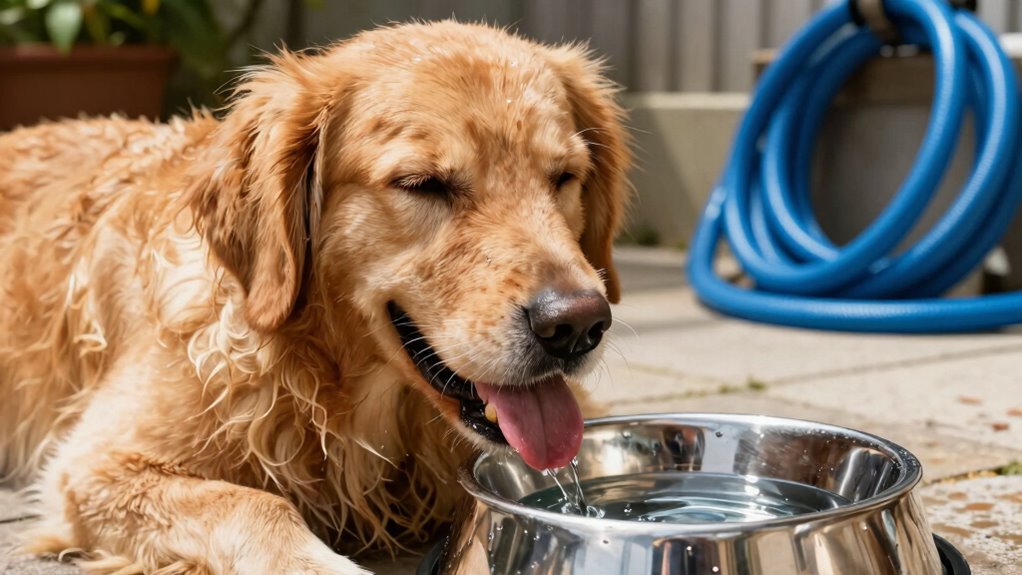
As temperatures rise, guaranteeing your dog stays properly hydrated becomes more important than ever. Hot weather can quickly lead to dehydration, especially if your dog isn’t drinking enough water. To keep your furry friend safe, you need to understand hydration methods and water intake guidelines that work best during warmer months. Dogs rely primarily on water to regulate their body temperature, so it’s your job to make sure they’re drinking enough throughout the day.
First, observe your dog’s drinking habits. The amount of water they need depends on factors like size, age, activity level, and the weather. As a general rule, a healthy dog should drink about one ounce of water per pound of body weight daily. For example, a 50-pound dog should consume roughly 50 ounces of water each day. During hot weather, this amount might need to increase, especially if your dog is active or spends a lot of time outdoors. Remember, these water intake guidelines serve as a starting point, but each dog is unique, so pay close attention to their behavior and hydration cues.
Monitor your dog’s drinking habits and adjust water intake based on size, activity, and weather conditions.
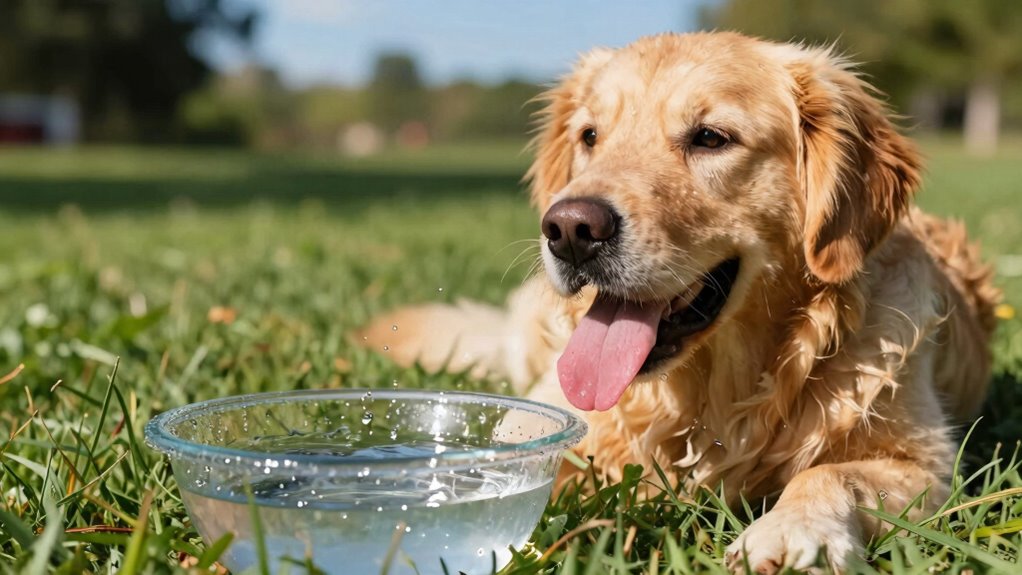
Hydration methods can vary, but providing fresh, clean water is the most straightforward and effective way to keep your dog hydrated. Guarantee their water bowl is filled regularly and placed in shaded or cool areas if they tend to drink less when it’s hot. You might also consider offering ice cubes or chilled water to entice them to drink more, especially on scorching days. Some dogs prefer running water, so using a pet fountain can encourage more frequent drinking. Additionally, incorporating wet food into their diet can boost hydration since it contains a significant amount of moisture compared to dry kibble. Ensuring your dog has access to appropriate hydration sources is essential for their well-being in hot weather. Staying aware of hydration cues can help you detect early signs of dehydration and act promptly. It’s also beneficial to learn about the typical signs of dehydration, which can sometimes develop quickly in hot conditions.
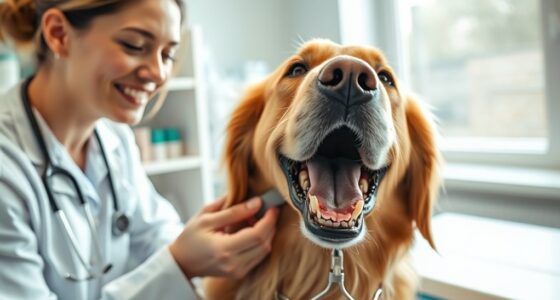
Monitoring your dog’s hydration status is vital. Signs of dehydration include dry gums, lethargy, sunken eyes, and loss of skin elasticity. If you notice any of these symptoms, increase their water intake immediately and contact your veterinarian. To prevent dehydration, make sure your dog has constant access to water, especially during walks, playtime, or outdoor activities. Avoid forcing water on them, but gently encouraging intake can help maintain their hydration levels.
In hot weather, it’s also wise to provide shade and limit strenuous activity during peak heat hours. Ensuring your dog’s environment remains cool and comfortable reduces the risk of dehydration and heatstroke. Remember, staying attentive to hydration methods and water intake guidelines isn’t just about quenching thirst; it’s about protecting your dog’s health and comfort when the temperature climbs. Proper hydration practices are an essential part of preventing heat-related illnesses, ensuring your dog stays safe and comfortable throughout the warmer months.
As an affiliate, we earn on qualifying purchases.
Frequently Asked Questions
Can Dogs Overhydrate and Become Water Intoxicated?
Yes, dogs can overhydrate and develop water intoxication if their water intake exceeds their needs. You should monitor your dog’s hydration levels carefully, especially in hot weather. Watch for signs like bloating, lethargy, or vomiting. Proper hydration monitoring involves providing fresh water and ensuring they don’t drink excessively at once. Keep an eye on their behavior and encourage steady, moderate water intake to prevent overhydration.
How Does Humidity Affect a Dog’s Hydration Needs?
Ever wonder how humidity impacts your dog’s hydration? It plays a vital role in temperature regulation, making your dog sweat less and struggle to cool down. As humidity rises, you need to increase hydration frequency to prevent dehydration. Keep a close eye on their water intake, especially on humid days, and watch for signs of overheating. Adjust accordingly, because underestimating humidity’s effect can be risky for your furry friend.
Are Some Dog Breeds More Prone to Dehydration?
Yes, some breeds are more prone to dehydration due to breed-specific hydration needs. For example, brachycephalic breeds like Bulldogs and Pugs have breathing challenges that increase their risk, requiring extra hydration training to recognize signs of dehydration early. You should monitor these breeds closely during hot weather, offering frequent water breaks and encouraging hydration. Tailoring hydration strategies to your dog’s breed helps prevent dehydration and keeps them healthy and comfortable.
What Signs Indicate a Dog Is Dehydrated?
If your dog’s skin doesn’t bounce back quickly or their gums feel sticky and dry, they’re desperately dehydrated! You must spot these signs early with proper hydration monitoring tools and follow dog hydration strategies. Watch for sunken eyes, lethargy, or a loss of interest in water — these clues scream ‘urgent hydration needed!’ Stay vigilant, because even a slight dehydration can turn into a serious emergency for your furry friend.
Is It Safe to Give Dogs Ice Cubes for Hydration?
Yes, giving your dog ice cubes can be safe and helps with hydration, especially on hot days. Ice cube safety is generally good, but avoid giving them too many at once to prevent choking or stomach upset. Use ice cubes as a hydration tip by adding them to water or offering small pieces. Always supervise your pup and make sure they’re comfortable eating ice, especially if they tend to swallow quickly.
Conclusion
As the heat rises, you might think you’ve done enough to keep your dog hydrated. But are you truly prepared for the unexpected? Sometimes, what seems sufficient might not be enough when the temperature spikes or unexpected heatwaves hit. Stay vigilant, monitor your dog’s behavior closely, and never underestimate the power of consistent hydration. Because in the end, ensuring your furry friend’s well-being might depend on just one more sip — or one more moment of awareness.