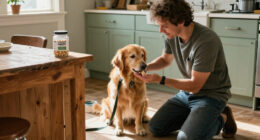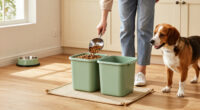
Dog food storage containers solve two related problems: keeping kibble contained and making daily feeding manageable. The real choice is whether your container should stay in one place and focus on a tight, dependable seal, or move with you when a full bag is heavy or storage is spread across the home. An airtight stationary bin is usually the better fit for a pantry, kitchen corner, or feeding station where freshness and straightforward access matter most. A rolling container suits households that buy large bags, store food away from the bowl, or have difficulty lifting and carrying a full container. Both designs can work well, but wheels do not automatically mean better storage, and an airtight label does not guarantee the seal is effective. Capacity, lid construction, cleaning, and the space available should settle the decision.

Get pet supplies delivered free with Prime
- Fast, free delivery on millions of items
- Prime Video, Amazon Music and more included
- Member-only deals all year

Vittles Vault Airtight Pet Food Storage Container with Scoop, 50 lb Capacity
- ✔ Capacity: Up to 50 lb; fit varies with kibble
- ✔ Material: Food-grade HDPE plastic
- ✔ BPA status: BPA-free

IRIS USA Airtight Pet Food Storage Container with Wheels, 33 Qt
- ✔ Capacity: 33 qt; approximately 22–26 lb of most dry kibble
- ✔ Dimensions: 16.5 × 10.8 × 18.4 in; 16.9 in high without wheels
- ✔ Material: Polypropylene

Vittles Vault Airtight Stackable Pet Food Storage Container, 40 lb
- ✔ Capacity: Up to 40 lb; fit varies with kibble
- ✔ Material: Food-grade HDPE plastic
- ✔ Material features: BPA-free, non-toxic, reusable
At a Glance
| Criteria | Airtight stationary dog food container | Rolling dog food container | Winner |
|---|---|---|---|
| Freshness and pest protection | A well-fitted gasket lid can limit air and moisture exposure; performance depends on the actual seal. | Can be airtight too, but wheels do not improve the lid seal; inspect the closure and gasket. | A |
| Moving a full load | Must be lifted or scooted; manageable for smaller bins, awkward when full. | Wheels reduce lifting effort on suitable floors; thresholds, rugs, and stairs can limit usefulness. | B |
| Storage capacity | Commonly available in compact and large sizes; choose capacity based on bag size and available space. | Often designed for larger quantities, though size and usable capacity vary by model. | Depends |
| Daily feeding access | Simple lid or hinged top gives direct access at a fixed feeding spot. | Convenient when rolled near the feeding area; may need to be repositioned after use. | Depends |
| Cleaning and maintenance | Fewer moving parts; smooth interior and removable lid make cleaning easier. | Wheels, axles, and lid parts add places for crumbs and dust to collect. | A |
| Space and placement | Fits a fixed pantry or feeding corner; no clearance needed for wheels. | Needs a stable parking area and room to roll; may be bulky in narrow spaces. | A |
| Value | Often the lower-cost choice; pays off when the bin stays put. | Higher cost is worthwhile when moving heavy food is a frequent problem. | Depends |
Vittles Vault Airtight Pet Food Storage Container with Scoop, 50 lb Capacity
For households that buy larger bags, this 50 lb capacity Vittles Vault is the most straightforward choice in the lineup. Its food-grade HDPE body is paired with a threaded locking lid and double gaskets, a more substantial barrier design than the IRIS container’s snap-lock lid and foam seal. That combination is intended to help manage moisture while containing odors and keeping pests out, useful when the storage bin sits in a pantry, utility room, or other indoor space.The included one-cup scoop gives us a ready way to portion food without keeping a separate measure nearby. Compared with the stackable 40 lb Vittles Vault, this model prioritizes stated capacity over vertical organization; it makes more sense when one container needs to hold a larger supply than when shelf space is the main constraint. Compared with the wheeled IRIS, it offers a threaded lid and greater stated capacity, but gives up the convenience of rolling the bin around.There are practical limits. The full 50 lb capacity may not match every kibble’s density or shape, so we should check the container’s dimensions and the food bag before relying on it for a whole bag. It is hand wash only, and the manufacturer recommends climate-controlled storage. That makes it a better indoor pantry solution than a bin to leave in an exposed shed or hot garage.
Pros:
- Threaded locking lid with double gaskets helps manage moisture, odors, and pests.
- Largest stated capacity in this comparison, up to 50 lb.
- Food-grade, BPA-free HDPE body is designed for reusable storage.
- Includes a one-cup scoop.
Cons:
- Actual fit varies with kibble shape and density.
- Hand washing is required.
- Climate-controlled storage is recommended.
Best for: Households that buy larger quantities of dry food and want a gasketed threaded lid with a scoop included.
Not ideal for: People who need a wheeled bin, compact shelf storage, or a container for uncontrolled outdoor conditions.
Bottom line: The 50 lb Vittles Vault is our strongest pick for larger indoor kibble supplies when its footprint and food-dependent capacity fit the household.
“The 50 lb Vittles Vault is our strongest pick for larger indoor kibble supplies when its footprint and food-dependent capacity fit the household.”
IRIS USA Airtight Pet Food Storage Container with Wheels, 33 Qt
The IRIS USA stands apart because its attachable wheels solve a day-to-day problem the two Vittles Vault options do not: moving a loaded container between a pantry, feeding area, or closet. At 33 quarts, it is also the more modestly sized choice in this group. Its snap-lock lid and foam-line seal are designed to help protect kibble from moisture, while the polypropylene body can also hold treats, birdseed, or other household supplies.Capacity is the main constraint. The supplied estimate is about 22–26 lb of most dry kibble, and some 30 lb bags may not fit. By comparison, the Vittles Vault 40 lb and 50 lb models offer higher stated weight capacities and threaded lids with double gaskets. We would favor the IRIS when a smaller supply and mobility matter more than maximizing storage or getting the more elaborate gasket arrangement.The wheels are useful, but they do not make this the best choice for every layout: the container still needs room to roll and turn, and its flexible polypropylene is less rigid than a hard-sided option. Like the other picks, it is hand wash only. Check the listed dimensions, especially the height with wheels attached, and confirm that your regular kibble bag fits before choosing it as a bag-to-bin replacement.
Pros:
- Attachable wheels make a loaded bin easier to move.
- Snap-lock lid with foam-line seal helps protect contents from moisture.
- BPA-free polypropylene can store pet food and other dry household items.
- Smaller capacity can suit homes with limited storage needs.
Cons:
- Some 30 lb kibble bags may not fit; stated typical capacity is about 22–26 lb.
- Flexible polypropylene is less rigid than hard-sided containers.
- Hand wash only.
Best for: People who store a smaller amount of kibble and want to roll the container between storage and feeding areas.
Not ideal for: Households buying 30 lb bags that need the entire bag to fit, or shoppers who prioritize a rigid body and threaded double-gasket lid.
Bottom line: The IRIS is the practical mobility pick for smaller kibble supplies, provided its capacity and flexible body suit your routine.
“The IRIS is the practical mobility pick for smaller kibble supplies, provided its capacity and flexible body suit your routine.”
Vittles Vault Airtight Stackable Pet Food Storage Container, 40 lb
When floor space is limited, the stackable Vittles Vault 40 lb brings a feature neither alternative highlights: a design intended for vertical storage. Its food-grade, BPA-free HDPE body uses a threaded locking lid with Gamma Seal Technology and double gaskets, matching the 50 lb Vittles Vault’s sealing approach while stating a smaller capacity. That makes this the more organization-focused of the two screw-top models.We would choose it over the larger Vittles Vault when stacking or fitting into a tighter storage arrangement matters more than keeping the biggest supply in one bin. The included one-cup scoop is convenient for serving, and the container is also described as suitable for dry pet food, birdseed, goat feed, and other dry foods. Against the IRIS, it offers a more rigid HDPE construction and a threaded gasketed lid, but lacks wheels, so moving it once full may be less convenient.Stackability is only useful if the bin’s shape and the location allow safe, accessible placement; it does not eliminate the need to check dimensions or kibble fit. Its stated capacity is up to 40 lb, but the amount held varies with food shape and density. As with the 50 lb version, it is hand wash only, and climate-controlled storage is recommended, including for covered outdoor use.
Pros:
- Stackable design can help use vertical storage space.
- Threaded lid and double gaskets help manage moisture and pests.
- Food-grade, BPA-free HDPE body is reusable.
- Includes a one-cup scoop.
Cons:
- Capacity fit varies with kibble shape and density.
- Hand wash only.
- Climate-controlled storage is recommended.
Best for: Households that want a gasketed lid and need to organize dry food vertically in a suitable storage area.
Not ideal for: People who need the highest stated capacity, want to move a full bin on wheels, or plan to store food in uncontrolled outdoor conditions.
Bottom line: The 40 lb Stackable suits organized indoor storage when vertical space matters more than the larger capacity of its 50 lb sibling.
“The 40 lb Stackable suits organized indoor storage when vertical space matters more than the larger capacity of its 50 lb sibling.”
As an Amazon Associate we earn from qualifying purchases.
Key Differences
The biggest practical difference is how the container handles weight. A stationary bin asks you to bring the food to the feeding area or keep the bin beside it. That works for many homes because a full container is opened and scooped in place. A rolling model reduces the effort of moving a heavy load across a clear, level floor. It can be useful when food is stored in a utility room or pantry and meals are served elsewhere. But wheels do little on thick rugs, at door thresholds, or on stairs, so the advantage depends on the route between storage and the bowl.
Freshness depends more on the lid and how the food is handled than on whether the container has wheels. Look for a lid that closes securely, a gasket that sits evenly, and materials that are easy to wash and dry. A container should hold the bag size you actually buy without forcing the lid shut. Keeping kibble in its original bag inside the container can help retain the packaging’s date and product information while adding a barrier between food and the bin. For most homes, a stationary model offers the simpler and less expensive setup. Pay extra for wheels when moving food is a recurring burden, not just because the design looks more convenient.
Detailed Comparison
Freshness and pest protection (Airtight stationary dog food container wins — minor)
A wins by a minor margin when the models are otherwise comparable. A stationary bin often has a simpler lid with fewer joints and moving parts, which makes it easier to inspect whether the seal closes evenly. A rolling model can protect food just as well if its lid and gasket are well made; wheels themselves have no effect on freshness. In practice, prioritize the closure over the category name: a loose lid can admit moisture and pests regardless of the container’s shape. Keep food dry, close the lid after scooping, and clean spills promptly.
Moving a full load (Rolling dog food container wins — major)
B wins by a major margin on smooth, level routes. Rolling can spare the effort of lifting a large container from a pantry to a feeding area, a meaningful benefit for anyone with limited strength or a heavy bag. A stationary bin needs to be carried, slid, or filled near where it will stay. The advantage shrinks on rugs, uneven floors, thresholds, and stairs, where wheels can catch or become impractical. Choose wheels only if the path you need to use supports them.
Storage capacity (moderate difference)
Depends on the model and the bag size. Rolling containers are often built to hold larger quantities, which can reduce how often a household refills them. Stationary bins also come in large sizes, and a broad range of shapes may fit a pantry better. Capacity labels can be difficult to compare because a stated volume does not always translate neatly to pounds of kibble; kibble shape and density vary. Match the bin to the amount you buy and check its dimensions before ordering. Avoid a container so large that food sits unused for too long.
Daily feeding access (moderate difference)
Depends on where the container lives. A stationary bin wins when it can stay beside the bowls: open the lid and scoop without moving anything. A rolling bin wins when food is stored in one room and needs to travel to another, since it can be moved close to the feeding spot. Frequent rolling adds a step when the floor plan does not require it. Consider the normal feeding routine, including who scoops and whether the bin has a lid they can open easily.
Cleaning and maintenance (Airtight stationary dog food container wins — moderate)
A wins by a moderate margin. A stationary container usually has fewer parts to clean and inspect. With a rolling design, crumbs and dust may collect around the wheels, axles, or extra seams, and those parts can complicate thorough washing. Either style should be emptied and cleaned when appropriate, then allowed to dry fully before refilling. Check whether the lid or liner comes off easily and whether the interior has corners that are hard to reach.
Space and placement (Airtight stationary dog food container wins — minor)
A wins slightly for compact or fixed storage. A stationary bin can be chosen to fit a specific shelf, cupboard, or corner, without requiring room to roll it out. A rolling unit needs a place to park and a clear path to move through, which can be awkward in a narrow pantry. If the food must travel, that floor space may be a worthwhile trade. Measure the intended location and the route before choosing, including clearance to open the lid.
Value (moderate difference)
Depends on how often you move the food. A stationary bin is generally the stronger value if it remains near the feeding area and does not need frequent lifting. A rolling bin costs more to provide mobility, and that extra spend makes sense when it solves a repeated problem: moving a large quantity, managing limited lifting ability, or serving bowls far from the storage spot. If the container will stay in one corner, the wheels are unlikely to justify the premium.
Airtight stationary dog food container: Pros and Cons
Pros:
- Fewer moving parts and a straightforward lid
- Often costs less than a comparable rolling model
- Easier to fit into a fixed pantry or feeding corner
- Usually simpler to clean around the base
Cons:
- A full bin can be difficult to lift or carry
- Less convenient when storage and feeding areas are far apart
- Large sizes still take up substantial floor or shelf space
Rolling dog food container: Pros and Cons
Pros:
- Reduces lifting when moved over smooth floors
- Useful for large bags and distant feeding areas
- Can be parked beside the bowls when needed
Cons:
- Wheels add cost without improving the food seal
- Rugs, thresholds, and stairs can defeat the mobility benefit
- More parts and seams can collect crumbs and require cleaning
- May need extra room to roll and park
Who Should Choose What
Choose Airtight stationary dog food container if:
- The container will stay beside the food bowls or in one pantry location.
- You buy modest quantities and can lift or refill the bin comfortably.
- A simple seal, easier cleaning, and lower purchase cost matter more than mobility.
Choose Rolling dog food container if:
- You buy large bags and regularly move food between storage and feeding areas.
- Lifting a full container is uncomfortable or impractical.
- Your route has smooth floors and enough clearance for the container to roll.
Skip both if: Neither design fits if you cannot find a container with a secure, easy-to-clean lid that fits your storage space. Keep the kibble in its original bag and choose a better-fitting sealed storage option instead.
Value for Money
A rolling model is worth paying more for when its wheels remove a regular source of effort. If you move a large, full container several times a week, the added cost can buy genuine convenience. It can also make feeding easier for someone who should avoid lifting heavy loads. The value disappears when the bin stays in one place or its wheels cannot handle the route. In those cases, a stationary container usually delivers the features that matter for less: an accessible lid, contained food, and a fixed place to scoop. Spend first on a dependable closure and a size that suits your buying habits. Treat mobility as a feature to pay for only when your home layout gives it a job.
Final Verdict
For most households, choose an airtight stationary container. It is the simpler, more affordable option when food is stored near the feeding area, and a good seal matters more to kibble storage than wheels do. Choose a rolling container if you regularly move heavy food across smooth floors or lifting is difficult; in that situation, the extra cost solves a real daily problem. The deciding factor is your route from storage to bowl: if the bin stays put, buy stationary; if it needs to travel and can roll safely, pay for mobility.
Frequently Asked Questions
Is a rolling dog food container more airtight?
No. Wheels do not improve the seal. Compare the lid closure and gasket, and choose a container that closes evenly and securely.
Should dog food stay in its original bag inside the container?
Keeping the bag inside the bin can help preserve product information and provide an additional barrier. Close the bag between uses and make sure the container is clean and completely dry before refilling.
How large should a dog food container be?
Choose a size that fits the amount you buy and the storage space available. Kibble density varies, so check product dimensions and capacity guidance instead of assuming a listed volume equals a fixed weight.
Are wheels useful on carpet?
They can be less useful on thick carpet, where a loaded container may be hard to push. Check the wheel design and your actual route; rugs, thresholds, and stairs can also limit movement.