
To manage seasonal shedding without losing your mind, stay proactive with a mix of proper nutrition, regular grooming, and environmental control. Feed your pet foods rich in omega-3s and support healthy skin with supplements recommended by your vet. Brush regularly and choose the right tools to remove loose hair before it drops everywhere. Keep your home clean with frequent vacuuming, washing bedding, and using air filters. For more tips, you’ll find simple steps to keep shedding under control and your sanity intact.

Get pet supplies delivered free with Prime
- Fast, free delivery on millions of items
- Prime Video, Amazon Music and more included
- Member-only deals all year
Key Takeaways
- Establish a consistent grooming routine with appropriate tools to remove loose hair and reduce indoor shedding.
- Incorporate a balanced diet rich in omega fatty acids to improve skin health and minimize excessive shedding.
- Regularly clean pet bedding, vacuum, and use HEPA filters to manage hair and dander in your home.
- Bathe your pet with gentle, moisturizing shampoos to support healthy skin and coat during shedding seasons.
- Be patient and proactive, combining grooming, environmental management, and nutrition for effective shedding control.
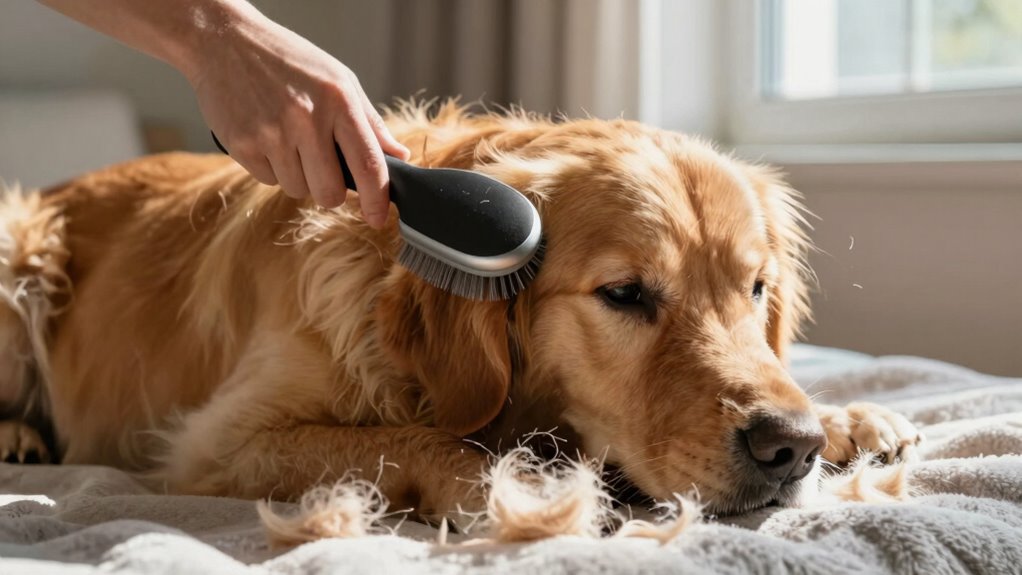
Are you noticing more hair around your home or on your pet than usual? Seasonal shedding can feel endless, but understanding how to manage it can make the process less overwhelming. One of the first steps is to evaluate your pet’s diet. During shedding seasons, making simple diet adjustments can support healthy skin and coat growth. Incorporate foods rich in omega-3 and omega-6 fatty acids, which help reduce dryness and promote a shinier, healthier coat. Adding supplements like fish oil can also boost coat condition, but it’s best to consult your veterinarian to determine appropriate amounts.
Adjust your pet’s diet with omega fatty acids to support a healthy, shiny coat during shedding season.
Alongside diet, grooming routines play a crucial role in managing shedding. Regular brushing helps remove loose hair before it falls around your home or on your pet. Use the right brush for your pet’s coat type—slicker brushes work well for dense coats, while shedding blades are effective for heavy shedders. Consistent grooming not only keeps your pet comfortable but also distributes natural oils, which can improve coat health and reduce excessive shedding. Make grooming a positive experience, rewarding your pet with treats or praise to keep them relaxed and cooperative.
In addition to diet adjustments and grooming routines, consider setting up a designated space for grooming where you can clean up easily afterward. Regular baths can also help manage shedding, especially if you use a gentle, moisturizing shampoo suited to your pet’s skin type. Bathing regularly loosens loose hair and removes dirt and debris that can trap hair follicles. Recognizing the connection between seasonal shedding and your pet’s health can help you stay proactive in managing it. Additionally, understanding the role of pet health can guide you in addressing underlying issues that may contribute to excessive shedding. Maintaining a healthy coat also involves understanding the role of nutrition in skin and coat health, which can influence shedding levels.
Another tip is to keep your environment clean and well-ventilated. Using a high-efficiency particulate air (HEPA) filter can trap airborne hair and dander, reducing the amount that settles on furniture and clothing. Regularly washing your pet’s bedding and vacuuming around your home will also cut down on loose hair and minimize allergens. Incorporating proper ventilation can significantly improve indoor air quality and reduce allergens associated with shedding.
Managing seasonal shedding doesn’t have to drive you crazy. By making targeted diet adjustments, establishing effective grooming routines, and maintaining a clean environment, you can keep shedding under control. Patience and consistency are key. The more proactive you are, the less hair will invade your space, and you’ll both feel more comfortable during those shedding seasons.
pet shedding brush for dense coats
As an affiliate, we earn on qualifying purchases.
As an affiliate, we earn on qualifying purchases.
Frequently Asked Questions
Can Seasonal Shedding Indicate Underlying Health Issues?
Yes, seasonal shedding can sometimes indicate underlying health issues like hormonal imbalances or parasite infestations. If you notice excessive or unusual shedding, it’s vital to pay attention and consult a veterinarian. Hormonal imbalances can disrupt the hair growth cycle, and parasites might cause irritation or hair loss. Addressing these issues early helps keep your pet healthy and guarantees the shedding is part of a normal seasonal cycle, not a sign of deeper problems.
How Long Does Seasonal Shedding Typically Last?
You might worry about how long seasonal shedding lasts, but with proper grooming techniques, you can manage it effectively. Typically, seasonal shedding lasts around 4 to 6 weeks, though it varies by breed and environment. Seasonal grooming helps remove loose hair, reducing mess and discomfort. Keep in mind, consistent brushing during this period supports healthy skin and coat, making shedding more manageable and preventing hair from becoming tangled or matting.
Are There Specific Diets That Reduce Shedding?
Yes, certain diets can help reduce shedding. Focus on a balanced diet rich in omega-3 and omega-6 fatty acids, which support healthy skin and coat. Incorporate dietary supplements like fish oil or flaxseed oil, and maintain a consistent grooming routine to remove loose hairs. Proper nutrition and regular grooming work together to minimize shedding, keeping your pet’s coat shiny and healthy while reducing the amount of hair around your home.
Does Shedding Vary by Breed or Hair Type?
Yes, shedding varies by breed and hair type. You’ll notice that dogs with a dense, double coat or thick fur texture shed more heavily during seasonal changes. Coat color can sometimes influence shedding patterns too, but fur texture plays a bigger role. Breeds with fine, single-layer coats tend to shed less than those with coarse, double-layer coats. Understanding your dog’s specific fur texture helps you better manage their seasonal shedding.
When Should I See a Vet About Excessive Shedding?
Coincidences happen, and your pet’s excessive shedding might be one. You should see a vet if you notice bald patches, persistent itching, or if shedding seems abnormal despite regular pet grooming. Environmental factors like allergies or stress could also contribute. Don’t ignore these signs; early veterinary advice helps identify underlying issues, ensuring your pet stays healthy and comfortable through seasonal changes.
Conclusion
So, enjoy the shedding chaos—you’re officially part of the club. Ironically, while you’re frantically vacuuming fur and battling tumbleweeds, your pet’s just doing their thing, oblivious. Embrace the mess; it’s a sign of healthy, happy fur. Remember, in the grand scheme, a little fur tumbleweed here and there is a small price for the love and companionship you share. After all, isn’t a little shedding just part of the pet owner’s charm?
Fall Picks
fall essentials
As an affiliate, we earn on qualifying purchases.