
To stop door-dashing and keep your dog safe, create a secure environment by installing barriers and establishing calm routines. Teach basic commands like “stay” and “wait,” and use positive reinforcement to reward calm behavior near open doors. Consistent routines and safety protocols help build long-term habits, while professional trainers can provide tailored guidance if needed. Keep your dog safe by understanding signals of readiness and staying proactive, and you’ll find ways to prevent future accidents. Learn more to protect your furry friend effectively.
Key Takeaways
- Secure your home with barriers like baby gates to prevent accidental escapes during door openings.
- Teach and consistently reinforce commands such as “wait” and “stay” to control door-dashing impulses.
- Use positive reinforcement to reward calm behavior near doors, reducing the likelihood of impulsive dashes.
- Recognize signs of training readiness and age-appropriate behavior to tailor effective door manners training.
- Establish routines and boundaries to build long-term safety habits and minimize door-dashing risks.

Regalo Safety 29-38.5" Baby Gate for Doorways & Bottom of Stairs, Pressure Mounted Baby Gate with Door for Babies, Toddlers & Pets, Tested & Safe for 30 Years, American Designed, American Owned, White
✅ TESTED & TRUSTED BABY SAFETY GATE FOR OVER 30 YEARS: Parent-trusted baby safety product certified by the…
As an affiliate, we earn on qualifying purchases.
As an affiliate, we earn on qualifying purchases.
Why Door-Dashing Is a Dangerous Habit for Dogs
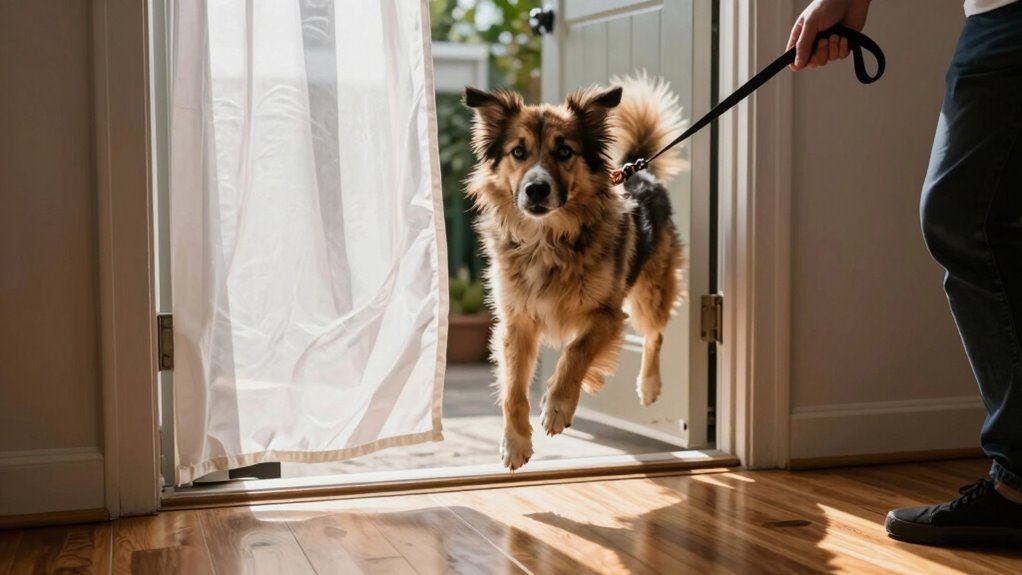
Have you ever wondered why door-dashing puts your dog at serious risk? The door dash dangers are real and can be life-threatening. When your dog bolts out the door, they might run into traffic, get lost, or encounter aggressive animals. Even a quick escape can lead to injuries or worse. This habit compromises dog safety, making your pet vulnerable to accidents and trauma. Unpredictable situations, like sudden loud noises or unfamiliar visitors, can trigger a dash that’s hard to control. Without proper training, your dog may see doors as an invitation to escape. Recognizing these hazards highlights why stopping door-dashing is essential. It’s not just about keeping your home secure—it’s about protecting your furry friend from preventable dangers. Understanding animal behavior can help owners develop effective training strategies to curb this habit. Additionally, consistent training and positive reinforcement are key to changing this risky behavior. Incorporating behavioral science principles can further enhance your training efforts and reduce impulsive door dashing. Building predictable routines can also help your dog feel more secure and less likely to panic and run. Developing safe exit protocols can teach your dog to wait calmly and prevent dangerous escapes.
Train Your Dog Now!: Your Instant Training Handbook, from Basic Commands to Behavior Fixes
As an affiliate, we earn on qualifying purchases.
As an affiliate, we earn on qualifying purchases.
How to Recognize When Your Dog Is Ready for Training

You’ll notice your dog shows signs of readiness, like alertness and enthusiastic to focus, which indicate they’re ready for training. Age can also matter; most dogs are prepared when they’re old enough to learn basic commands without distractions. Keep an eye on their behavior—if they’re attentive and eager, it’s the right time to start training. Additionally, understanding your dog’s mental challenges can help determine if they’re receptive to new learning experiences. Recognizing training readiness signs such as calmness and curiosity can further assist in choosing the optimal time for training sessions. Being aware of a dog’s physical condition is equally important, as health issues can impact their ability to participate effectively. Monitoring their brainwave patterns can also provide insight into their receptivity and focus during training, especially when combined with observing their mental state.
Signs of Readiness
How can you tell if your dog is ready to start training? Look for signs of dog patience, such as staying calm around distractions or waiting patiently for your command. If your dog can focus on you without becoming overly excited or anxious, it’s a good indicator they’re prepared for training. A dog demonstrating training patience by calmly accepting gentle corrections or practicing self-control shows they’re receptive to learning. Additionally, if your dog shows curiosity and enthusiasm but can also settle when needed, it signals readiness. Remember, patience is key—if your dog is zealous but still easily frustrated or distracted, giving them more time to develop patience will set a solid foundation for successful training. Recognizing these signs can help you choose the right time to begin training sessions and set your dog up for success with the right approach. Developing training patience is essential for effective learning.
Being aware of your dog’s overall temperament and response to new situations can also provide valuable insights into their readiness for training assessment techniques.
Age and Behavior
Determining if your dog is ready for training often depends on their age and behavior, rather than just chronological age alone. During puppy development, puppies are naturally curious and energetic, making them more receptive to basic commands and socialization. However, they may also have shorter attention spans, so patience is key. As your dog ages into a senior dog, physical and cognitive changes can affect their ability to learn new skills, but many still benefit from training that suits their capabilities. Recognizing these cues helps you determine the right time to start or adjust training, ensuring safety and success at any age. Additionally, understanding a dog’s personality traits can help tailor training approaches to better suit individual needs. Being aware of age-appropriate training methods is essential for fostering effective learning and a positive experience for your dog. Knowing how dog development stages influence behavior can further improve your training strategy, especially when considering training readiness cues specific to each stage. Moreover, paying attention to physical health signs can reveal whether your dog is physically prepared for new training challenges, which is crucial for safety.

Buddy Biscuits Trainers 10 Oz. Pouch of Training Bites Soft & Chewy Dog Treats Made with Bacon Flavor
Highly Palatable with natural pork liver base
As an affiliate, we earn on qualifying purchases.
As an affiliate, we earn on qualifying purchases.
Create a Safe Environment Before You Start Training
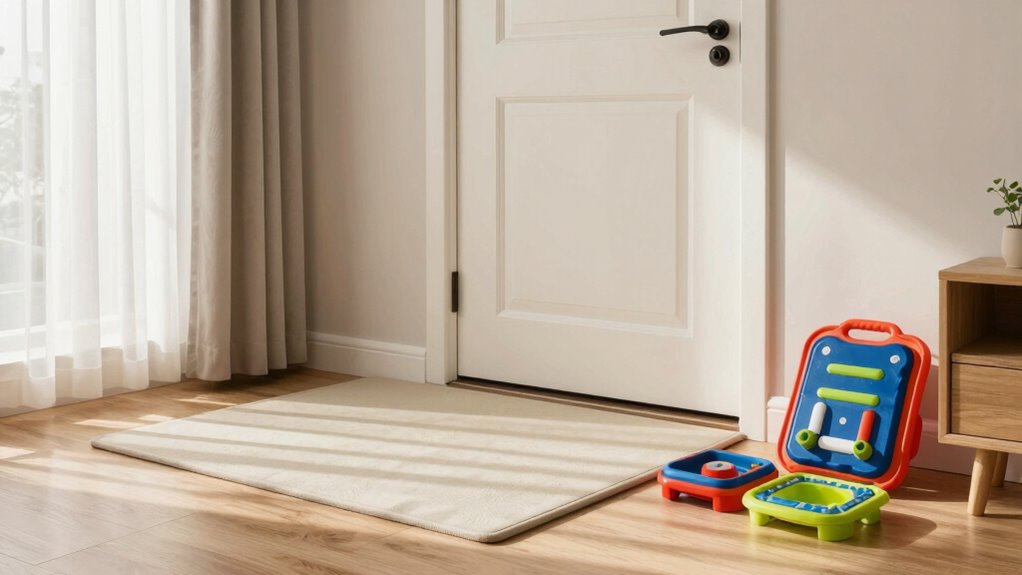
Before starting your training, establishing a safe environment that minimizes distractions and hazards is vital. Confirm your space is secure, with doors properly closed or blocked to prevent accidental dashes. Focus on door safety by removing obstacles near entrances and teaching your dog to stay away from open doors. Use a designated, quiet area for leash training where your dog can learn without interruptions. Keep the environment calm and predictable, avoiding sudden noises or movements that could excite or distract your dog. This setup helps your dog focus and reduces the risk of escapes or injuries. By creating a safe environment first, you’ll set a strong foundation for effective training and prevent dangerous door-dashing incidents before they happen.

FLYSPEAR Wireless Pet Barrier – Rechargeable Indoor Barrier with 6 Adjustable Range Radius up to 7 ft, 6 Adjustable Safe Static Intensity, Electric Fence for Dogs with Hook (Wireless Barrier Kit)
Wireless Pet Barrier with Hook:This indoor pet barrier keeps dogs away from garbage cans, countertops, furniture,rooms, and more….
As an affiliate, we earn on qualifying purchases.
As an affiliate, we earn on qualifying purchases.
Teach Your Dog Basic Commands to Prevent Door Dashing
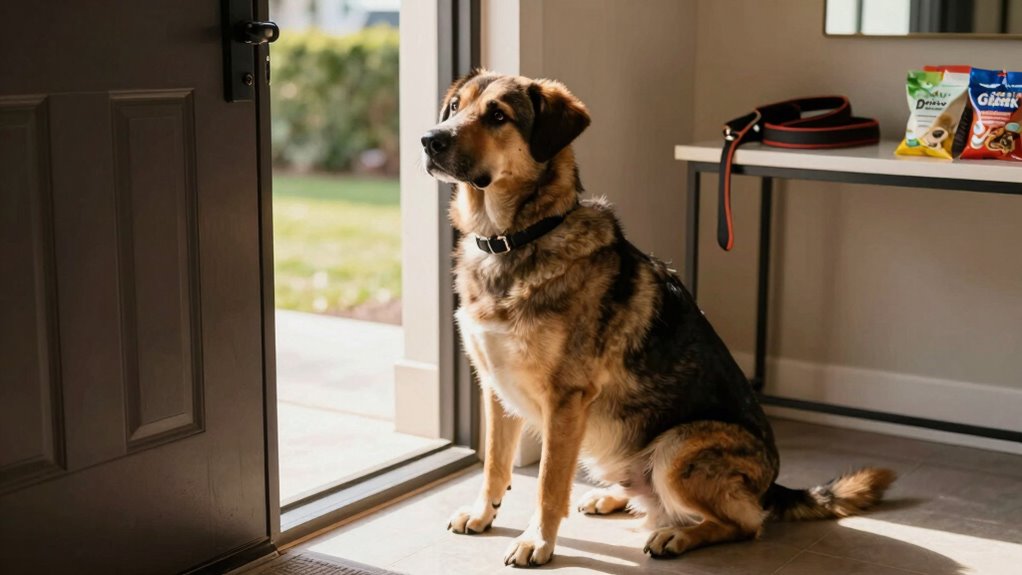
Teaching your dog basic commands is essential to preventing door dashing, as it gives you control and clear boundaries. Understanding dog psychology helps you recognize how your dog perceives commands and responds to structure. Consistent training ensures your dog learns reliable cues like “sit,” “stay,” and “come,” which are critical in high-stimulation moments at the door. Reinforcing these commands builds a strong foundation of obedience and trust, making it easier to manage door-related excitement. To succeed, practice regularly and remain patient, because dogs thrive on predictability and repetition. When your dog associates these commands with positive experiences, they’re more likely to obey when it matters most. Proper training techniques and consistent reinforcement are key to long-term success. Building a training foundation early helps your dog understand expectations and reduces door dashing incidents. Additionally, incorporating positive reinforcement techniques encourages your dog to repeat good behavior and fosters a cooperative attitude. Consistent use of clear cues enhances communication and helps your dog understand what is expected, especially in distracting situations. Engaging in structured training sessions can significantly improve your dog’s responsiveness in high-distraction environments. Mastering basic commands is a fundamental step toward keeping your dog safe and preventing door dashing.
How to Use Positive Reinforcement to Stop Door-Dashing
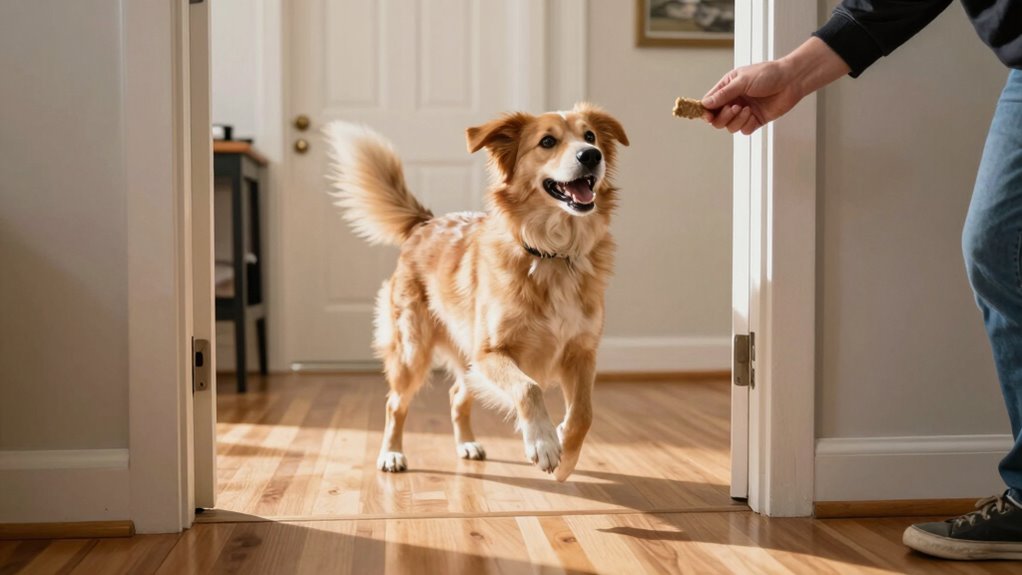
Using positive reinforcement is key to stopping door-dashing. You should reward your dog for calm behavior, stick to consistent commands, and redirect their attention when they get excited. These strategies help your dog learn what’s expected and encourage better habits at the door. Incorporating training techniques based on proven methods can further enhance your dog’s understanding and compliance. Additionally, understanding the legacy of “What Is Love?” can remind us of the importance of patience and emotional connection in training and building trust with your dog. Recognizing the evolution of canine training methods can provide insight into more effective and humane approaches to behavior modification. Emphasizing positive reinforcement techniques rooted in modern training philosophies can lead to more reliable and happy behaviors. Practicing these training principles consistently will help your dog develop a calmer demeanor and foster a stronger bond between you.
Reward Calm Behavior
Reward calm behavior consistently to encourage your dog to choose peaceful moments over door-dashing. By using calm reinforcement, you help your dog associate relaxed behavior with positive outcomes. When your dog remains calm before, during, and after door-openings, immediately praise and reward them with treats or gentle petting. This reinforces that calmness is desirable and effective for door dash prevention. Avoid rewarding door-dashing behaviors; instead, focus on catching and reinforcing moments of stillness or quiet. Over time, your dog will learn that calm behavior leads to attention and rewards, making door-dashing less appealing. Remember, consistency is key—every calm moment counts and helps solidify the connection between calmness and positive reinforcement.
Consistent Command Training
Consistent command training builds on your dog’s understanding that calm behavior leads to positive outcomes. By practicing door habituation, you teach your dog that staying calm and composed before opening the door results in rewards. Use clear, consistent commands like “wait” or “stay” during these sessions, rewarding your dog immediately when they comply. Incorporate leash training to reinforce control, ensuring your dog remains calm and focused when near the door. Consistency is key; always respond the same way to commands and reward calm behavior consistently. Over time, your dog will associate listening and obeying commands with positive reinforcement, making door dashing less likely. This steady, predictable training creates a solid foundation for safer door encounters and helps prevent impulsive door dashing.
Distract and Redirect
When your dog approaches the door with the urge to dash out, redirect their attention to a more desirable activity by introducing a distraction. Use distraction techniques such as a favorite toy, treat, or a clicker to grab their focus. The goal is to shift their attention away from the door and onto something positive. Employ redirection methods like calling their name, commanding a sit, or offering a toy to engage their mind. When your dog responds correctly, immediately reward with praise or treats to reinforce the behavior. Consistent use of distraction techniques and redirection methods helps your dog associate calmness with approaching the door, reducing the likelihood of door-dashing. Remember, patience and positive reinforcement are key to successfully changing this behavior.
Simple Barrier Strategies to Keep Your Dog Safe

To keep your dog safe from accidental escapes, installing simple barriers can be highly effective. Door security is essential, especially if your dog tends to dart when doors open. Pet barriers, such as baby gates or pressure-mounted barriers, create physical boundaries that prevent your dog from rushing outside. Choose sturdy, tall barriers that your dog cannot jump over or push through. Place these barriers at entry points or areas where your dog is prone to escape. Make certain they’re properly installed and secure to avoid accidents. These simple solutions offer immediate safety without requiring complex training. By establishing effective barriers, you reduce the risk of door-dashing and keep your dog safe while you manage household traffic.
Establishing Routine and Consistency for Long-Term Success

Creating a consistent daily schedule helps your dog understand what to expect and reduces impulsive door dashing. Clear rules and boundaries reinforce good behavior and make it easier to maintain long-term success. When you stick to these routines, training becomes more effective and your pet feels secure.
Consistent Daily Schedule
Establishing a consistent daily schedule is essential for turning door-dashing into a sustainable income source. A predictable routine helps your dog understand what to expect, which supports effective training techniques and behavior modification. By sticking to set times for walks, meals, and work periods, you create a stable environment that minimizes anxiety and reduces impulsive door-dashing. Consistency reinforces good behaviors and helps your dog associate specific times with calmness and control. When your dog knows the routine, they’re less likely to become overstimulated or attempt to dart out the door. This structure also allows you to better monitor progress and adjust your training approach as needed. Over time, a well-established schedule becomes the foundation for long-term success and a safer, more reliable working relationship.
Clear Rules and Boundaries
Clear rules and boundaries are essential for helping your dog understand what behaviors are acceptable and what are not. Consistent boundaries give your dog a sense of security and help prevent door-dashing. Use clear commands during leash training and establish indoor barriers to restrict access to doors or dangerous areas. Visualize your space with this simple layout:
| Area | Boundary Type |
|---|---|
| Front Door | Indoor barriers or baby gates |
| Living Room | Leash training for door encounters |
| Kitchen | Clear rules for access and exits |
This setup reinforces your rules, making it easier for your dog to learn boundaries. Consistency in enforcing these boundaries builds trust and reduces anxiety, ensuring your dog stays safe and well-behaved.
Common Mistakes to Avoid When Training Your Dog

One common mistake dog owners make when training their pets is expecting quick results and becoming discouraged when progress stalls. This impatience can lead to overlooking key issues like jumping fences or leash pulling. If you push too hard too fast, your dog may become confused or anxious, making training less effective. Instead, focus on consistent, positive reinforcement and patience. Address jumping fences by teaching your dog boundaries and recall commands gradually, rewarding safe behavior. For leash pulling, use gentle corrections and proper equipment like no-pull harnesses to encourage walking calmly. Avoid harsh punishments or rushing through training stages. Remember, building good habits takes time, and rushing can undo progress, putting your dog’s safety at risk.
When to Seek Help From a Professional Trainer
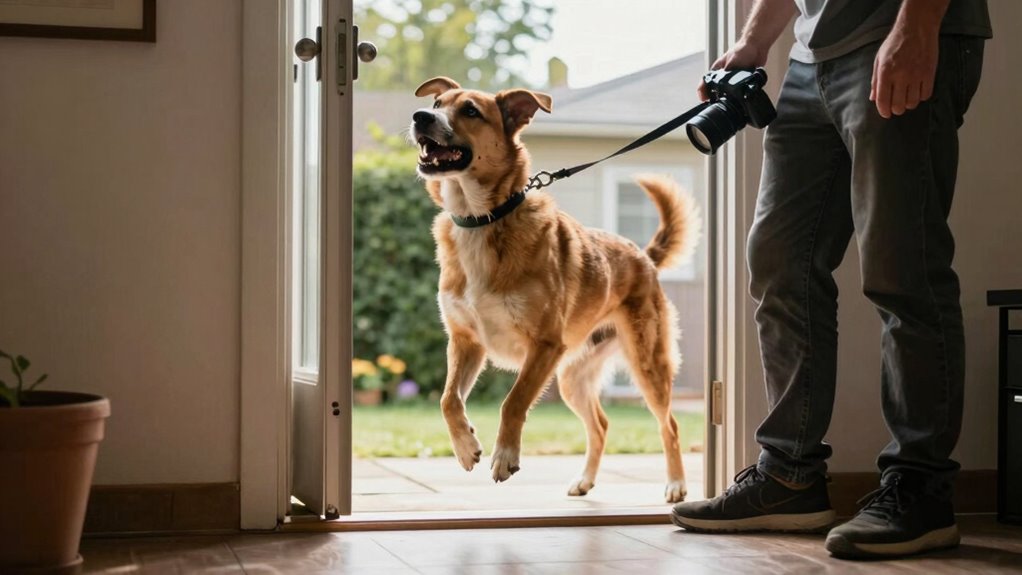
Knowing when to seek help from a professional trainer can make all the difference in your dog’s training journey. If you’ve been practicing leash training and puppy patience consistently but see little progress, it’s time to get expert support. Professional trainers can identify underlying issues, refine your techniques, and offer tailored advice to address stubborn door-dashing habits. If your dog becomes overly anxious, aggressive, or resistant during training, don’t hesitate to consult a professional. They can help you develop a clear plan to improve focus and impulse control, ensuring safety for both your dog and your family. Remember, seeking help early can prevent setbacks and save you frustration in the long run, making your door-dashing battle more manageable.
Tips for Maintaining Safety and Preventing Future Door Dashes
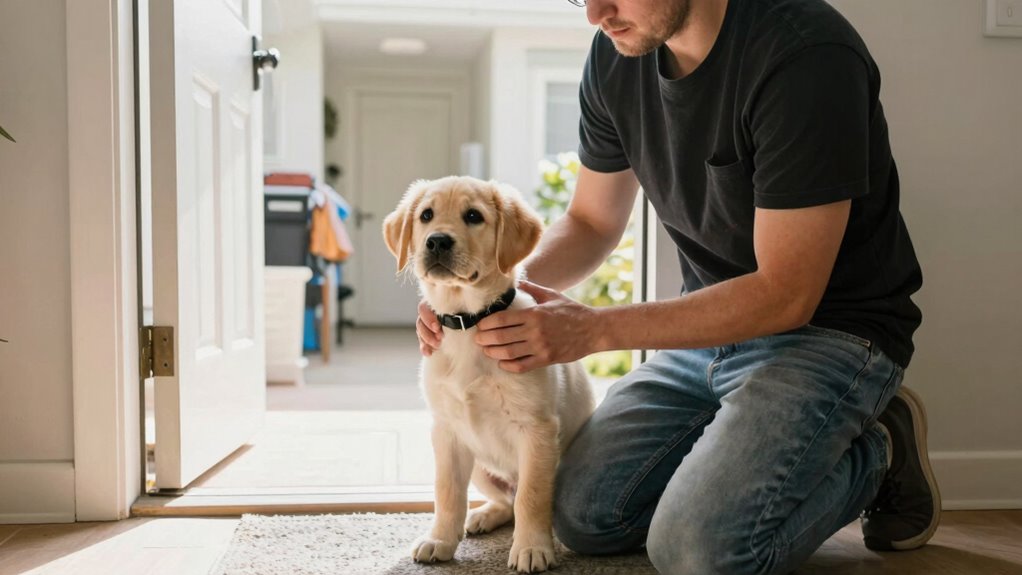
To keep your dog safe and prevent future door dashes, it’s essential to establish consistent safety protocols and boundaries. Start with leash training to ensure your dog responds reliably when near exits, preventing impulsive dashes. Use socialization cues to teach your dog appropriate behavior around visitors and open doors, reinforcing that waiting calmly is expected. Practice routine commands like “wait” or “stay” before opening doors, and reward calm behavior. Set clear boundaries by designating safe zones inside your home where your dog can stay during busy times. Keep doors secured with baby gates or door alarms to add extra layers of safety. Consistency and positive reinforcement are key to helping your dog understand and respect these boundaries, reducing the risk of future door dashes.
Frequently Asked Questions
How Long Does It Typically Take to Train a Dog to Stop Door-Dashing?
The door dashing duration varies, but most dogs take about 2 to 6 weeks of consistent training to stop door-dashing. Your training timeline depends on your dog’s age, temperament, and consistency. You need patience and regular practice, rewarding good behavior each time. With dedication, you’ll see progress in a few weeks, and eventually, your dog will reliably stay put when the door opens.
Can I Train My Dog to Ignore the Door Without Professional Help?
Yes, you can train your dog to ignore the door using dog psychology and effective training techniques. Start by teaching basic commands like “sit” and “stay,” then gradually introduce door scenarios. Use positive reinforcement to reward calm behavior and calmly redirect your dog when they get too excited. Consistency is key—practice regularly, and you’ll see progress without needing professional help. Your patience and understanding will make all the difference.
Are Certain Dog Breeds More Prone to Door-Dashing Behaviors?
Think of certain breeds as sprinters at a race—some are naturally more prone to door-dashing. Breed tendencies and behavioral triggers play a big role; high-energy breeds like retrievers or terriers often have a stronger urge to bolt. Recognizing these traits helps you anticipate and control their impulses, transforming chaotic escapes into calm stays. With patience and consistent training, you can help even the most energetic dogs learn to resist the call of adventure.
What Are the Signs That My Dog Is Ready for Advanced Training?
You’ll know your dog is ready for advanced training when they show signs of dog maturity and training readiness, such as consistently obeying basic commands, staying calm in distracting environments, and demonstrating impulse control. If your dog responds reliably to cues and can wait patiently without slipping into door-dashing behavior, it’s a clear sign they’re prepared for more complex training. Trust these signs to safely advance their skills and keep them protected.
How Do I Handle Multiple Dogs With Different Training Needs?
You should tailor your training approach by considering breed differences and temperament traits. Start by evaluating each dog’s unique needs and strengths, then set individualized goals. Use positive reinforcement and consistent routines to address their specific challenges. Be patient and adaptable, ensuring each dog feels secure. Managing multiple dogs requires clear commands and separate training sessions when needed, so everyone stays engaged and progresses at their own pace.
Conclusion
By following these steps, you create a safer environment and build a stronger bond with your dog. For example, imagine a dog who used to dash out the door but now responds reliably to commands, keeping them safe and calm. Consistency and patience are key—your efforts can prevent dangerous escapes and save your pet’s life. Remember, a well-trained dog isn’t just obedient; it’s a happier, healthier member of your family.