
To help your nervous dog during thunderstorms, start desensitizing them with gradual exposure to storm sounds played softly at first, then slowly increase the volume. Create a cozy, secure space with calming aids like pheromone diffusers, and keep a calm, reassuring presence. Establish a consistent routine to foster security and avoid reinforcing fearful behaviors. If you keep applying these techniques consistently, you’ll discover more ways to ease your dog’s storm anxiety effectively.

Get pet supplies delivered free with Prime
- Fast, free delivery on millions of items
- Prime Video, Amazon Music and more included
- Member-only deals all year
Key Takeaways
- Gradually expose dogs to storm sounds at low volume to build tolerance and reduce fear over time.
- Create a cozy, soundproofed safe space with familiar items to comfort anxious dogs during storms.
- Use calming aids like pheromone diffusers or collars to promote relaxation and reduce storm-related anxiety.
- Maintain a consistent routine and calm owner demeanor to reinforce feelings of safety during thunderstorms.
- Practice patience and persistence with desensitization techniques to help nervous dogs feel more secure during storms.
Many dogs become anxious during thunderstorms, but with consistent desensitization techniques, you can help your nervous pet feel calmer and more secure. Noise phobia is common among dogs, and thunderstorms often trigger intense fear responses. The key is to gradually expose your dog to the sounds of a storm at a low volume, so they learn to associate the noise with calm rather than danger. You might start by playing recordings of thunder at a very soft level while engaging your dog with treats or praise. Over time, slowly increase the volume, always making sure your dog remains relaxed. This process helps desensitize them to the sound and reduces their fear over time. Consistent exposure is essential, as it reinforces positive associations and helps your dog build tolerance. Incorporating desensitization techniques can make a significant difference in how your dog responds to storms.
Gradually desensitize your dog to thunder sounds to ease their fear and increase calmness during storms.
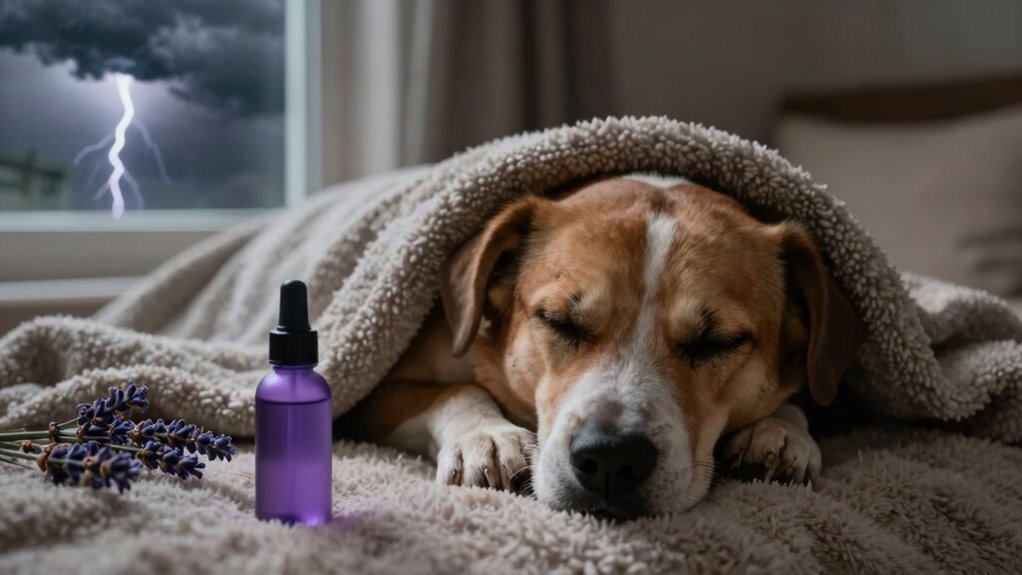
Calming techniques play an essential role in managing noise phobia. When a storm begins, it’s natural for your dog to seek out a safe hiding spot or become clingy. Instead of reinforcing these behaviors, you can introduce calming techniques that promote relaxation. For example, you might create a cozy, soundproofed space where your dog feels secure, filled with their favorite blanket or bed. Using calming aids, such as pheromone diffusers or calming collars, can also help reduce anxiety. During a storm, speaking softly or using a calming voice reassures your dog, helping to distract them from the noise. Offering gentle petting or massage can further promote relaxation, but only if your dog enjoys it and remains calm.
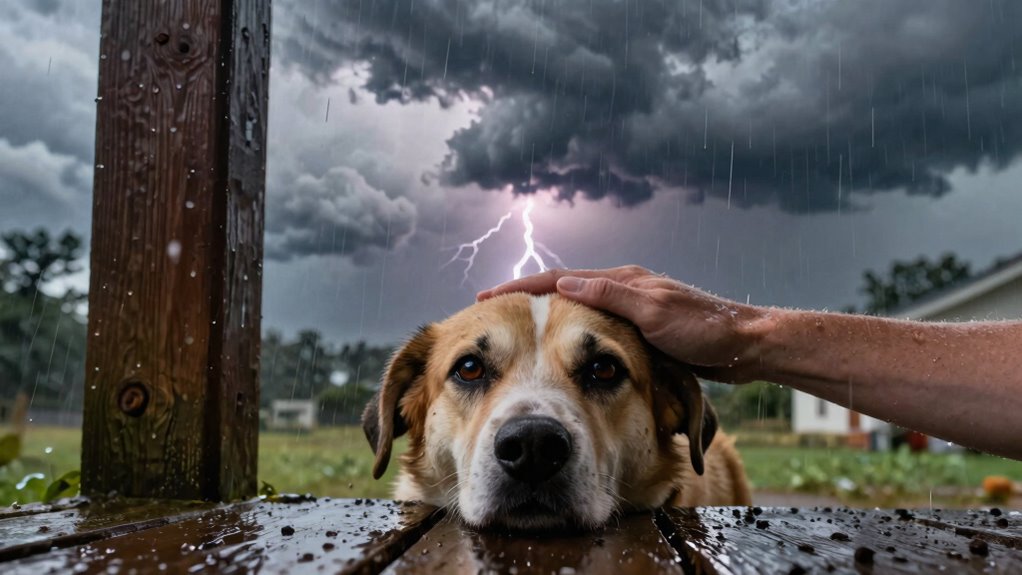
Consistency is essential in this process. Each time a storm occurs, follow the same routine to reinforce positive associations with the noise. If your dog shows signs of extreme distress, don’t punish or scold them; instead, gently comfort them while maintaining a calm environment. This approach guarantees they connect your presence with safety rather than fear. Additionally, keeping your own demeanor calm and collected during storms helps your dog feel more secure. Remember, patience is key—desensitization takes time, and progress might be gradual. Recognizing that noise phobia is a common issue among dogs can help you approach the process with understanding and patience.
Incorporating these strategies into your routine can considerably reduce your dog’s noise phobia. With patience and persistence, you can help your nervous pet learn to tolerate thunderstorms better, decreasing their fear and increasing their comfort. The goal is to create a sense of safety and calm that endures even when the storm rages outside. By applying consistent desensitization techniques and effective calming methods, you’re taking important steps toward easing your dog’s storm-related anxiety and helping them feel more secure during weather disturbances.
dog thunderstorm sound desensitization recordings
As an affiliate, we earn on qualifying purchases.
As an affiliate, we earn on qualifying purchases.
Frequently Asked Questions
How Long Does Thunderstorm Desensitization Typically Take?
Storm exposure through desensitization methods can take anywhere from a few weeks to several months, depending on your dog’s anxiety level. Consistent, gradual exposure helps reduce their fear over time. You should start with short, controlled sessions, gradually increasing exposure as your dog becomes more comfortable. Patience and positive reinforcement are key. Remember, each dog responds differently, so don’t rush the process—progress varies based on individual temperament and response.
Can Medication Assist With Thunderstorm Anxiety?
Sure, medication can help with thunderstorm anxiety, but don’t forget the real magic lies in behavior modification and calming techniques. Think of meds as a shiny Band-Aid; they might mask the problem temporarily. For lasting relief, you need to work on desensitization and calming strategies, like creating a safe space or using calming aids. Medication might be useful, but it’s not a substitute for training and patience.
Are Certain Breeds More Prone to Storm Phobia?
Certain breeds are more prone to storm phobia because of breed tendencies and their heightened sensitivity to loud noises and sudden changes. For example, herding and toy breeds often show higher phobia prevalence compared to more resilient breeds. You should pay extra attention to these breeds when implementing desensitization techniques. Understanding their natural tendencies helps you tailor your approach, making your efforts more effective in easing your dog’s storm anxiety.
How Can I Identify if My Dog’s Fear Is Severe?
If your dog shows intense behavior signs like trembling, hiding, or excessive barking during storms, their fear may be severe—statistics show nearly 50% of dogs experience significant storm anxiety. Watch for behavior signs that indicate heightened distress, such as pacing or attempts to escape. Recognize anxiety triggers like loud thunder or flashing lightning. If these signs persist or worsen, consider consulting a vet or behaviorist for tailored support.
What Safety Precautions Should I Take During Thunderstorms?
During thunderstorms, prioritize rain safety by keeping your dog indoors and away from windows. Use sturdy shelter strategies like creating a cozy den or using calming sounds to block loud noises. Always have a collar with ID tags on, and consider a leash if you need to take your dog outside temporarily. Stay calm yourself, as your demeanor influences your dog’s comfort. These steps help protect your dog and reduce fear during storms.
Conclusion
By gradually desensitizing your nervous dog to thunderstorms, you can substantially reduce their anxiety and improve their quality of life. Remember, research shows that nearly 50% of dogs suffer from noise phobias, highlighting how common and impactful this issue is. With patience, positive reinforcement, and consistent exposure, you can help your furry friend feel safer and more secure during storms. Your gentle support makes all the difference in helping them overcome their fears.
Fall Picks
fall essentials
As an affiliate, we earn on qualifying purchases.