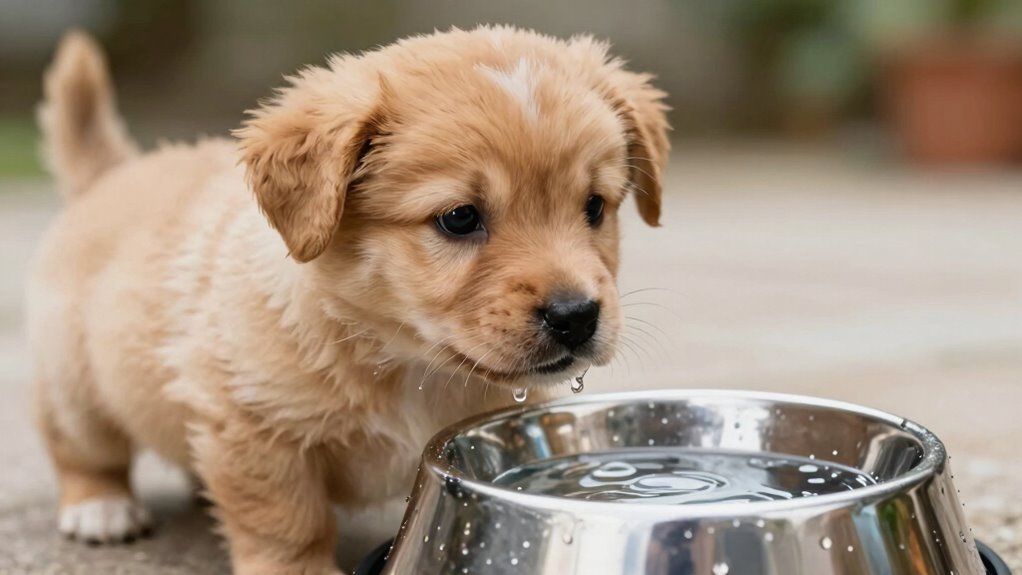

You should offer your puppy about ½ to 1 oz of water per pound of body weight each day, so a 10-pound puppy needs 5 to 10 oz. Make certain the water is fresh and accessible at all times, especially in hot weather or after play. Watch for signs of dehydration or excessive drinking, which can indicate health issues. Staying attentive helps guarantee your puppy stays healthy and hydrated—there’s more to discover on how to keep hydration ideal.
Key Takeaways
- Puppies typically need ½ to 1 oz of water per pound of body weight daily.
- Adjust water intake based on age, activity level, diet, and environmental conditions.
- Always provide fresh, clean water in a accessible location for consistent hydration.
- Monitor signs of dehydration like dry gums, lethargy, and sunken eyes.
- Increase water supply during hot weather or periods of high activity.
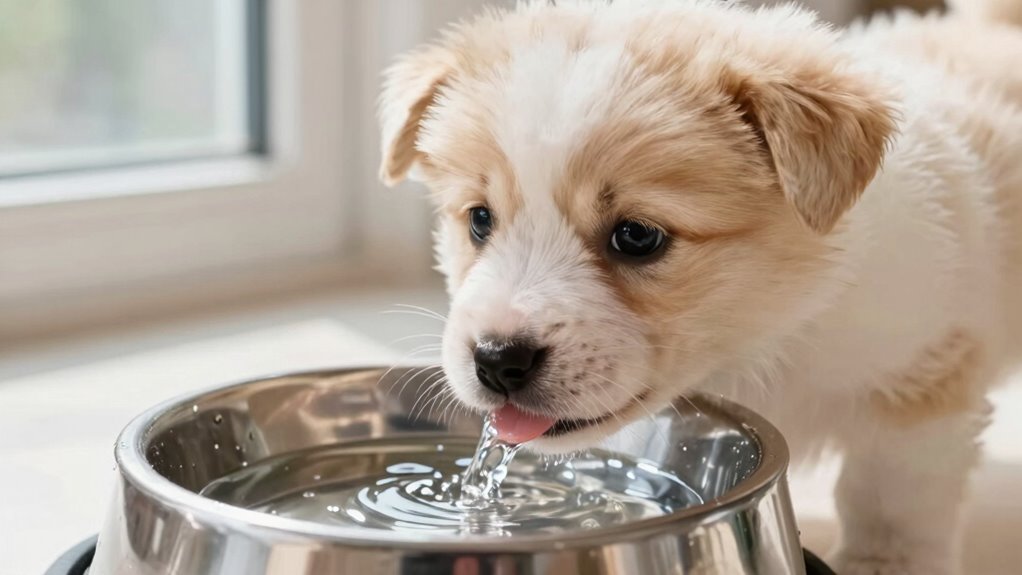
Ensuring your puppy stays properly hydrated is essential for their growth and health. Proper puppy hydration supports vital bodily functions, keeps their energy levels up, and promotes healthy development. Knowing how much water your puppy needs each day can seem tricky, but understanding water intake guidelines makes it easier to keep them well-hydrated. Puppies are more vulnerable to dehydration than adult dogs because they have higher metabolisms and more active bodies, so paying close attention to their water consumption is crucial.
Proper hydration is vital for your puppy’s growth, health, and energy—monitor their water intake carefully.
Typically, puppies need about one-half to one ounce of water per pound of body weight daily. For example, a 10-pound puppy should drink roughly 5 to 10 ounces of water each day. However, this can vary based on factors like age, activity level, diet, and environmental temperature. If your puppy eats mostly wet food, they might drink less water than a puppy on a dry kibble diet because wet food contains moisture. Conversely, if it’s hot outside or your puppy is especially active, their water needs will increase. Always keep an eye on your puppy’s behavior and water intake to make sure they’re staying properly hydrated.
To guarantee your puppy drinks enough water, provide fresh, clean water at all times. Change their water frequently to prevent it from becoming stale or contaminated. Use a clean bowl that’s easy for your puppy to access, and place it in a quiet, low-traffic area. Proper hydration is vital for preventing health issues and maintaining your puppy’s overall well-being, so monitoring their water intake is key. Additionally, environmental temperature can significantly influence how much water your puppy needs, so adjusting their water supply accordingly is important. Providing consistent access to clean water helps support healthy development and prevents dehydration, especially in warmer weather or during periods of increased activity. Regularly observing your puppy’s hydration status and understanding signs of dehydration can help catch potential issues early. If you notice your puppy drinking excessively, it could be a sign of health issues like diabetes or kidney problems, so consult your veterinarian if this occurs. Conversely, if they’re reluctant to drink, it might indicate illness or discomfort, and you should seek veterinary advice promptly.
Monitoring your puppy’s hydration isn’t just about quantity; it’s also about observing their overall behavior. Puppies that are well-hydrated tend to be energetic, alert, and have moist, shiny noses and gums. Proper hydration is also influenced by environmental temperature, which can affect their water needs. If your puppy shows signs of dehydration—such as dry gums, lethargy, sunken eyes, or loss of skin elasticity—you need to act quickly. Increasing water availability is the first step, but persistent signs of dehydration require veterinary attention. Remember, maintaining proper puppy hydration isn’t a one-time effort; it’s an ongoing part of caring for your puppy’s health and happiness. By following water intake guidelines and staying attentive to their needs, you help make certain your puppy grows into a healthy, active dog.
As an affiliate, we earn on qualifying purchases.
Frequently Asked Questions
Does Water Intake Vary by Puppy Breed?
Yes, water intake varies by puppy breed due to breed-specific hydration needs and activity levels. Larger breeds typically require more water, while smaller breeds may need less. Active breeds burn more energy and consequently need increased puppy water needs to stay hydrated. Keep an eye on your puppy’s behavior and water consumption, ensuring they always have access, especially during hot weather or after playtime.
Can Puppies Drink Too Much Water?
Ever wonder if your puppy can drink too much water? Yes, overhydration can occur, leading to a condition called water poisoning. While proper puppy hydration is essential, excessive water intake can dilute electrolytes, cause nausea, or even more severe health issues. Monitor your pup’s drinking habits, and make certain they drink appropriate amounts to stay healthy without risking water poisoning. Always consult your vet for guidance on ideal hydration levels.
How to Encourage a Puppy to Drink More?
To encourage your puppy to drink more and improve their hydration, make fresh water easily accessible and change it regularly. You can also add a splash of low-sodium broth or place ice cubes in their bowl to make drinking more appealing. Maintain consistent drinking habits by offering water after playtime and meals. Monitoring their intake guarantees they stay properly hydrated, which is essential for their overall health and well-being.
Is Filtered Water Better for Puppies?
Filtered water is better for puppies because it promotes better puppy hydration and reduces contaminants. Your puppy’s water preferences can influence how much they drink, so offering clean, fresh water encourages hydration. Using filtered water minimizes impurities and chemicals, helping keep your pup healthy. Always guarantee they have access to fresh water, especially if you notice they’re drinking less. Prioritizing filtered water supports your puppy’s overall well-being and hydration needs.
When Should I Be Worried About Dehydration?
You should worry about dehydration if your puppy shows signs like lethargy, dry gums, sunken eyes, or loss of skin elasticity. These are serious indicators affecting puppy health. Make certain your pup always has access to fresh water, preferably filtered for better hydration signs. Promptly consult a vet if you notice these symptoms to prevent dehydration from worsening and ensure your puppy stays healthy and well-hydrated.
Conclusion
Remember, keeping your puppy happily hydrated is like offering a gentle, invigorating breeze on a warm day. By paying close attention to their water intake and ensuring fresh, clean bowls always await, you’re nurturing a healthy, vibrant companion. Think of it as a small, loving gesture that pays off in wagging tails and bright eyes. With just a little mindful care, you’re helping your puppy grow up strong, happy, and ready for all life’s adventures ahead.